The number of Palestinians killed in Israel’s deadly bombardment of Gaza Strip surpassed 6,000 people as Gaza’s Ministry of Health announced the death of 700 people in just 24 hours.


The number of Palestinians killed in Israel’s deadly bombardment of Gaza Strip surpassed 6,000 people as Gaza’s Ministry of Health announced the death of 700 people in just 24 hours.

In solidarity with those who fought racial apartheid in South Africa, bell hooks emphasized, “[The Black American] struggle is also a struggle of memory against forgetting.” The same is true for Palestine.

The State Department is dismissing any talk of a ceasefire in Gaza claiming it will only help Hamas, while a White House National Security official warns, “innocent civilians are going to be hurt going forward.”

I want to believe that mass protests, strikes, and boycotts will be more effective than violence at liberating the colonized. Yet how many liberation movements have felt forced to choose violence as the only path to freedom? Would that it were otherwise.

Rev. William Barber’s ahistorical criticisms of Palestinian resistance show a profound ignorance of the history of settler colonialism endured by Palestinians.
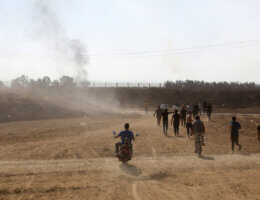
It’s easy to show solidarity with powerless victims who endure their suffering with stoicism. But Palestinians chose to break free of their cage, even if it shattered the image of perfect victimhood.

Dozens of hospitals are forced out of service as the situation in the West Bank and the northern front escalate. Meanwhile, Macron arrives in Israel to show support, and Hamas releases two captives on humanitarian grounds

At a time when the rest of Palestine languishes in a post-political, post-Palestinian nightmare, Gaza shows us that Palestine is now alive everywhere.

An Israeli think tank with ties to Israeli Prime Minister Benjamin Netanyahu issued a report on October 17 promoting the “unique and rare opportunity” for the “relocation and final settlement of the entire Gaza population.”

CUNY for Palestine demands Chancellor Félix Matos Rodríguez publicly condemn Israel’s genocidal violence in Gaza, and support CUNY students and workers who are routinely attacked when voicing support for Palestine.