

I was in sixth grade when Palestine was going through the Second Intifada. This is when I decided to become a journalist.
One of the reasons behind my decision was the idea, held by most Palestinians, that our story wasn’t heard enough. It is the idea that our narrative as a people, and as individuals, was absent from public debate and from people’s awareness in most of the rest of the world. To be a journalist, for me, and for many Palestinian millennials who followed the same path, meant to bring our people’s ongoing story to be part of the world’s consciousness and common memory.
In recent years, I have discovered what this job has meant in reality. By trying to dig as deep as possible into the Palestinian past and present, reporting and writing on Palestine means being in close contact with the constant, self-renewing, overwhelming collective and individual trauma of Palestinians.
Since late 2021, the West Bank has been experiencing a new wave of upheaval, brought about by the failure of past political attempts to maintain stability without ending the occupation—a story repeated many times since 1967.
The expansion of Israeli settlements, the growing Israeli military brutality against Palestinians, and the deteriorating economic situation have led a young generation of Palestinians to look for ways to confront the occupation. Local armed groups began to spring up in refugee camps and other communities, while Israeli military raids skyrocketed in number and in violence. And with each raid, people were killed, maimed, and brutally detained. And the trauma grew.
Palestinians have developed collective forms of co-existing with trauma; special traditions that have given traumatic experiences, including death, a ritualistic form. Funerals of those killed by the occupation are ceremonies that take place on the fine line between the mourning of death and the celebration of the honor that the community recognizes to a martyr’s family. The return of released detainees are improvised neighborhood parties that celebrate steadfastness. For teenage detainees, they are coming of age parties. And when a house is demolished, it is the solidarity around the family that takes center stage. To be near any of these events, it is required to join the ceremony, where people try to merge their individual stories into a collective cathartic practice. As a journalist, I try to go beyond the ceremonial atmosphere and bring out personal stories to showcase a general human experience.
For two years prior to October 7, I spent half of my time as a journalist reporting an average of one Israeli raid per day, writing the same parts of the same story each time. Soldiers enter communities, shoot, break the doors of homes, and snatch people from their beds into indefinite detention.
The other half, I have spent looking for the stories of the victims, trying to tell them. Sometimes, it was an elderly woman who was shot while having coffee on her balcony. At others, it was a teenage girl coming back from special courses ahead of her exams. And at other times it was a worker returning home with a Ramadan breakfast meal for his waiting family.
Each time, I had to make the family members or friends live through every bit of the trauma again, exactly at the moment when they were trying to overcome it. I interrupted their collective cathartic ritual and forced them to air their personal wounds to me, a stranger. This leaves a scar on your own soul every time you do it, which you eventually learn to absorb as part of the job.
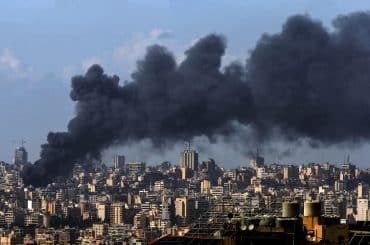
Since October 7, the collective Palestinian trauma has become immeasurable, especially in Gaza, where people aren’t even given the opportunity to mourn properly and in accordance with their traditions. Palestinians in Gaza have been forced either to wave goodbye to dozens or hundreds of their loved ones as they are placed in mass graves, or to look for their decomposing remains between the rubble of their homes and neighborhoods.
Our work as journalists and storytellers sometimes feels futile to us, especially when death in its cruelest form is visited upon us on a daily basis, to the point that we can’t even catch up with it.
The Palestinian story, which had been shaped by the traumatic experience of the ongoing Nakba for the last 76 years, has been growing in new dimensions with each new massacre and with each new assault on a hospital or a tent city. The voices trying to get the story out seem as if they are drowning in the void, even more so when over 150 Palestinian journalists in Gaza have been killed on duty in the past eight months with absolute impunity.
However, in an intimate corner of our consciousness, we know that the story needs to be told, now more than ever. History, which is ongoing, is not limited to the past. It teaches us that genocide is only possible if dehumanization is possible.
Dehumanization is possible when a people’s collective story, made up of millions of individual human stories, has been erased from the world’s memory and awareness. Though it might be a painful process, in the most painful of times, it is our duty to bring it back.
Long article on this topic in today’s Guardian:
https://www.theguardian.com/world/article/2024/jun/25/grey-zone-how-hamas-linked-journalists-legitimate-targets
Thank you for doing what you can to counteract the forces that dehumanize and discount Palestinians.
Another Israeli soldier who was presumed to be kidnapped has been pronounced dead , his body held by Hamas: Sgt. Maj. Mohammed El Atrash, 40, from Sawa, who was killed in combat on October 7.
And we’ve seen this terrifying video from Oct.7:
https://www.youtube.com/watch?v=p4jtjhzXNFw&ab_channel=AssociatedPress
These are the men seen in the video: Hersh Goldberg-Polin (a US citizen) ,23, from Jerusalem ; Or Levy 33, from Givataym; Elia Cohen 27 from Tzur Hadassah ; Alon Ohel, 22 from Lavon.
Who knows how many are still alive?
Free the hostages!