
Not for a single time did I think that the war would bring up memories from my childhood and damage them, too, as it damages the present and future for myself and hundreds of thousands of families in Gaza.
I was catching up on the news on Tuesday, August 13, and was shocked to see my friend, Muhammad Abu al-Qumssan. He is from Tal al-Hawa, west of Gaza City, and has evacuated with his family several times. I met him almost every day in the market in Rafah when we both evacuated there, and I also met him in Khan Younis. But I never saw him that broken.
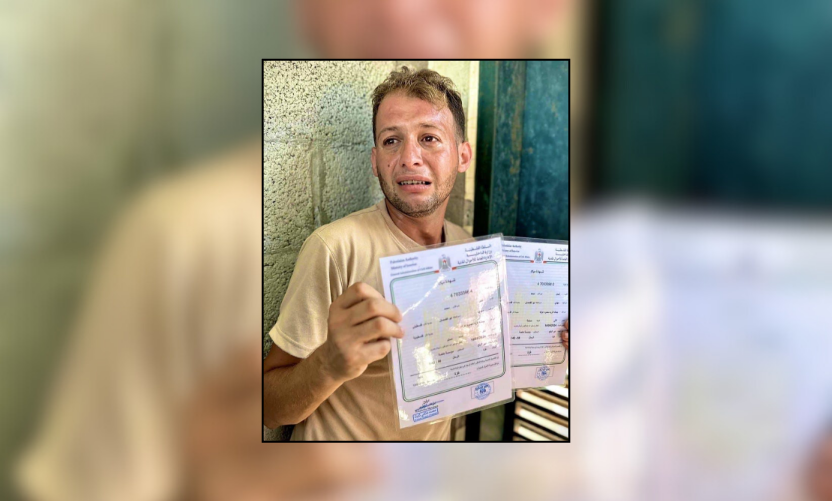
Muhammad was showing up on social media in videos screaming and crying like a child, distraught by his misfortune; people around him tried to hold him still, but he evaded them, trying to reach his family, who were killed in an Israeli airstrike. His brother hugged him and held him still, and people around him started praying to God to grant him patience.
Muhammad became a father to two beautiful twins on August 10. He went to the hospital to issue their birth certificates. He was eager to return home and show them to his family and celebrate with them, but he was too late.
“I did not have time to be happy with them,” Muhammad said with unstoppable tears.
I know Muhammad from school. He always had a beautiful smile on his face, even during the war. I remember he was a good singer at school.
When I saw his photos, I could not believe that it was the same person. I called him immediately, and he was almost unable to speak.
“There’s no one left for me, Tareq. They killed everyone. I couldn’t even see their faces to say goodbye.”
Muhammad could not come up with any reasonable reason for why his wife and newborn twins were targeted in their apartment in Deir al-Balah. They were alone in a house that Muhammad had been able to rent during the war instead of living in a tent. He had his pregnant wife’s well-being in mind when he secured the apartment, wanting to offer her as much safety as he could in light of the genocide.
He brought his babies everything he could before they were born. In a time when everything was mostly impossible to get, Muhammad had, over the months, collected clothes, a baby crib, soap, diapers, baby formula, a feeding bottle, and everything else that a baby needs.
“There was no time. I just left the house to go to the hospital, and that was the last time I saw them. My relatives near me called me when I was about to get back home. They asked, ‘Are you okay?’ I got worried and asked them what happened. They said, ‘your place was bombed and your family is moving to the same hospital that you’re in.’ I went to see them, but the hospital staff would not even let me see them. They were burned beyond recognition, and there were no faces to see.”
Muhammad’s wife, Dr. Jumana Arafah, was a physician working at the hospitals and published posts on her social media page showing children targeted by Israeli snipers.
The airstrike only killed Muhammad’s family in the building. People in Gaza considered this crime as part of the ongoing pattern of killing anyone exposing Israel’s crimes in Gaza, and Jumana was one of them.
Tareq S. Hajjaj
Tareq S. Hajjaj is a journalist and a member of the Palestinian Writers Union. Follow him on Twitter at @Tareqshajjaj.


So sad. Such pain. May all those affected somehow find peace.