

Editor’s note: This dispatch is a continuation of the ‘Operation Al-Aqsa Flood’ daily dispatches, which we have been publishing since October 7, 2023. Moving forward, the dispatches will be filed under the title ‘Israel’s Genocide’, though the subject matter will remain the same. We will continue to bring you updates of the latest events in Gaza and As we enter one year since Israel’s genocidal war began, we believe this new title best reflects the reality of the Palestinian experience on the ground in Gaza and across occupied Palestine.
Casualties
- 41,467 + killed* and at least 95,921 wounded in the Gaza Strip. 32,280 of the slain have been identified, including 10,627 children and 5,956 women, representing 60% of the casualties, and 2,770 elderly as of August 6, 2024. Some 10,000 more are estimated to be under the rubble*
- 718+ Palestinians have been killed in the occupied West Bank, including East Jerusalem. This includes at least 146 children.**
- Israel revised its estimated October 7 death toll down from 1,400 to 1,140.
- The Israeli army recognizes the death of 714 Israeli soldiers and the injury of at least 4,100 others since October 7.***
* Gaza’s branch of the Palestinian Ministry of Health confirmed this figure in its daily report, published through its WhatsApp channel on September 26, 2024. Rights groups and public health experts estimate the death toll to be much higher.
** The death toll in the West Bank and Jerusalem is not updated regularly. This is the latest figure according to the Palestinian Ministry of Health as of September 25, 2024.
*** These figures are released by the Israeli military, showing the soldiers whose names “were allowed to be published.” Israeli daily Yediot Ahronot reported on August 4, 2024, that some 10,000 Israeli soldiers and officers have been either killed or wounded since October 7. The head of the Israeli army’s wounded association told Israel’s Channel 12 that the number of wounded Israeli soldiers exceeds 20,000, including at least 8,000 who have been permanently handicapped as of June 1. Israel’s Channel 7 reported that according to the Israeli war ministry’s rehabilitation service numbers, 8,663 new wounded joined the army’s handicap rehabilitation system since October 7 and as of June 18.
Key Developments
- Gaza branch of the Palestinian Ministry of Health says death toll surpasses 41,467, with 95,921 wounded since October 7, including 33% children, 18.4% women, and 8.6% elderly; at least 115 Palestinian children born and killed by Israeli forces since October 7.
- The Palestinian Health Ministry says that Palestinian deaths at the hands of Israeli forces or settlers in the West Bank and Jerusalem have reached 718 since October 7.
- The Lebanese Ministry of Health says 1,247 Lebanese people have been killed, over 5,278 wounded in hundreds of Israeli airstrikes across Lebanon, especially in the south and the Beqaa Valley.
- The U.S. and France present a proposed ceasefire deal between Hezbollah and Israel for 21 days that would lead to a sustainable ceasefire; Reuters reports that U.S.-French proposal links both Lebanese and Gazan fronts in deal; Qatar says it has no knowledge of this linkage.
- Israeli admits it was struck by several drones from Iraq in the southern city of Eilat, says several Israelis wounded.
- Netanyahu office denies having reached any ceasefire agreement with Hezbollah after reports that the Israeli PM gave green light to such a deal.
- Israeli far-right ministers threaten to block Netanyahu’s budget plan if he approved a ceasefire deal prior to his office’s statement denying news about reaching a deal.
- Israeli opposition leader Yair Lapid says he will not accept any ceasefire proposal with Lebanon that doesn’t include moving Hezbollah’s units away from the border.
- Lebanese Ministry of Interior says that more than 70,000 Lebanese have been forced to flee their homes and towns since Israel launched its latest offensive on Lebanon last Monday.
- Israeli strikes expand to all of southern Lebanon, most of the Beqaa Valley, and Mount Lebanon.
- Hezbollah’s rockets reach Akka, Haifa, Tiberias, and the lower Galilee. The group’s military wing says it targeted a major airfield and military industries amidst Israeli censorship.
- Hezbollah launches one rocket at greater Tel Aviv area for first time since the war began, targeting Mossad headquarters.
- Israeli cabinet discusses possibilities of a ground invasion of southern Lebanon.
- Israeli daily Yediot Ahronot says Hezbollah has used less than 10% of its military capabilities so far.
- New York Times quotes a former Gaza division commander in the Israeli army saying that Hamas “took over cities minutes after Israeli forces withdrew,” adding that Israel “wins tactically, but Hamas wins at the end.”
- Hamas spokesperson Osama Hamdan says that the “resistance in Lebanon and in Gaza will not be separated.”
- Gaza health authorities refuse to receive 88 bodies returned by Israeli forces for lack of information and identification.
- Israeli strikes continue to target the Zeitoun neighborhood in eastern Gaza City and Khan Younis.
- Israeli forces raid Jenin and besieged its public hospital on Wednesday.
- Israeli forces kill three Palestinians in the West Bank in the past week.
- Israeli settlers bulldoze Palestinian farming lands in the villages of Um Safa and Arura, north of Ramallah.
- Armed Israeli settlers storm the Palestinian neighborhood of Sowana in Jerusalem and threaten residents.
Netanyahu denies news of ceasefire with Hezbollah as Israel continues to bomb Lebanon
Three Lebanese were reported wounded in an Israeli air strike that targeted a building in Beirut’s southern Dahiya district on Thursday. Israeli media said that the strike targeted the commander of Hezbollah’s air and drone unit, while the Lebanese Civil Defense hasn’t announced any fatalities as of the time of writing.
Israel has intensified its assault on Lebanon since last Monday, expanding its bombing campaign to reach dozens of new Lebanese towns in the south, the Beqaa Valley, and even in Mount Lebanon and Kisrwan.
Israeli airstrikes targeted the outskirts and some urban areas in the towns of Marjayoun, Nabatiyeh, Zahrani, Sarafand, Kharoub, Nabi Shit, Nahleh, Younin, and Breteil, as well as the surroundings and outskirts of the cities of Tyre and Sidon in the south and Baalbek in the Beqaa Valley.
In the town of Joun, some 13 kilometers from Tyre, an Israeli airstrike killed four people and wounded five more on Wednesday, while 11 residents of the town remain missing. In the town of Ain Qana, near Nabatiyeh, an Israeli strike killed three and wounded 13, while in the Baalbek region, Israeli strikes killed four Lebanese and wounded 38. In Bint Jbeil, Israeli strikes killed five members of a single family and a newborn baby from another.
Meanwhile, Hezbollah continued to launch rockets at Israeli targets in the Galilee. Hezbollah’s statements indicated that its rockets targeted the Israeli military manufacturer Raphael in the Haifa region several times. Hezbollah also announced targeting the Ramat David military airbase in the lower Galilee and the Ramat Motskin settlement between Haifa and Akka. Meanwhile, Hezbollah’s rockets continued to target the city of Safad and Kiryat Shmona in the upper Galilee.
Israeli alert sirens sounded throughout the week in all of the north, including the Haifa-Akka coastline and the Tiberias area in the eastern Galilee. Sounds of rocket explosions in the lower Galilee were heard by Palestinians from Jenin and other parts of the northern West Bank. Israeli military censorship continues to ban the publication of data concerning Israeli casualties.
Meanwhile, the U.S. and France presented a proposal for a 21-day ceasefire between Israel and Hezbollah that would give space for negotiations over a lasting ceasefire. While neither Hezbollah nor the Lebanese state officially responded, Israeli media reported on Wednesday night that Netanyahu had given the green light to the government to accept a ceasefire as long as it guarantees the return of evacuated Israelis to the north.
For their part, Israeli ministers in Netanyahu’s government, including Itamar Ben-Gvir and Bezalel Smotrich, threatened not to vote for Netanyahu’s budget plan if he approved a ceasefire deal. On Thursday morning, Netanyahu denied the Israeli media reports, insisting that the war on Lebanon would continue until the return of evacuated Israelis to the north.
Earlier on Tuesday, Netanyahu said in a cabinet meeting that the goal of the offensive against Lebanon was to separate the Lebanese and Gaza fronts, as Hezbollah has continuously refused to end its operations against Israel unless Israel ends its war on Gaza.
Israel launched its most recent offensive against Lebanon, killing over 1200 Lebanese since the escalation of hostilities and forcing some 70,000 to flee their homes.
Israel returns bodies of dead Gazans without identification
Palestinian medical directors at the Nasser Hospital in Khan Younis refused to receive some 88 bodies of Palestinians killed during the current Israeli assault on the Gaza Strip, as Israeli forces brought them in a container to deliver them to the hospital.
The persons to whom the bodies belonged were presumably abducted by Israel in the Gaza Strip throughout the war, although the bodies carry no identifying information. The hospital said that it would not receive or bury the bodies because before they were properly identified, calling upon the International Committee of the Red Cross to carry out its role in verifying the identities and details of the bodies before delivering them to the Palestinian side.
Israel has been withholding dozens of Palestinian bodies in Gaza since the beginning of its assault on the coastal strip last October. These join the 307 Palestinian bodies withheld after 2015 from across the Palestinian territories, in addition to over 200 bodies withheld between 1967 and the 1980s.
The director of the Gaza Government Media Office, Ismail Thawabteh, said that “the bodies arrived in a container, without previous coordination with Palestinian or international institutions, without identification, and without respect for the dead.”
Thawabteh added that Palestinian authorities refused to receive the bodies before receiving all relevant information pertaining to them. Thawabteh reiterated the calls for the Red Cross to “step up to its responsibility” in this regard.
For its part, the International Committee of the Red Cross reiterated the rights of families “to access any information relevant to their beloved ones, and to bury them with dignity according to traditions.” The Red Cross added that “individuals who lost their lives in armed conflict must be treated in a way that preserves their human dignity,” and that International Law stipulates that they must be searched for and retrieved.
Meanwhile, Israeli strikes continued to target Palestinian homes across the Gaza Strip. In Khan Younis, Israeli strikes killed six Palestinians on Thursday alone, including two children, while a woman was reported killed in a strike on a home in Jabalia.
Israeli artillery also shelled the Zeitoun neighborhood in eastern Gaza city, which has been targeted by Israeli strikes repeatedly in recent weeks. In the central Gaza Strip, Israeli shelling on Nuseirat hit a girls’ school that served as a shelter for thousands of Palestinians, wounding an unspecified number of Palestinians, although no deaths were reported.

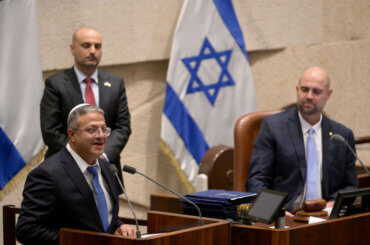
The West: Israel, how about considering a ceasefire?
Israel: If I say no, will you cut diplomatic, material, and financial aid to me?
The West: No.
Israel: I don’t want a ceasfire.
The West to the world: Sorry but we tried. But we will remain deeply concerned. And we are always committed to human rights of the world.