

Palestinians in Masafer Yatta, the grouping of 12 rural communities in the South Hebron Hills, face a new wave of Israeli attempts to displace them — this time for good.
On June 17, the Building and Planning Bureau of the Israeli army’s Civil Administration — the governing body in charge of administering urbanization in the West Bank — issued an order allowing military drills in the so-called Firing Zone 918, which includes most of Masafer Yatta and its communities. This order effectively gives the military commander of the area a green light to forcibly displace its inhabitants, especially since it included the rejection of all building plans submitted by Masafer Yatta’s mayorship.
Palestinians fear that this development means that a final crackdown on Masafer Yatta’s inhabitants is imminent.
The order comes amid recent escalations by the Israeli army and Israeli settlers against the rural communities. In early May, the Israeli army demolished all Palestinian structures belonging to the community of Khallet al-Dabe’, including homes and livestock barracks, forcing its roughly 150 inhabitants to leave.
Jaber Dababseh, a Khallet al-Dabe’ resident in his late thirties, told Mondoweiss that the demolition happened in two rounds. “First, they demolished 70% of the area a month ago, including water wells,” Dababseh said. “Then they came back again after we had put up new tents. They tore those down, too, and destroyed the rest of the houses. They flattened everything, except for two homes and the school.”
After that round of demolition, settler attacks increased, Dababseh said. “They started destroying and vandalizing farmland, and they brought in flocks of sheep,” he explained, referring to the settler practice of stealing Palestinian land through so-called “shepherding outposts.”
Dababseh continued: “When we tried to defend ourselves, the Israeli Civil Administration said, ‘This land isn’t yours anymore. Your house is gone, go live in Europe.’ The army then came to provoke us, and they said, ‘What are you doing here without homes? How are you still here?’”
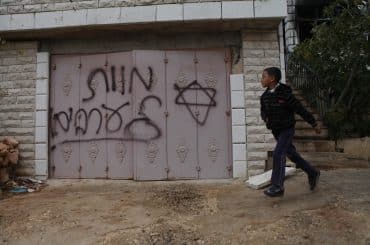
Last week, Israeli settlers attacked Susiya, another community in Masafer Yatta, at 1 a.m., setting fire to a farmer’s home. The owner, Nasser Shreiteh, told Anadolu Agency that he was in the house with his wife and seven children, and that they escaped the fire at the last moment. Israeli settlers also beat and injured a Palestinian woman in the village in her forties, Rabiha Nawajaa.
The slow ethnic cleansing of Masafer Yatta
The people of Masafer Yatta have been engaged in a legal battle to prove their right to live in their communities since the year 2000. For the past 25 years, Israeli authorities have continued to systematically demolish any new structures added by Palestinians in the “firing zone,” preventing them from building roads or receiving services.
Nidal Younis, the mayor of Masafer Yatta, tells Mondoweiss that a hearing in Israeli courts scheduled for July 20 would address a petition for a building permit in one of the 12 communities, Isfey. “And then we have more hearings scheduled later for other communities, but now we know for a fact that these hearings are going to all end in outright rejection,” Younis says.
But according to Younis, the people of Masafer Yatta have spent millions of shekels on legal cases just to buy themselves some time, but the ultimate ruling always comes down on the side of the army. “We’ve been battling in the Israeli court system for so long that we know how it works by heart,” he explains. “The judge seems to act professionally, hearing all our testimonies and debating with fellow judges, to the point that one thinks that they are really trying to do justice. Then, an Israeli army officer comes in and gives the army’s account, which is usually the same: the army has a vital need to train in the area, and they need to remove the communities for security reasons. Then the judge gives the ruling, which is a word-for-word repetition of the army’s arguments.”
Now, with the new order by the Civil Administration, the court doesn’t even need to hear the community members’ concerns, Younis explains. Today, the army’s claim to extend its “firing zone” is stronger than ever, because it can say that it’s engaged in a war and needs the area to train. “We expect that the hearings will be a formality just so they can go through the final legal procedure before physically expelling us from the area,” Younis says.
The Civil Administration order to allow the army to conduct drills in Masafer Yatta is based on a document issued last week by the army’s Central Command. According to the document, the residents of the area must be expelled “using the full range of civilian and security tools at [the army’s] disposal.”
Annexation plans 40 years in the making
Masafer Yatta’s 36 square kilometers have been in the crosshairs of Israeli plans for settlement expansion for over 40 years. Israel declared the area a “Firing Zone” in 1980, a year after Ariel Sharon, Israel’s then-Minister of Agriculture, told representatives of the World Zionist Organization’s settlements committee that “firing zones” in the West Bank would be used as “land reserves for settlements,” as recently revealed by Israeli outlet +972 Magazine, which reported on the classified minutes of the meeting.
The population of roughly 2,000 Palestinians has been forced to live in harsh conditions, often rehabilitating the caves spread across the area into houses in order to avoid their demolition. Meanwhile, Israeli settlements have increased in the area, receiving the Israeli state’s largesse in service provision, security, and urban planning.
According to cartographer and settlement expert Khalil Tafakji, “the Israeli plan for Masafer Yatta is the extension of the settlement plans for the Jordan Valley, [which are] included in the Allon Plan of 1972.”
Just like the Allon Road bordering the Jordan Valley led to the expulsion of Palestinian communities east of Nablus and Ramallah, Israel’s plans in Masafer Yatta aim at doing the same with Hebron and its surrounding villages. “It is meant to isolate Masafer Yatta from the Dead Sea to the east and from the Green Line to the south,” Tafakji explains. “It would contain the Palestinian demographic presence in major city centers, isolating them completely and annexing some 27% of the West Bank to Israel.”
Tafakji says these details were all included in Benjamin Netanyahu’s annexation plan of 2019, and is now part of hardline Finance Minister Bezalel Smotrich’s recent “Decisive Plan” aimed at annexing the West Bank.
“None of this is secret,” he adds. “It never was.”

Zionism, as evidenced in Masafer Yatta, exposes itself as an inherently exclusionary and oppressive ideology. The forced displacement of non-Jews, enabled by military orders and legal manipulation, reveals Israel’s true agenda: ethnic cleansing under the guise of security.
The consistent demolitions, settler violence, and legal obstacles faced by non-Jewish communities highlight how Zionism has evolved from a movement for Jewish self-determination to one that prioritizes Jewish identity and rights over those of anyone who is not Jewish. The use of military zones to seize land and the normalization of settler violence demonstrate that Zionism operates as a mechanism for territorial conquest, systematically disempowering non-Jews in the process.
Masafer Yatta’s displacement is part of a broader Zionist strategy to erase any non-Jewish presence in areas under Israeli control. Zionism still is a colonial project that seeks to maintain a state built on Jewish supremacy, rather than peace or justice for all.
You have to wonder why they bother with this nonsense, since the entire West bank is already a free-fire zone for the IDF and armed settlers. But when your entire society is a patchwork of lies (“A land with out people for a people without land”, etc.), it takes ever more lies to try to cover up what is happening.
Death, death – from the IDF.