As a key deadline approaches in the United Nations General Assembly, a little-used UN mechanism, immune from the US veto, could bring military protection to the Palestinian people – if we demand it.
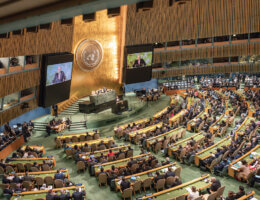

As a key deadline approaches in the United Nations General Assembly, a little-used UN mechanism, immune from the US veto, could bring military protection to the Palestinian people – if we demand it.

While Chancellor Friedrich Merz’s announcement that Germany is stopping arms deliveries to Israel made international headlines as a shocking policy reversal, the details tell a different story.
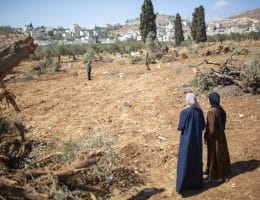
Israel uprooted 10,000 olive trees in al-Mughayyir during a three-day siege of the West Bank Palestinian village. The Israeli army stated that uprooting the trees was intended to “deter” village residents and make them “pay a heavy price.”

Democratic National Committee members rejected a resolution calling for an arms embargo on Israel, but pressure continues to mount on party leaders to adopt a stronger stance against the Gaza genocide.

The Israeli army carried out one of its most extensive raids on the city center of Ramallah in years, firing at civilians with teargas, stun grenades, and live ammunition.

The Israeli army carried out a ‘double-tap’ strike on the Nasser Hospital in Gaza, killing at least 20 people, including five journalists who worked for Al Jazeera, Reuters, and the Associated Press.
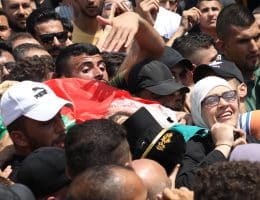
United in grief over their sons, either killed or jailed by Israel, these Palestinian mothers formed a “league” to support one another. But as Israel’s violence expands, and new mothers join their league, the group is finding it harder to operate.

Hundreds of scholars, educators, and education practitioners condemn Harvard Educational Review’s cancellation of a special issue on Palestine, saying it aims to silence discussion of the genocide and dehumanization of the Palestinian people.

From August 29-31, thousands of Palestine supporters will gather in Detroit, Michigan, for the second annual People’s Conference for Palestine, guided by the principle: Gaza is the Compass.
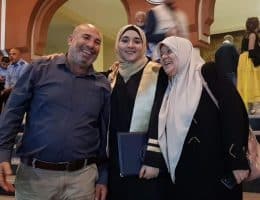
Reem Hamadaqa is among 70 Palestinian students accepted into Canadian graduate programs who are unable to leave Gaza due to the Israeli siege and genocide. The students are calling on the Canadian government to defend their right to education.