
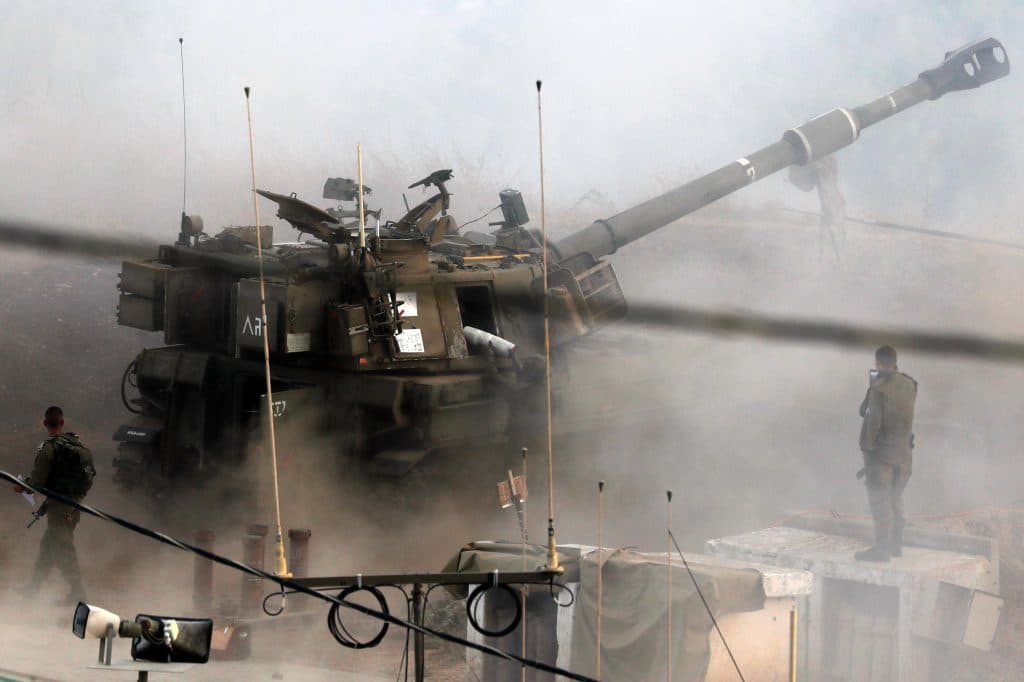
Israel has entered a new era of territorial expansionism and military aggression beyond the borders of historic Palestine. Its belligerent actions have accelerated across Jordan, Lebanon, Syria, Yemen, Iran, Qatar, Libya, and most recently, Somaliland. These developments aren’t due to a change in Israeli strategic ambitions, but rather to the loosening of constraints that had kept it bounded before October 2023.
This expansionist turn reflects a structural recalibration of risk, leverage, and international tolerance rather than a sudden ideological shift. But it is also due to the way Israel’s economy is now structured: the military industry has been carrying the economy ever since Israel experienced a level of global isolation that decimated most other sectors over the past two years. The result? Israel now has an additional structural incentive to be in a perpetual state of war.
Prime Minister Benjamin Netanyahu gave voice to this reality when he announced that Israel would need to become a “super Sparta” — a highly militarized warrior state with a self-sufficient military industry, capable of defying international pressure and arms embargoes because it no longer has to rely on American military beneficence.
A crucial recent strategic declaration sharpens this trajectory. In January 2026, Prime Minister Benjamin Netanyahu announced his intention to end U.S. military aid to Israel within roughly a decade, framing this as a path toward military-industrial self-sufficiency and strategic autarky. This announcement signals that Israel is no longer content to remain subordinate to the U.S., instead seeking to operate as its strategic partner in the region at a time when the U.S.’s national security strategy is shifting attention from the Middle East to the Western Hemisphere.
Netanyahu’s declaration amplifies the urgency of the export-led growth model, which is largely based on arms and defense-linked industries. The problem is, if Israel is to replace $3.8 billion in annual U.S. military aid, it must dramatically scale up its domestic production and export capacity.
Also read: Israel moves to embrace its isolation.
The Israeli state is attempting to institutionalize this export surge through policy, committing roughly NIS 350 billion (equivalent to $100–108 billion) over the coming decade to expand an independent domestic arms industry. Economically, this means that military production will become central to Israel’s long-term industrial strategy, diverting capital, labor, and state support toward weapons manufacturing rather than civilian recovery, a strategy that is untenable during wartime. This also embeds Israeli firms deeper into global security supply chains, even as the state itself becomes diplomatically isolated.
The structural dimension: incentive for permanent war
Since 2023, Israeli military exports have become one of the few sectors compensating for its broader economic slowdown. In 2023, defense exports reached approximately $13 billion, and in 2024 they climbed further to around $14.7–15 billion, setting successive records. This expansion took place while civilian economic growth weakened, labor shortages and unemployment intensified due to the prolonged mobilization of the army, and large segments of the small and medium enterprise sector reported sustained losses and bankruptcies. Arms exports essentially functioned as a countercyclical stabilizer during wartime stress, but now they’re becoming a permanent part of how the Israeli economy aims to reproduce itself.
In 2025, this trajectory accelerated even further. Israel signed some of its largest defense agreements to date with the U.S., UAE, Germany, Greece, and Azerbaijan, covering air defense systems, missiles, drones, and advanced surveillance technologies. While full contract values are not always disclosed, these deals are expected to push total defense exports beyond the 2024 record, reinforcing the arms sector as Israel’s most dynamic export industry, even as other exports, such as agriculture, face an imminent “collapse,” according to Israeli farmers.
The war economy has become the organizing principle of political survival and regime insurance.
As civilian sectors stagnate, the war economy provides growth, foreign currency earnings, and political insulation. This creates a structural incentive for permanent mobilization: war sustains demand, shields the government from accountability, and reinforces a worldview in which force is treated as the primary currency of international relations.
In this configuration, military aggression and territorial expansionism are the mechanisms through which the Israeli economy now seeks to reproduce itself. As a result, Israel’s governing coalition rests on permanent securitization. The war economy has become the organizing principle of political survival and regime insurance.
The global dimension: the end of international law
The international dimension is equally decisive. Israel’s territorial expansionism and military aggression have been enabled by the hollowing out of global constraint mechanisms such as international law.
Western states have demonstrated that there is no meaningful red line when violence is framed as counterterrorism or civilizational defense. Legal norms remain rhetorically intact but operationally suspended. This has altered Israel’s strategic calculus, because if Gaza produces diplomatic noise but no material sanctions, then Lebanon, Syria, or Iraq carries even lower expected costs.
The collapse of normalization: no reason to play nice
Normalization politics also play a role. The collapse of Israeli-Saudi normalization talks — which had accelerated throughout 2023 under U.S. mediation but stalled after Israel launched its genocide in Gaza — did not discipline Israeli behavior, but liberated it.
Without Saudi recognition serving as a bargaining chip or incentive for restraint, Israel abandoned any pretense of using territorial compromises as a negotiating tool. It doubled down on the objective of establishing facts on the ground while seeking bilateral security ties with smaller or more vulnerable actors. Expansion now substitutes for Israel’s dying soft power, and recognition is increasingly extracted through leverage rather than negotiation.
What makes the post-2023 moment distinctive is Israel fighting across multiple theaters simultaneously, in the open, and with confidence that escalation will not trigger systemic pushback. Furthermore, Israel’s strategy has become structurally enabled by an ever-increasing reliance on new technologies developed during war. It is no longer a response to threats but a method of governance at home and influence abroad.
Since 2023, Israel has no longer pursued peace through containment, as it did during the Arab Spring period. Instead, it has shifted toward permanent occupation, land seizure, and the redrawing of political maps to sustain and expand its war machine.
How Israel is pursuing regional dominance
Domestically, Israeli territorial expansionism aims to permanently resolve the Palestinian question through a combination of expulsion, cantonization, co-optation, and ultimately displacement. The underlying logic is to eliminate what is perceived as Israel’s primary domestic security problem — the very presence of the Palestinian people on their land — once and for all, thereby restoring elite and societal confidence in the long-term survival of the state.
At the regional level, Israel pursues diverse objectives across the countries in which it intervenes, some involving territorial acquisition or semi-permanent occupation, others focused on subordination, fragmentation, and neutralization of perceived threats.
In Iran, aggression takes the form of seeking regime destabilization and military degradation through sustained airstrikes on nuclear and military facilities, alongside efforts to exacerbate social and political unrest. The June 2025 war between Israel and Iran marked the most direct military confrontation between the two states to date, yet it terminated in an informal pause rather than escalating into full-scale war, with neither side crossing recognized deterrence thresholds despite the intensity of exchanges.

Since then, large-scale protests inside Iran have introduced a new internal pressure point that external actors increasingly frame as a strategic vulnerability. This has coincided with explicit threats of war from Donald Trump and renewed U.S. military signalling, which together reinforce Israel’s long-standing view of Iran as an existential threat to be confronted through regime change. Yet the persistence of non-escalation reflects how aggression against Iran operates within implicit boundaries that territorial expansionism in Palestine or Syria does not face, even as the fusion of internal unrest and external coercive rhetoric makes this equilibrium more fragile.
In Lebanon, Israel seeks to dismantle Hezbollah not only as a military actor but as the backbone of a Shiite-led political order that obstructs Israeli regional dominance. The deeper objective is to fracture Lebanon into a minorities-based system in which Druze, Christians, and other groups are incentivized to seek external protection and economic linkage with Israel. A weak and segmented Lebanon provides strategic depth without the costs and liabilities of direct occupation. For now, the cross-border escalation in Lebanon functions less as a pathway to outright military victory and more as a tool for reshaping Lebanon’s internal political balance over time.
As of January 2026, despite the ceasefire nominally holding, Israel has maintained “temporary” positions in five “strategic” locations in southern Lebanon, refusing to complete its withdrawal. The result is a tense stalemate in which Israel maintains military leverage over Lebanon while withholding its commitment to a full withdrawal and leaving open the possibility of renewed major escalations.
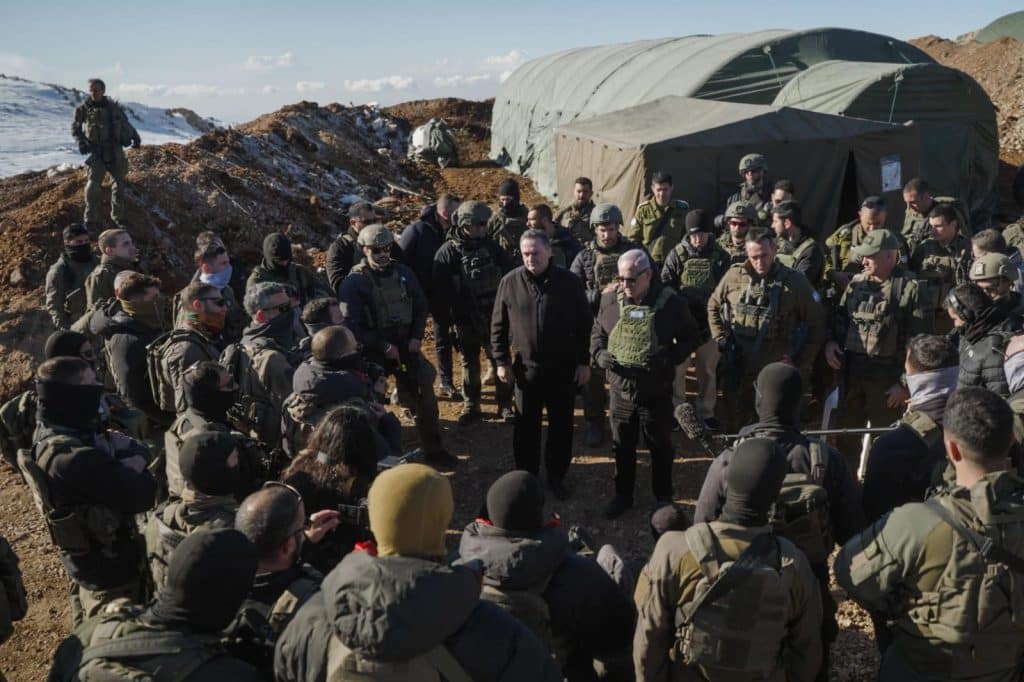
Israel’s strikes across Syria are somewhat more complex, becoming a central theater of Israeli military intervention and engineered political fragmentation following the fall of the Assad regime in December 2024. The Israeli strategy in Syria involves both direct military action and efforts to prevent unified Syrian state consolidation by providing military support for and coordination with Syrian Kurdish forces (the SDF) aimed at fragmenting the new Syrian government’s authority.
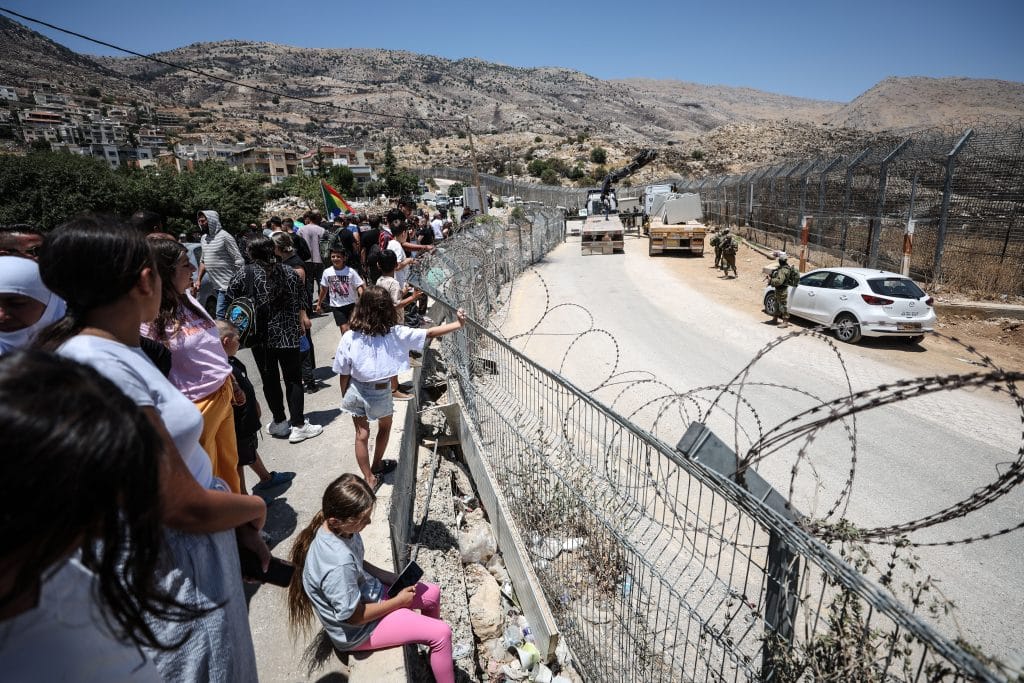
In March 2025, Israeli Defense Minister Israel Katz publicly announced that Israel would permit Syrian Druze workers to enter the Golan Heights for agricultural and construction work, framing this as a humanitarian gesture while simultaneously cultivating labour dependencies and economic ties that bind border communities to Israel. In July 2025, Netanyahu adopted a formal policy of “demilitarization of southern Syria,” declaring that Israeli forces would remain in southern Syria indefinitely and that no Syrian military forces would be permitted south of Damascus, effectively partitioning Syrian territory. Netanyahu framed this policy as “protection of the Druze.”
Israel’s setbacks in Syria
By late 2025 and early 2026, the SDF’s position had collapsed. Arab tribal defections in Raqqa and Deir Ez-Zour, mounting pressure from Turkish forces to the north, and a lack of sustained external support led to a rapid SDF retreat from much of northern and eastern Syria by January 2026. This collapse of Israel’s primary Kurdish proxy, coupled with the failure of Israeli-backed Druze militia resistance to prevent Damascus’s consolidation of authority in southern Syria, has undermined Israel’s strategy of preventing unified Syrian state reconstruction through proxy warfare.
The Druze and Alawite populations represent potential economic and demographic assets at a time when Israel faces a structural shortage of both soldiers and workers. Since 2023, this shortage has become acute. The Syrian periphery offers a pool of labor that can be selectively incorporated under autonomy arrangements or informal annexation, which Israel has already done by allowing a number of Syrian Druze to work in the Golan Heights. What is emerging is a strategy of economic annexation without formal borders, integrating the southern Syrian periphery into the Israeli economy on subordinate terms.
As for Yemen, its alignment with Gaza and its demonstrated capacity to disrupt Red Sea shipping have elevated it from a peripheral conflict to a strategic threat for Israel, especially since Ansar Allah’s blockade undermines Israel’s global trade architecture and its security relationships with Western shipping insurers, logistics firms, and port operators.
Yemen’s growing ties with Russia and China have only compounded this threat. That’s why attacking Yemen isn’t about Yemen alone, but about preserving a Western-aligned maritime order in which Israel is embedded as its key security node.
This is where Israel’s recognition of Somaliland comes in, allowing Israel to bypass internationally recognized states and to work directly with sub-state entities. Somaliland has allegedly agreed to have an Israeli military base established in the territory and to accept displaced Palestinians from Gaza in exchange for this recognition.
Regarding direct Israeli involvement in North Africa more broadly, Israel has not pursued direct military operations in Egypt or sustained military intervention in Sudan or Libya, but it has pursued indirect strategies of influence and intelligence gathering, from maintaining contacts with both sides of the Sudanese civil war to secretly meeting with Libyan officials before October 2023.
The costs of expansionism and potential for resistance
While Israel’s current trajectory is being framed domestically as a triumph, its long-term outlook remains grim and costly. Permanent war locks Israel into permanent military mobilization, accelerates demographic and moral exhaustion, and increases long-term exposure to asymmetric retaliation from Palestinian resistance, Syria, Lebanon, and others.
Each absence of consequence recalibrates expectations on both sides. Within Israel, it reinforces the belief that force carries no meaningful cost. Among those targeted, it sharpens incentives to develop longer-horizon strategies of attrition and retaliation. Geographic overreach further compounds these vulnerabilities. Israel’s efforts to embed itself within overseas military infrastructures in places such as Somaliland and southern Yemen (and to establish bases through regional proxies like the UAE) expose Israel’s operational reach to extended supply lines that are distant, insecure, and vulnerable to interdiction.
Rather than Israeli-operated facilities, these arrangements rely on third-party bases (principally Emirati), whose stability depends on shifting regional power dynamics and state priorities beyond Israel’s direct control. Maintaining an effective presence at such a distance raises the likelihood of further military stumbling blocks, financial constraints, and unanticipated entanglements that may prove difficult to sustain over time, especially as Yemen’s Ansar Allah threatens to target any future military bases in Somaliland.
Re Israel’s war economy, this is from 2017 but nothing has changed:
Israel maintains robust arms trade with rogue regimes…Myanmar, which is conducting a ‘textbook ethnic cleansing’ of its Rohingya minority, is among the beneficiaries….Israel has not divulged details of its ties to Myanmar’s military government, but public records show that it has sold the military there armed patrol boats, guns and surveillance equipment. Myanmar’s special forces have also been trained by Israelis….Israeli firms have also broken with the United States and Europe by supplying weapons and surveillance equipment to militias in South Sudan, where a civil war has raged since late 2013. Some 300,000 Sudanese are believed to have been killed in the fighting….“Many Western states sell arms, but what’s unique about Israel is that, wherever war crimes and crimes against humanity are being committed, you find Israel is present,” Mack told Al Jazeera….
Israel maintains robust arms trade with rogue regimes | News | Al Jazeera
International construction unions denied entry to the occupied Palestinian territories – BWI: Israel on 2 February refused entry to the West Bank to an international delegation of construction trade unions, seeking to meet Palestinian construction workers. The delegation included the General Secretary of the Building and Wood Workers’ International (BWI), representing more than 12 million workers worldwide, together with trade union leaders from Belgium, France, Spain, and South Africa.
For Israel, power is the ability to destroy. (Not only for Israel!) It has been Sparta, not Athens, for a very long time.
And yes, it can make a lot of money selling arms and “security products.” Will that work over the long haul? I’d like to say no, but I’m afraid it probably will. So long as Jewish Israelis are willing to put up with continuing impoverishment.
Oh, dear. No matter what you think about war and peace, desecrating war graves is a no-bo:
https://www.theguardian.com/world/2026/feb/04/idf-bulldoze-gaza-war-cemetery-allied-graves-satellite-images
“Western states have demonstrated that there is no meaningful red line when violence is framed as counterterrorism or civilizational defense….”
________________________________________________
Ilan Pappe:
“What is still missing is that the Palestine national movement itself has to get its act together so these processes … would not lead to something worse but would open the way for building something better for everyone.”