Last week, I had a conversation with a man in his early eighties who has been involved in Republican Party politics for most of his adult life. Not the MAGA variety. This was the older kind, the New Deal-era Republican who believes in civic participation, thinks maximizing voter turnout is intrinsically good, and approaches political disagreement as something to be reasoned through rather than weaponized. He had heard about Zohran Mamdani’s win in New York and recognized it as the product of real political talent and real campaign work. He asked good questions about the war on Iran. He was open to being persuaded. And when I described what is happening in historic Palestine and across the region as a colonial project of territorial expansion, he immediately understood the concept.
The gap in his understanding is not surprising. This is an intelligent, engaged, politically experienced man in his eighties, and the basic structural reality of Israeli politics had never been accurately presented to him. This is the predictable result of a media environment in which Fox News and MSNOW (formerly MSNBC) alike, conservative and liberal corporate media across the board, systematically center the Israeli narrative in their coverage of this conflict. The result is an American public that is structurally prevented from understanding what is actually happening. It is why an eighty-year-old lifelong political observer could ask me, genuinely, who would replace Netanyahu, and be surprised by the answer.
The Israeli political spectrum is almost entirely unified around the core colonial project that drives the genocide, the ethnic cleansing, the annexation, and the expansion. What remains of the Israeli “left” does not offer a meaningfully different future. In that context, Netanyahu occupies something close to the Israeli center. His likely successors, people like Itamar Ben-Gvir and Bezalel Smotrich, are so far to the right that most Americans would not recognize them as holding basic moral or ethical beliefs. They do not conceal their desire to expel or murder Palestinians and, more broadly, Arabs from the territories they believe God gave to Jews.
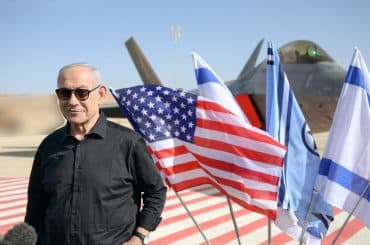
This is why Mondoweiss exists, and why what we do is different. We center the Palestinian narrative, not as a corrective gesture, but because it produces a more accurate picture of reality. When you start from Palestinian experience and Palestinian testimony, the events in Gaza, the West Bank, Lebanon, and Iran are not confusing or ambiguous. They are the elements of a political project that has been consistent for decades and is now accelerating. This week, Jonathan Ofir published a piece that looks at exactly this reality. A recent Israel Democracy Institute poll registered Jewish-Israeli support for the war on Iran at 93%, not only on the right but across the entire Zionist political spectrum. Support runs at 97% on the right, 93% at the center, and 76% on the Israeli “left.” The leader of The Democrats, the merger of the Labor party and the further-left Meretz party, offered the military his “full backing.” Yair Lapid, the centrist opposition leader whom Western media regularly holds up as the reasonable alternative to Netanyahu, recently confirmed that territorial ambitions stretching from the Euphrates to the Nile were intrinsic to Zionism because, as he put it, “Zionism is based on the bible.” At the Israeli parliament in 2015, Netanyahu was asked whether Israel would forever live by the sword. His answer was yes, and he tied that directly to territorial control.
The moral dimension of that consensus is visible in a second piece from Jonathan this week, on the soldiers who gang-raped a Palestinian prisoner at the Sde Teiman detention facility. The case was recently closed by Israel’s newly appointed Chief Military Advocate. Defense Minister Israel Katz met with the soldiers, apologized to them, and instructed the military to return them to service. Netanyahu issued a statement calling the case a “blood-libel” against heroic fighters confronting, in his words, “the worst of our enemies.” This is not an aberration. It is what impunity looks like when it becomes policy. A society that polls at 93% for a war of aggression and celebrates men who raped a prisoner is not a society drifting toward extremism. It has already arrived there.
What makes this moment distinct from earlier cycles is the role of the United States. Netanyahu has long sought to pull American military power directly into the Israeli colonial project. He has finally succeeded with the sheer ineptitude of Donald Trump and the servility of the people around him. Joe Kent said it plainly in his resignation letter from his post as White House counterterrorism chief. “Iran posed no imminent threat to our nation, and it is clear that we started this war due to pressure from Israel and its powerful American lobby,” he wrote. The media’s response has been to dismiss Kent as an antisemite rather than engage with his claims, a pattern Philip Weiss documents in his piece this week.
The consequence of all this falls first, as always, on Palestinians. In Gaza, Israeli restrictions on aid, tightened during the Iran war, have driven food prices to crisis levels and raised fears of a return to famine. In the West Bank, an Israeli special forces unit shot into a car carrying the Bani Odeh family as they returned from holiday shopping, killing both parents and two children, leaving two young brothers alive to recount being dragged and beaten by soldiers afterward. The Iran war gives Israel the conditions and the cover to accelerate the genocide and the ethnic cleansing of Palestinians without the usual level of international scrutiny.
Understanding what is happening in Gaza, Lebanon, the West Bank, Iran, and inside the United States requires understanding that these are not separate crises. They are one project. The sword Netanyahu promised Israel would live by forever is being carried right now, and the United States has its hand on it as well.
This week, we also published an interview with Mahmoud Khalil, one year after his arrest. His arrest opened a wave of suppression that has not subsided. His conversation with Michael Arria is worth your full attention.
🇮🇱 Israeli society and the regional war
Israel’s near-total support for the war on Iran is the expression of a political culture that has made permanent expansion inseparable from national identity. This week, Jonathan Ofir examines both the numbers and the moral rot underneath them.
READ MORE → ‘Forever live by the sword’: Understanding Israelis’ massive support for Iran war — Jonathan Ofir
READ MORE → Israeli soldiers who gang-raped Palestinian prisoner are now free to return to military service — Jonathan Ofir
🇵🇸 Palestine under the cover of war
The Iran war has given Israel the conditions it needs to tighten the siege on Gaza and intensify the killing in the West Bank, away from the world’s attention.
READ MORE → Food shortages return to Gaza as Israel tightens aid restrictions under the cover of its war on Iran — Tareq S. Hajjaj
READ MORE → Israeli army killing of Palestinian family sends shockwaves throughout the West Bank — Qassam Muaddi
🇱🇧 Lebanon
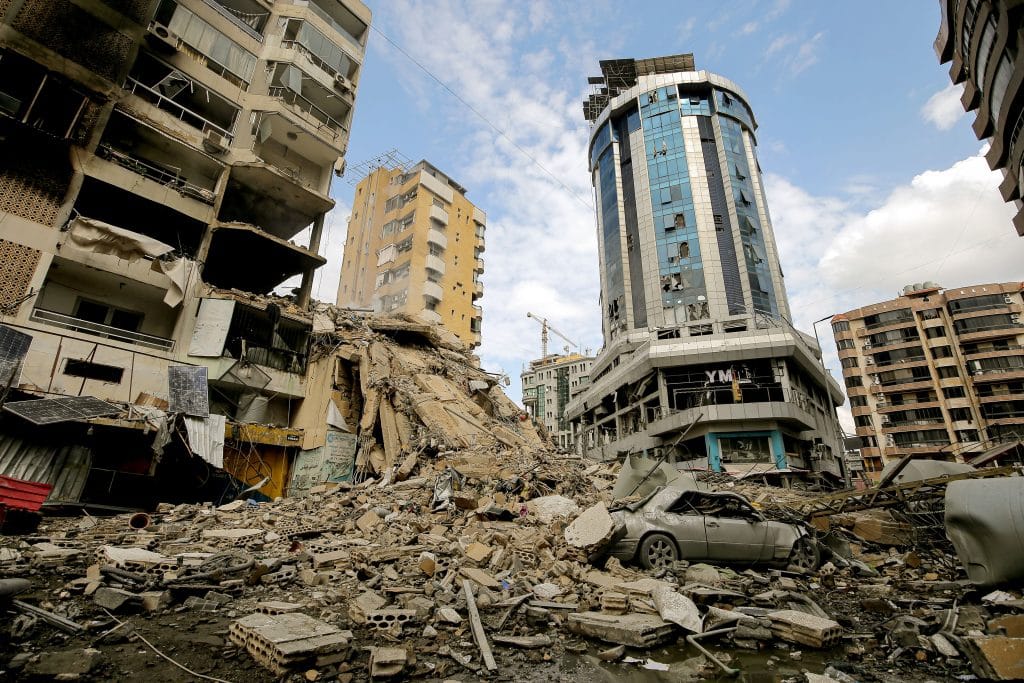
Israel’s war in Lebanon is meant to break the peopel’s will, displace them, and project dominance over civilian life.
READ MORE → The Gods must be cruel: Inside Israel’s psychological warfare campaign in Lebanon — Mayssoun Sukarieh
READ MORE → This Lebanese village resisted two Israeli commando drops last week. Here’s why Israel is targeting it. — Layla Yammine
🇺🇸 United States
The war on Iran has exposed fractures on the right over the Israel lobby’s role, and in Democratic politics over a base that has moved decisively against Israel while much of the party leadership has not. Repression of the Palestine solidarity movement continues.
READ MORE → Instead of taking Joe Kent’s claims seriously, the media is disregarding him as an antisemite — Philip Weiss
READ MORE → Trump suggests treason charges for journalists as Iran war spins out of control — Michael Arria
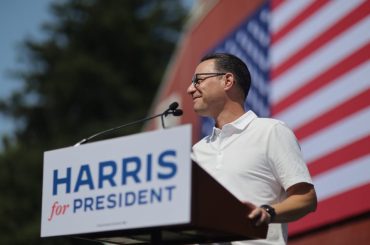
READ MORE → The Shift: Presidential hopeful Josh Shapiro is out of step with Dem voters on Israel — Michael Arria
READ MORE → AIPAC wins, and loses, big in heated Illinois Democratic primaries — Michael Arria
READ MORE → A year after his arrest, Mahmoud Khalil speaks on the status of his case and the ongoing fight for a free Palestine — Michael Arria
🌍 International
Israel’s project of regional domination is reshaping political alignments around the world.
READ MORE → Anger in the GCC spreads as Iran retaliates over U.S.-Israeli strikes — Mitchell Plitnick
READ MORE → Meet Nasry ‘Tito’ Asfura, Honduras’s new Christian Zionist president of Palestinian descent, who is looking to deepen ties with Israel — Ana Maria Monjardino
READ MORE → Irish PM’s St. Patrick’s Day visit with Trump sparks backlash in Ireland — Jeanne Connerney