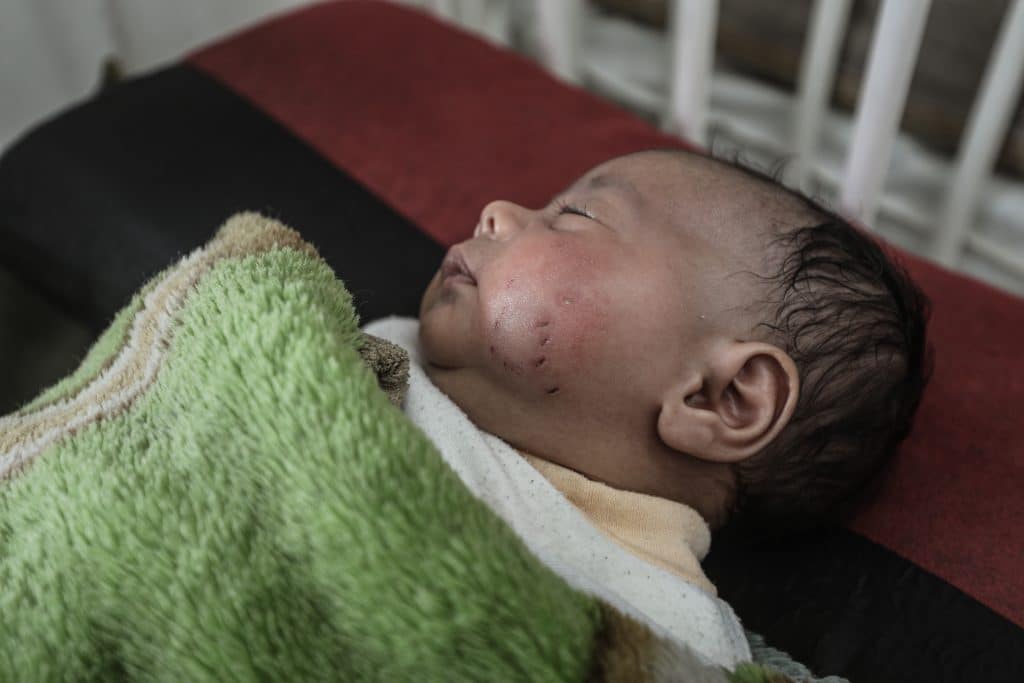
On a dark night, the al-Ustaz family of four slept on the wet ground in a tent, surrounded by rubble and sewage. They woke to the screams of one-month-old Adam, crying in a way unlike anything they had heard before. His mother reached for him in the dark and woke his father, who turned on his phone’s flashlight. The newborn’s face was covered in blood.
At first, the family thought a small insect had bitten the baby, but the amount of blood was too much. The father soon spotted a large rodent, about the size of a rabbit, he says. He realized it had attacked his baby inside the tent.
The al-Ustaz family’s ordeal is the latest in a series of stories about an infestation of rats and mice in displacement camps across Gaza, leading to several reported cases of children being bitten in their sleep.
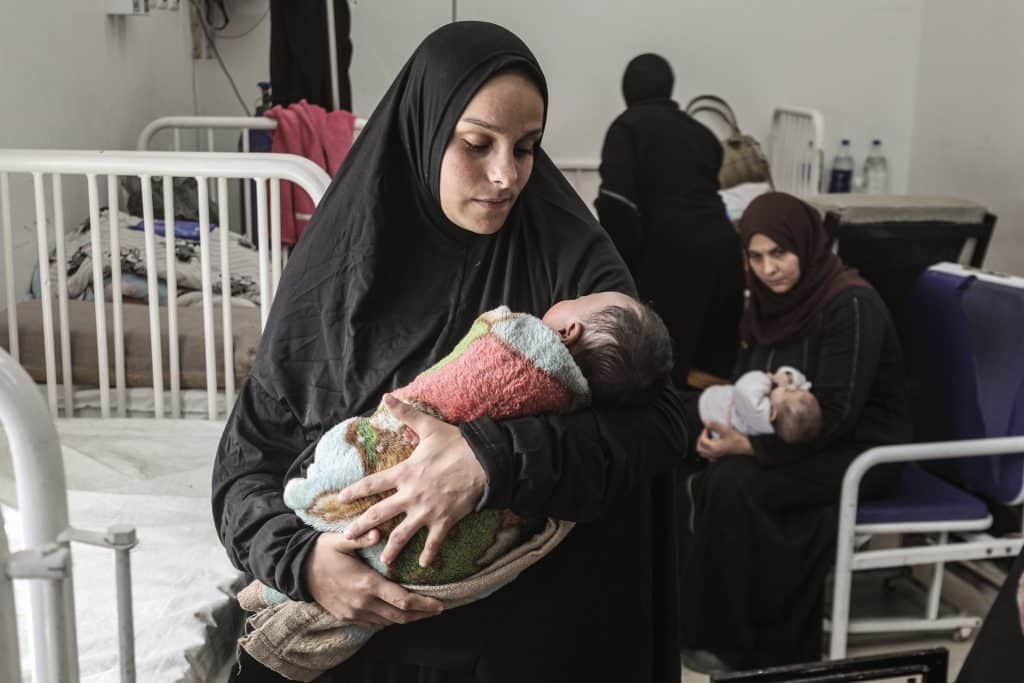
Once the family realized what had happened, they left the tent and went to al-Rantisi Hospital, west of Gaza City.
‘I’m afraid of life inside a tent now’
In video testimony for Mondoweiss, Adam’s mother, Yasmeen al-Jamala, 31, says that Adam’s mauling will likely leave lasting scars. She says that the lack of basic sanitation and hygiene in the displacement camp allows for rodents to freely move in and out of tents that cannot be securely closed. She added that the animals can burrow underground and enter from below. The rodents’ size and appearance are also alarming, she adds, with some “as large as cats or rabbits,” frightening children in the camp.
The incident left al-Jamala fearful of returning to her tent. “I’m afraid rats are going to attack my children again,” she says. “I’m afraid of life inside a tent now.”
She said Adam had been sleeping beside her and that she had only just fallen asleep before his screams woke her. “I wish I hadn’t slept. I wish I had stayed up all night guarding my son,” she says.
Al-Jamala said the attack has left her with recurring nightmares. Usually, it is that something is chasing and biting her one-month-old son and her two-year-old daughter, or that she wakes up to see them already bitten. “I have lost my ability to sleep after this incident,” she said. “I always see my children being attacked in my dreams.”
The father, Yousef al-Ustaz, 33, emphasized that the rodent also had leaped toward Adam’s face, underscoring its aggressiveness, he said.
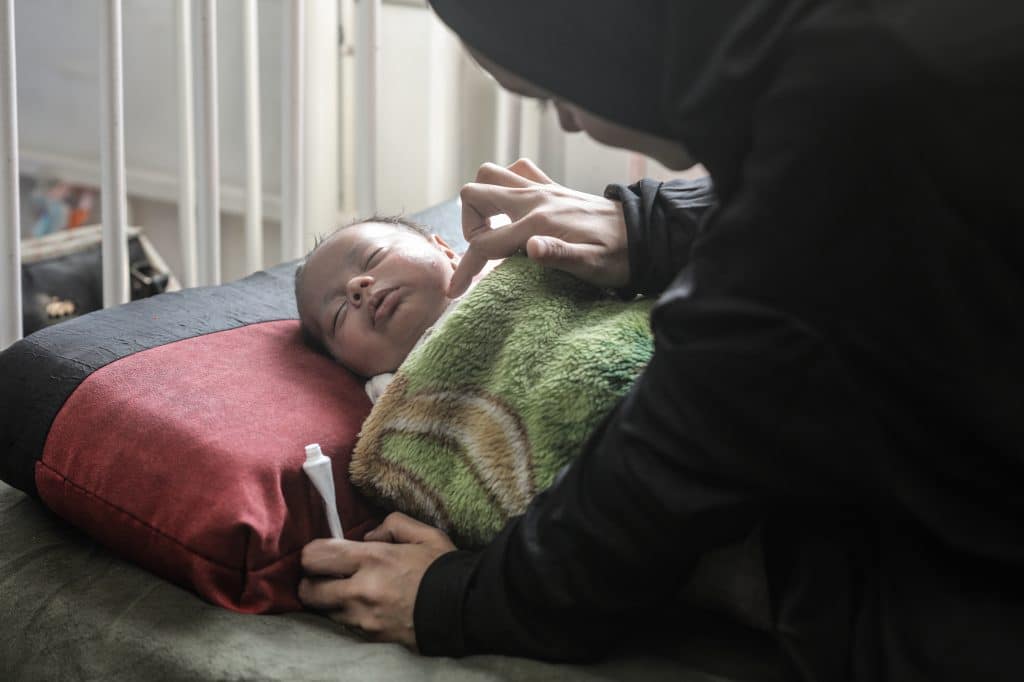
In her video testimony for Mondoweiss, al-Jamala places her hand on her child and points out the bite marks on Adam’s cheek. She counts six teeth. “The rat wasn’t just gnawing my baby. It was sharpening its teeth on his cheek!” she exclaims.
‘I just want one peaceful night’
Dr. Saeed Ma’ruf, the physician responsible for Adam’s case at al-Rantisi Hospital, tells Mondoweiss that the newborn arrived at the hospital in “critical condition.” He points out that rodent bites often lead to highly contagious and serious diseases that could quickly lead to a health crisis.
“These bites can carry spiral bacteria that cause diseases such as rat-bite fever, which is very dangerous,” he explains. “As well as tularemia bacteria, and several viral diseases that get transmitted from rodents to humans through bites.”
“When the child was admitted, we took it seriously and administered treatment to try and prevent the spread of these diseases,” Dr. Ma’ruf said.
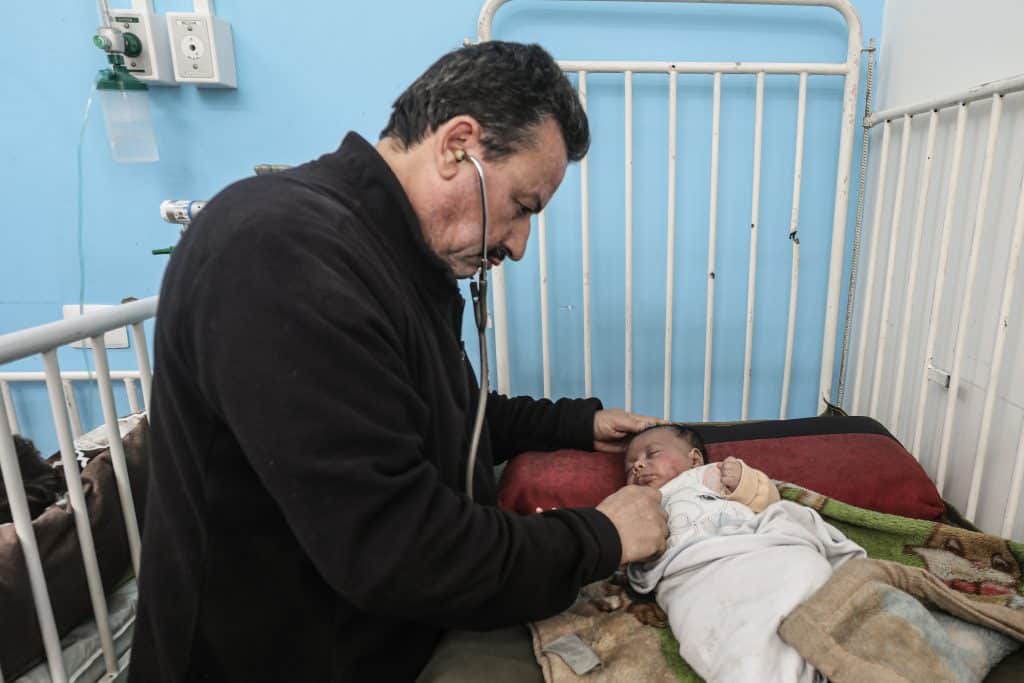
But in the first three days after the bite, severe redness appeared, and then pus began to ooze from his injured cheek, the doctor went on to explain. “There are concerns about complications from the bite that could lead to heart or joint inflammation,” he said.
Adam’s father, Yousef, explains that their living conditions in the tents also contribute to the spread of rodents because they store their food there, including sacks of flour and other supplies. And once night falls, he says, they can’t really see anything or identify any possible infestations. “Complete darkness takes over everything. If only each tent could be provided with small flashlights,” he said, explaining that when rodents see light, they try to avoid entering.
“I need a way of protecting my family,” he added. “I just want one peaceful night of sleep. Since we moved to the tents, we haven’t had a day of rest.”
Tareq S. Hajjaj
Tareq S. Hajjaj is the Gaza Correspondent for Mondoweiss and a member of the Palestinian Writers Union. Follow him on Twitter/X at @Tareqshajjaj.