Donald Trump’s naked threats to target Iran’s civilian infrastructure are the culmination of a strand of neoconservative thought that has defined U.S. war-making over three decades, from the Iraq war to Obama’s drone campaigns to the Gaza genocide.


Donald Trump’s naked threats to target Iran’s civilian infrastructure are the culmination of a strand of neoconservative thought that has defined U.S. war-making over three decades, from the Iraq war to Obama’s drone campaigns to the Gaza genocide.
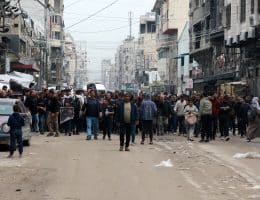
The passing of the recent Israeli death penalty law aimed at Palestinians formalizes what Israel and colonial powers have always done: creating new laws to legalize colonial violence.
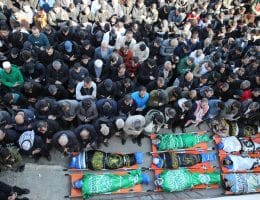
The Gaza genocide, in its relentless accumulation of dead children, obliterated neighborhoods, and starved bodies, is an assault on the capacity of Palestinians to be horrified by everyday atrocities — or to be enchanted by the possibilities of liberation.
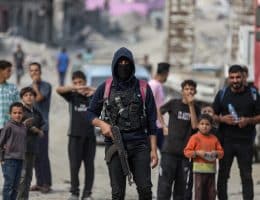
The Palestinian resistance faces a dilemma with Trump’s ‘Board of Peace’: reject it and risk annihilation, or engage and risk normalizing permanent occupation.
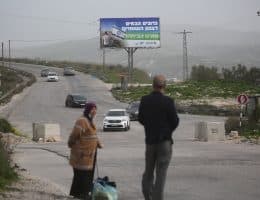
Israeli violence in the West Bank isn’t as dramatic as in Gaza, but it is methodical, durable, and sometimes harder to understand. Here’s how Israel is using settler terror, financial policies, and legal tactics to suffocate Palestinian life.

Birzeit University is no longer what it once was. The transformation has been gradual and, therefore, easily rationalized, but the result has been the hollowing out of a university that once led the Palestinian struggle.
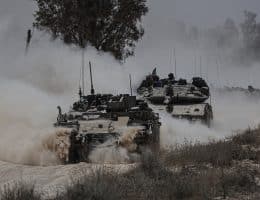
Israel’s strategic posture favors a constant state of war over political deals that might constrain future aggression. Its recognition of Somaliland is part of this strategy, and an attempt to plant the first flag of its would-be empire in Africa.

Throughout the Gaza war, Israel has debated what to call it. The military says “October 7 War,” while Netanyahu wants “War of Redemption.” What’s clear is that Israel believes it can only resolve its ongoing cycle of crisis through genocidal violence.
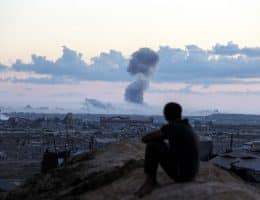
Two years on, the memory of October 7 returns as both catastrophe and possibility, reminding us that both resistance and surrender are choices haunted by loss. But two years on, we also learned something else: they are defeatable.

Benjamin Netanyahu’s recent comments that Israel must start making its own weapons and become a self-sufficient “super Sparta” signals that the small colony might be willing to embrace its isolation — all in the name of annihilating Palestine.