Israel is using the so-called Gaza Humanitarian Foundation to condense Palestinians into increasingly narrow enclaves, forcing displacement through need. We are witnessing the rise of a new humanitarianism where aid sites double as kill zones.


Israel is using the so-called Gaza Humanitarian Foundation to condense Palestinians into increasingly narrow enclaves, forcing displacement through need. We are witnessing the rise of a new humanitarianism where aid sites double as kill zones.
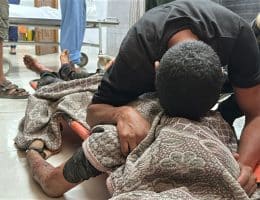
Whether it’s total conquest or managed containment, Israel doesn’t have a single grand strategy for Gaza, but it uses the possibility of both to prolong the war.

The festive inauguration of Ramallah’s Icon Mall as the Gaza genocide continues shows that Palestinian elites are not simply indifferent, but shameless. Yet, many who do feel shame act as if it is the only remaining way to politically engage.

The protests in Gaza calling for Hamas to step down are fueled by a desire for certainty — that if Hamas simply surrenders, Israel’s genocide will stop. The tragedy is that these cries will go unheard, or even worse, will further fuel the war machine.

Abdaljawad Omar interviews Mohammed El-Kurd about his new book, the struggle of narrating Palestinian resistance without dilution, and the contradictions of writing for an audience one refuses to appease.

Trump’s call to ethnically cleanse Gaza is an affirmation of an ascendant global movement, with Israel in the vanguard, seeking to overturn long-standing international norms. Palestinian ties to the land stand in direct resistance to this project.
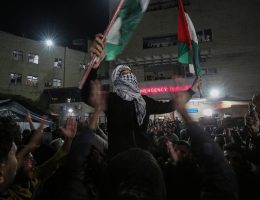
The recent ceasefire celebrations with Hamas fighters in the heart of Gaza City exposed Israel’s military failures, and also showed how Palestinian joy is a direct affront to the petty gods who seek to rule over us.
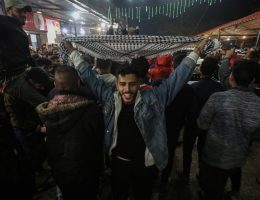
In the wake of a ceasefire, many will try to force the discourse into a binary of victory and defeat. But as the dust settles, a true picture emerges: one of the fragility of the Israeli colony, and the transformative power of resistance.
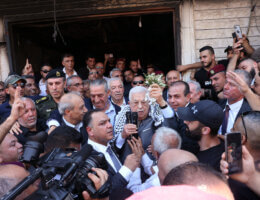
The PA’s deadly campaign against the resistance in Jenin is breaking long-standing taboos against spilling Palestinian blood. It is also raising profound questions over the future of resistance in the face of the Gaza genocide.

The October 7 Hamas attack unraveled truths across the region, reopening questions of the future that lay dormant for years. Now, with the fall of Assad, the power map is being redrawn, presenting new threats and possibilities.