Gaza photographer Mohammed Asad has just turned away from the fence protest Friday when he felt a sting on his cheek and his camera strap jerk and saw Mohammed al Jahjuh, 16, writhing on the ground Al Jahjuh had been killed by an Israeli sniper. Asad narrowly escaped death, but his $2500 Canon camera was destroyed. He will borrow equipment, he vowed, to return to the protests. Israelis don’t understand “the Palestinian’s stubborn brain.”
Since the Great March of Return protests began at the Gaza fence last March, more than 90 protesters have suffered amputations. The Artificial Limbs center in Gaza City is struggling to keep up the demand for prosthetic limbs, with intermittent electricity and shortages of the raw materials needed.
“I fell asleep early Monday night and about 20 minutes into my sleep everything turned into massive chaos mixed with my brother-in-law loudly screaming,” Suhair said who shares a flat with her six children, “I rushed to my children’s bedrooms to check if they were alive.”
Palestinians are still demonstrating along the Gaza-Israel border on Fridays, but in fewer numbers and with less fury than seen in recent months as Egyptian mediators work to lessen confrontations along the fence. Ahmad Kabariti asks Palestinians in Gaza if they believe the protest should be suspended in exchange for an easing of the blockade.
Yesterday Israeli forces shot Aed Abu Amro in the leg, the Palestinian protester from the Gaza Strip who reached internet infamy after photographer for Anadolu Agency Mustafa Hassouna captured a shirtless Abu Amro gripping a Palestinian flag firmly in one hand and a slingshot in the other during a protest at the fence that divides the Gaza Strip and Israel.
“Go ahead sons, run closer to the wire. Seventy years being refugees are enough.. Do not waste your youth life living in siege” — Suliman Abu Arar, 80, urged on protesters at the Gaza fence Friday on the 29th week of the march of return. Seven Palestinian youths were killed by live fire.
Young Palestinians often describe their upbringing in the Gaza Strip as serving a sentence in “the world’s largest open-air prison,” and see themselves as trapped between Israel’s refusal to support Palestinian statehood, and an international community willing to look the other way. Ahmad Kabariti talks with young Palestinians in Gaza about what it means to grow up, and be stuck, living under siege.
Friday marked one of the deadliest days at the fence that divides the Gaza Strip from Israel since protests began in Gaza last March, as Israeli forced killed seven including two children.
Gazans held their 22nd Friday of protests as Egypt sought to gain a truce between Israel and the Strip. Etaf Wadi said she would not stop demonstrating: “There will be no truce, nor ceasefire. We see how this weekly non-violent protest harms those invincible soldiers and their state. We want a normal life without feeling surrounded.”
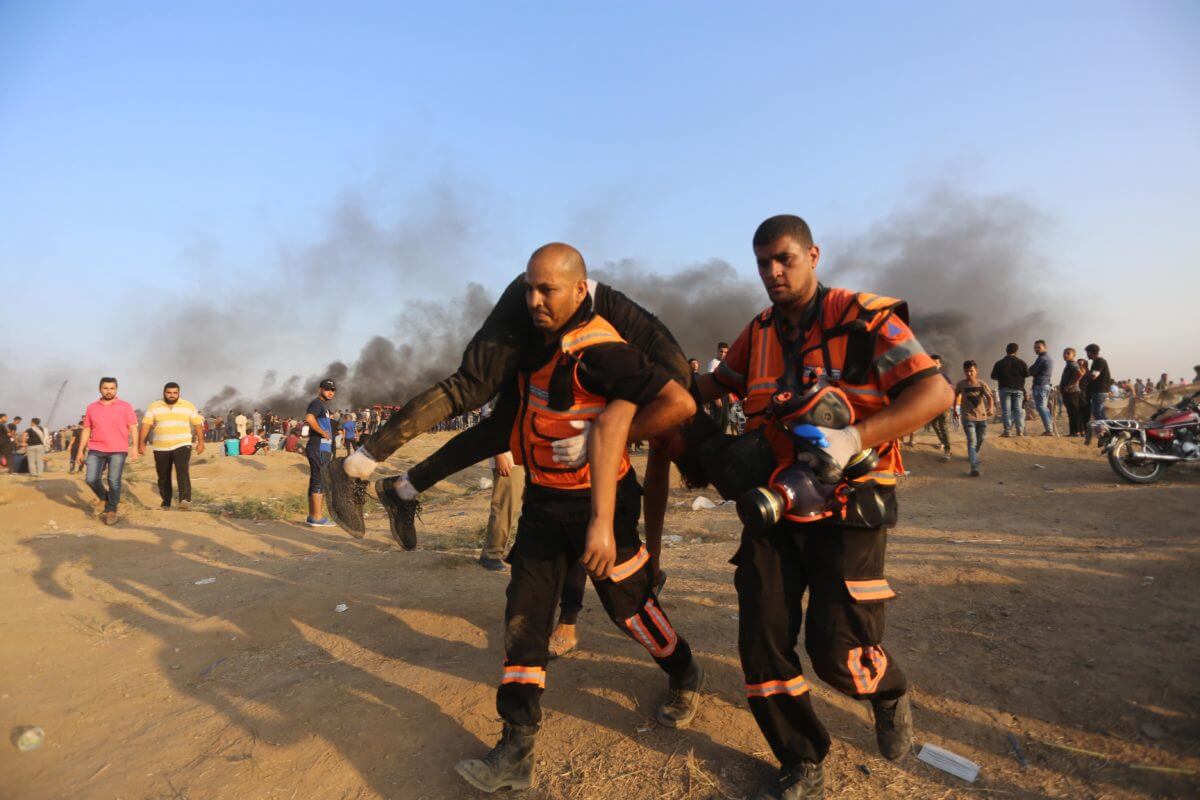
Abdullah al-Qatati, 22, was shot in the chest during a Great March of Return protest near Rafah in southern Gaza as he treated Ali al-Alloul, 55, who was also killed at the same time. The Gaza Health Ministry reported that more than 200 protesters were injured during the 20th weekly protest of the Great March of Return. Al-Qatati’s death takes place 10 weeks after Israeli forces killed 20-year-old paramedic Razan al-Najjar during a similar protest.