Israel and Turkey announced an end to the six-year diplomatic rift that began in 2009 after Israeli commandos killed 10 Turkish nationals during the seizure of a passenger ship, which departed from Turkey as part of the “Gaza Freedom Flotilla.” As a term of the agreement, Turkey will pass a law to make illegal any “criminal and civil claims” against Israel or it’s military forces for the death of the activists, Israel’s Prime Minister Benjamin Netanyahu said in Rome. Netanyahu added the blockade over the Gaza Strip, which was an area of dispute between the two countries, will remain in full.
In the last decade the number of Palestinian refugees in the West Bank and Gaza has increased by one million, according to a survey conducted by the Palestinian Central Bureau of Statistics (CBS) in advance of World Refugee Day.
Khaled Makhamri was an excellent student enrolled in university in Jordan on a prestigious governmental scholarship. Now his family is trying to understand why he carried out one of the deadliest attacks in Tel Aviv in years. More than 60 of the attackers in the last 9 months came from Khaled’s district in the southern West Bank and his hometown of Yatta is a particularly difficult place to live. It has the highest school drop out rate in the occupied Palestinian territory, settler attacks on agricultural land in the outskirts of town are common, and Israeli army ordered home demolitions in the surrounding areas are frequent. “The reason why he did such a thing is the occupation, he is not working with any illegal organization,” his father tells Allison Deger.
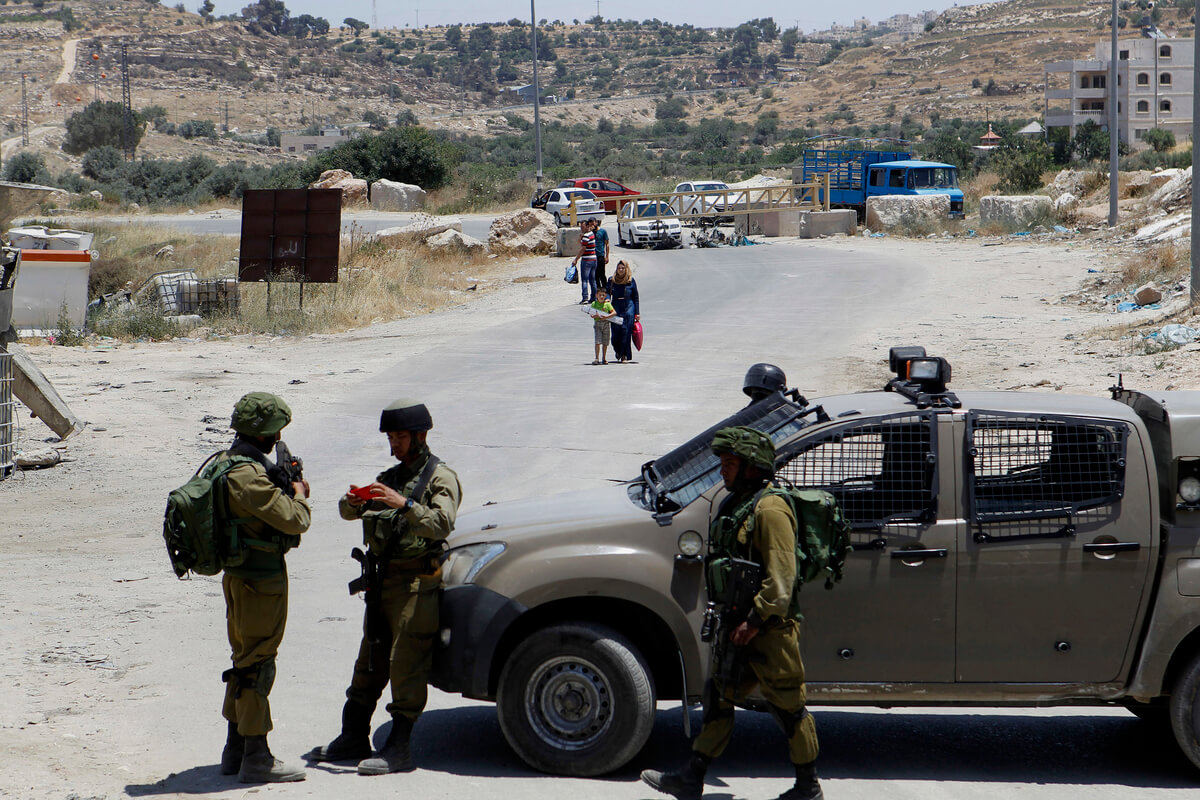
As Israel held funerals yesterday for those killed in an attack in Tel Aviv earlier in the week, police limited Palestinian travel from the West Bank and Gaza during the Ramadan holiday.
After two gunmen from the West Bank killed four Israelis and injured eight more in Tel Aviv last night at a popular shopping center, Israel announced today it would suspend entry permits for all Palestinians during the Ramadan holiday, including those residing in Gaza.
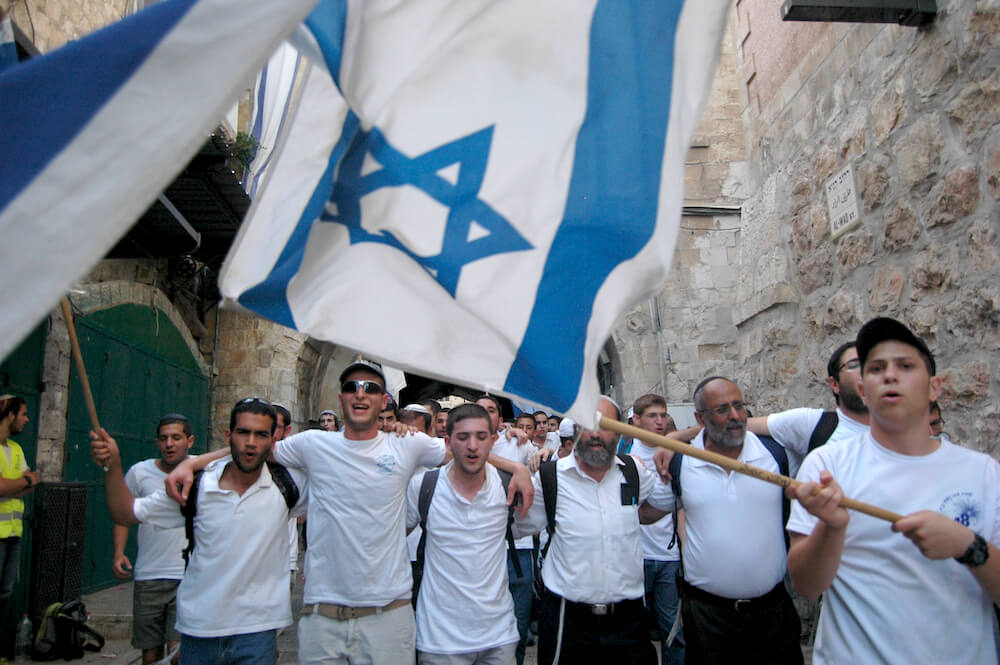
Blue and white banners filled Jerusalem yesterday to mark 49 years of Israeli rule in the city. Crowds of settler youth chanted the slogan “the Jewish nation lives” as they marched under the ramparts of Damascus Gate. Many wore stickers supporting rabbi Meir Kahane, a former Knesset member kicked out of the government after calling for violence against Arabs, while others pasted their clothes with decals backing a greater Israel, a Jewish-nationalist movement that seeks to annex the occupied Palestinian territory. Meanwhile, Palestinians were barred from sections of the city and postponed the start of their own festivities for the Muslim holy month of Ramadan to avoid conflicts with the settlers.
Palestinian parliamentarian Khalida Jarrar returned to her West Bank home in Ramallah today after more than a year in an Israeli prison on charges related to her political activism. Jarrar was arrested in April 2014 first under an administrative detention order, a form of imprisonment without charge. In December of that year she signed a plea deal for a 14-month sentence after a lengthy hearing. After a tearful reunion with her husband, mother, and supporters at the checkpoint, Jarrar then traveled to her house in Ramallah. Once in her backyard amid shrubs and fruit trees Jarrar described her legal ordeal, and the long journeys she made to Israel’s military court to stand trial.
J.M. Coetzee, the South African novelist, said at the Palestine Festival of Literature that it was rarely “productive” to use the word apartheid. But he implied that Israel was enforcing such a system in the West Bank and East Jerusalem.
After 25 years of bringing cases to Israel’s military court and supporting investigations into the killings of Palestinians, a foremost Israeli human rights group has said “there is no longer any point” to submitting complaints. Following stalled and faulty investigations in more than 700 cases since 2000, which resulted in a 3% conviction rate, the rights group B’tselem has given up on cooperating with the military justice system. The organization now believes filing cases in army courts can cause further harm to Palestinian victims. The group said it will cease “lending legitimacy to the occupation regime and aiding to whitewash it,” in report published today that outlines what it described as major deficits in the prosecuting process.
When the plain-clothed men came for him, Kifah Quzmar, 27, did not need to be told why they were dragging him out of a popular Ramallah cafe on a sunny afternoon last week. “Call my brother,” he told bystanders before being tossed into the back of a tinted SUV parked outside. “The muhaberat are rotten,” Quzmar wrote on Facebook two weeks before he was detained, using the Arabic colloquial term for undercover Palestinian intelligence agents. In the West Bank, such words are a punishable offensive under a 1960 Jordanian law still on the books making illegal “insulting a public official.” The crime carries a maximum of a six-month prison sentence.