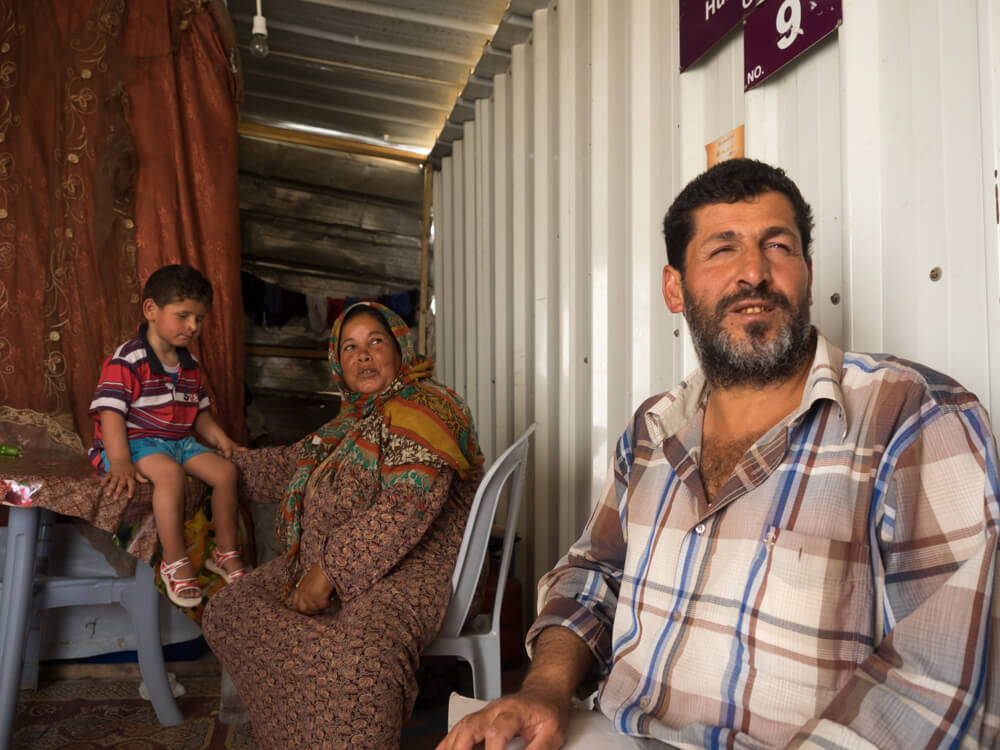
The Najjar family’s stately home in Khuza’a was one of 100,000 homes damaged or destroyed during Israel’s war on Gaza in 2014. Eight months after the final ceasefire reconstruction in Gaza has not begun, and the Najjar family is is forced to live in a donated shipping container just across the street from the four-meter-high mound of rubble that used to be their home. Youssef Najjar, 46, breaks into tears as he talks about the situation, “In this caravan, our life is all about suffering.”
For Palestinians in the Gaza Strip, the period since last summer’s war has been a one-way ceasefire. While Palestinian armed factions have observed the ceasefire, with a handful of exceptions, Israel has violated the ceasefire on a near-daily basis. Soldiers fire at farmers in the buffer zone, gunboats shoot at fishermen, and warplanes and drones are a regular sight over Gaza’s skies. Dan Cohen talks to several people in Gaza about life under this mostly unreported barrage. Moaeen al-Kheysi in Shujaiya says, “We wake up every night to the sound of shooting. The Israelis never stopped shooting at us but Palestinians aren’t shooting them. We want the ceasefire to be from both sides, not just one side.”
Yesterday, an estimated 5,000 Palestinian citizens of Israel and Jerusalemites participated in the March of Return in an open field overlooking the Sea of Galilee and above a valley where ruins of the village of Hadatha are scattered. Organized annually by the Association for the Defense of the Rights of the Displaced People, the March of Return commemorates the ethnic cleansing of Palestine by pre-state Zionist forces in 1947-1948 — what is known as the Nakba.
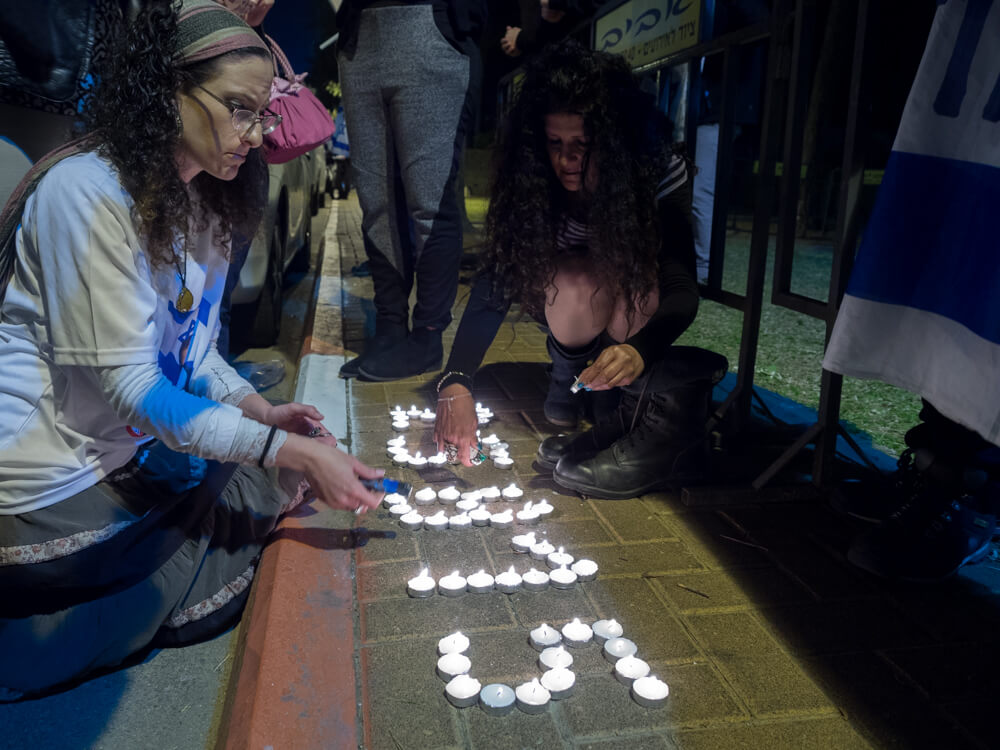
On Tuesday night, a busload of Palestinians from the West Bank and hundreds of Israeli Jews filed into the Tel Aviv Exhibition Grounds to attend a Combatants for Peace event billed as an “Israeli-Palestinian Memorial Day Ceremony: Honoring the Victims, Fighting for Peace.” Kahanist protesters had opposed Palestinian participation in the event and baited attendees as they entered. Dan Cohen reports on the proceedings and finds the Kahanists may be a bit more honest then their liberal Israeli counterparts.
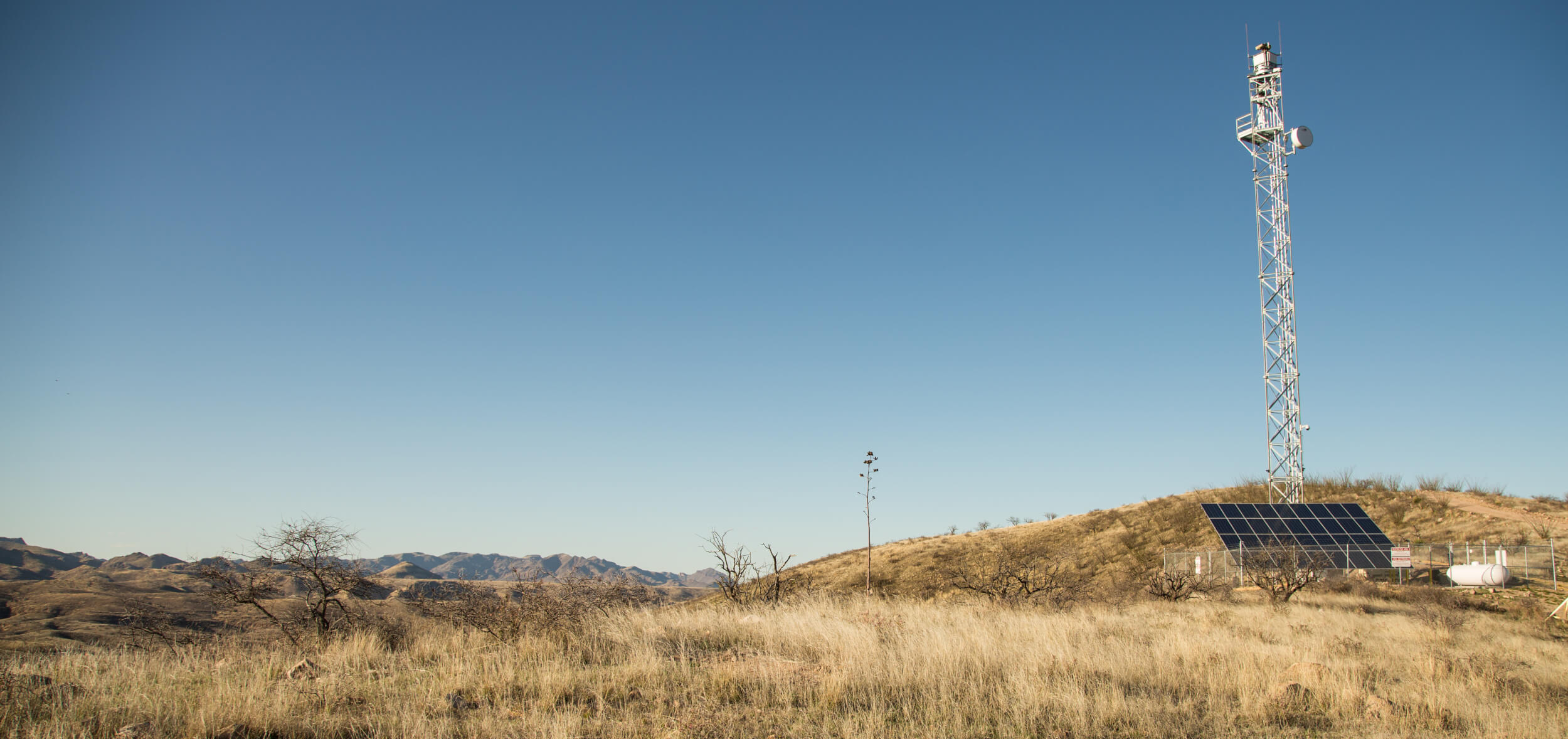
In the expanse of the Sonoran desert that stretches from the north of Mexico into southern Arizona, anti-immigrant fervor has made fertile ground to implement systems to sustain racism and inequality. Dan Cohen reports that technologies that Israeli firms developed to enforce Zionism in Palestine are being imported to the US-Mexico border to sustain the disenfranchisement of Mexican and Central American immigrants whose livelihoods have been wiped out by US neoliberal economic policies and imperial misadventures.
A little-publicized report released during the final weeks of Israel’s summer offensive on the Gaza Strip last year accuses Israel of targeting water and wastewater infrastructure during the 51-day assault, despite having been provided the coordinates of all water and wastewater facilities. Entitled Water Sector Damage Assessment Report, the paper by the Palestinian Water Authority (PWA) meticulously documents $34 million in damages that have caused a humanitarian and environmental crisis throughout the Gaza Strip. Yet the damage detailed in the report is likely incomplete as the team is unable to assess damage to pipe systems because most of the damage is underground and covered by massive amounts of rubble.
Since the conclusion of the summer’s devastating war in Gaza, the pressure on residents to leave the rubble-covered ghetto has become unbearable. Between the slash-and-burn Israeli assaults — another of which appears to be inevitable — and the Israeli-Egyptian siege that suffocates the economy and severely restricts the entry of basic necessities, there is little hope among the 1.8 million Palestinians living inside Gaza.
Three weeks after Israel’s latest assault on the Gaza Strip concluded, Israeli military and political leaders attended a conference next to Ben Gurion Airport to sell the successes of what Israel dubbed Operation Protective Edge, which killed more than 2,200 Palestinians including 521 children.
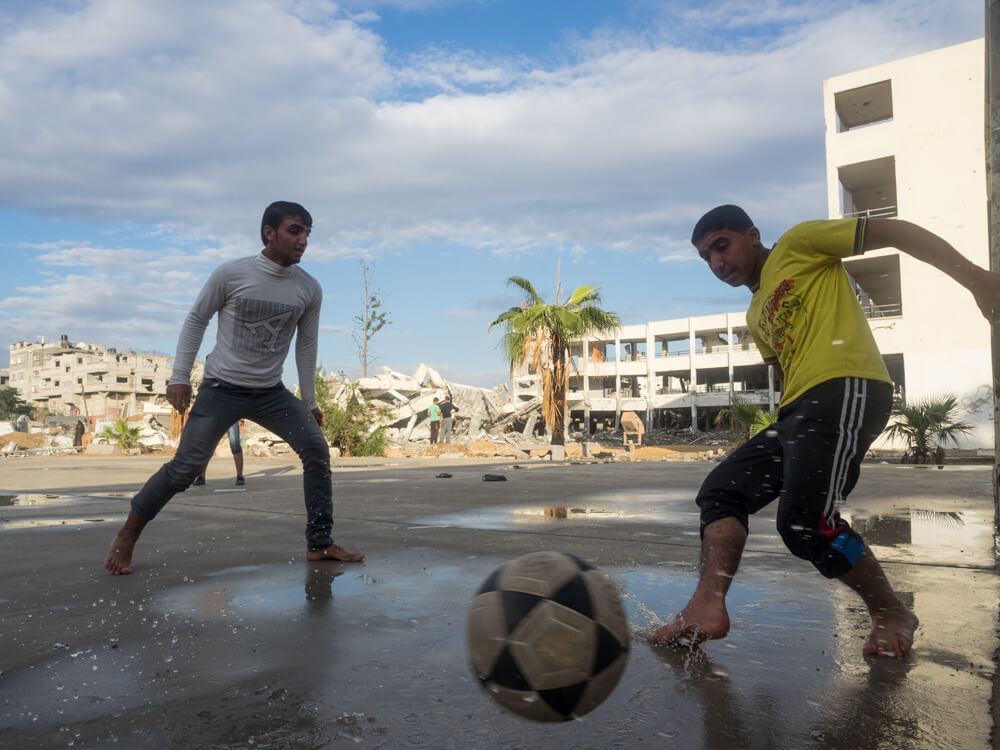
Dan Cohen reports from Gaza where eight years of siege and three wars in six years have left the besieged Strip in a state of perpetual disaster with no end in sight. After this summer’s assault, tens of thousands of Palestinians are sentenced to living in rubble wastelands that are scarcely recognizable from the thriving neighborhoods they once were. “The survivors are the real victims of war,” Hamza Saftawi, 23, said. “They have to live in the aftermath.”
Monday night, approximately 50 supporters of Yisrael Beiteinu, the right-wing political party headed by Foreign Minister Avigdor Lieberman, demonstrated in Jerusalem outside an exhibition at the Hansen House that featured a video by dancer/choreographer Arkadi Zaides. The fury of the demonstrators was directed at B’Tselem, the Israeli organization that documents human rights abuses in the occupied territories. Zaides’ video included footage from a B’Tselem project titled “Armed with Cameras.” The demonstration was organized by Mothers of Soldiers Against B’Tselem, a group whose mission is “working with legal tools to weaken human rights organizations,” according to the group’s Facebook page. Tensions were extremely high as an Israeli soldier and a settler had been stabbed to death that day in separate incidents. At the demonstration, at least one person was physically assaulted. “Somebody hit me over the head with a flag pole. They called us Nazis and said ‘May you burn in the gas chambers,’” Zafira Stern said.