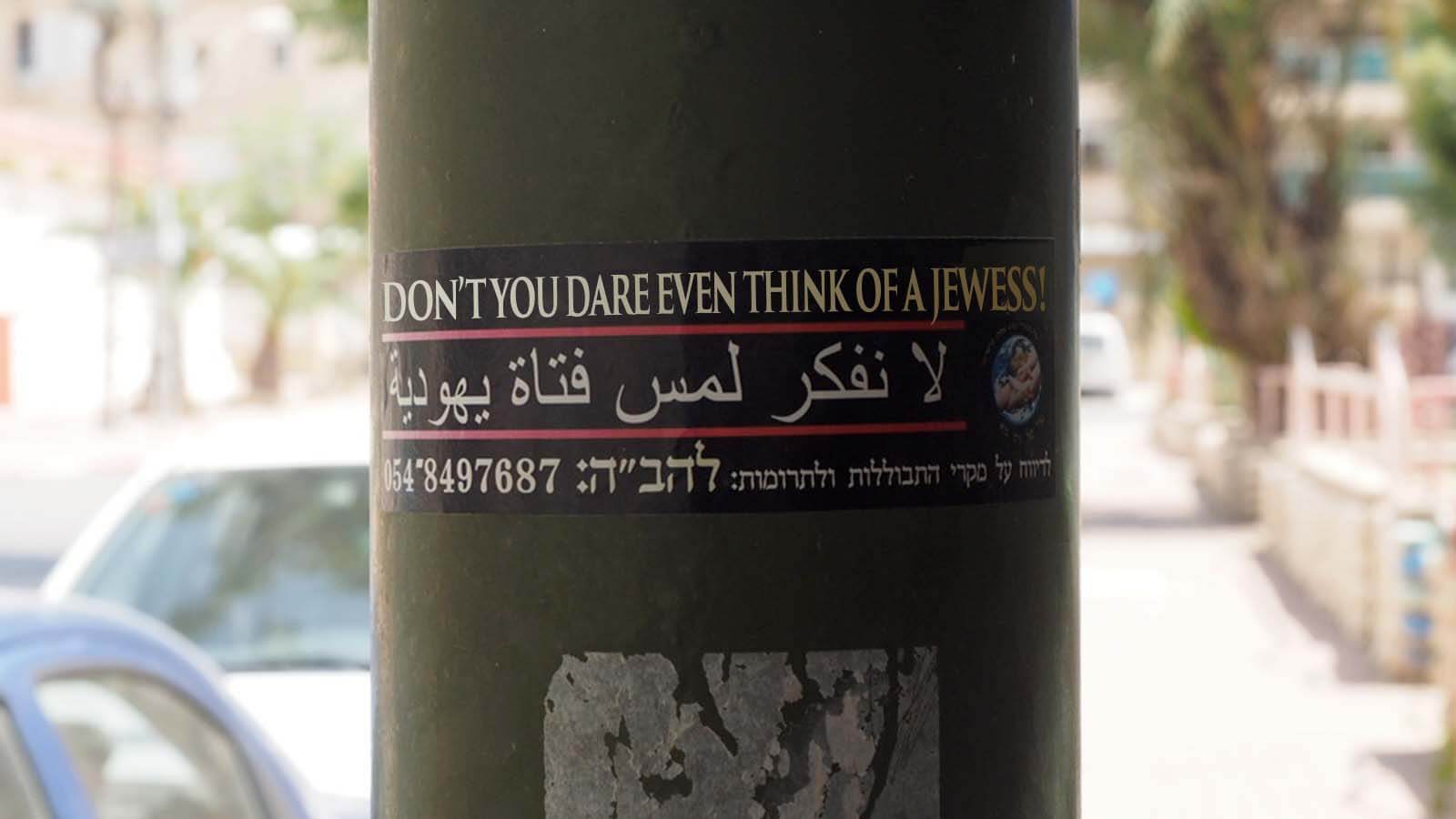
To American sensibilities, the Negev town of Dimona, Israel recalls the Jim Crow south. Throughout through the town of 33,000, racist graffiti can be seen in abundance on signs, walls and buildings. “Death to Arabs” is a common sight, and stickers promoting Lehava, the state-funded anti-miscegenation group, are posted around town.
A growing number of Israelis believe that the Duma firebombing that killed eighteen-month-old Ali Dawabshe and his father Sa’ad were carried out by Palestinians. “There’s no proof there was an attack,” said Lior, a restaurant owner in the settlement of Kiryat Arba. “But everybody thinks it was Palestinians who did it.”
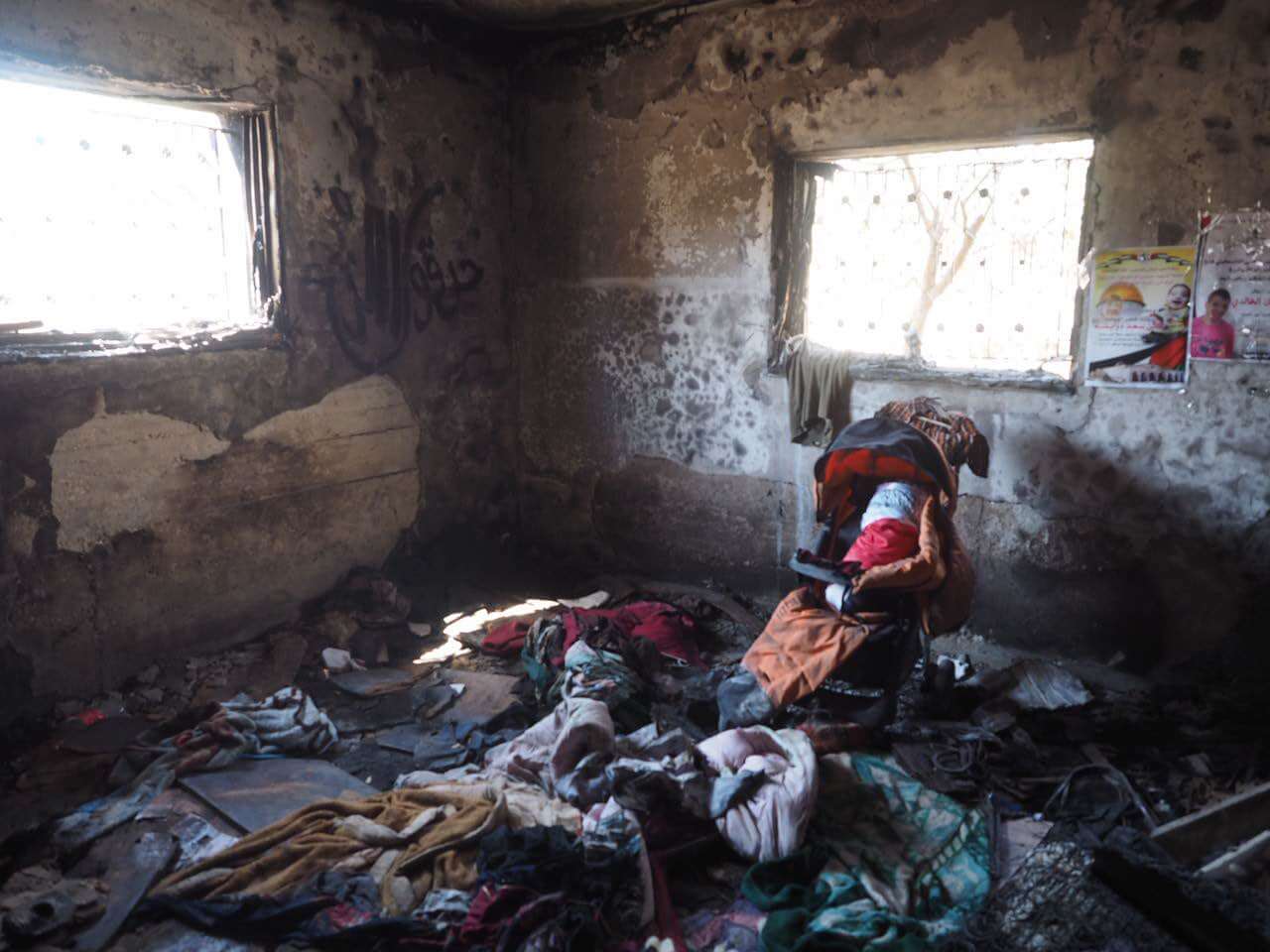
Since the settler firebombing that burned alive eighteen-month-old Ali Dawabshe and killed his father Sa’ad, Palestinians in Duma and other villages have formed night patrol groups to confront settler incursions. Unarmed, they have no means to repel settlers who have the full backing of the Israeli military. “We don’t have anything to defend ourselves or any equipment. We just try to warn people if we see something,” said one member of the Dawabshe family who identified himself as Akram, preferring to use a pseudonym for his own security.
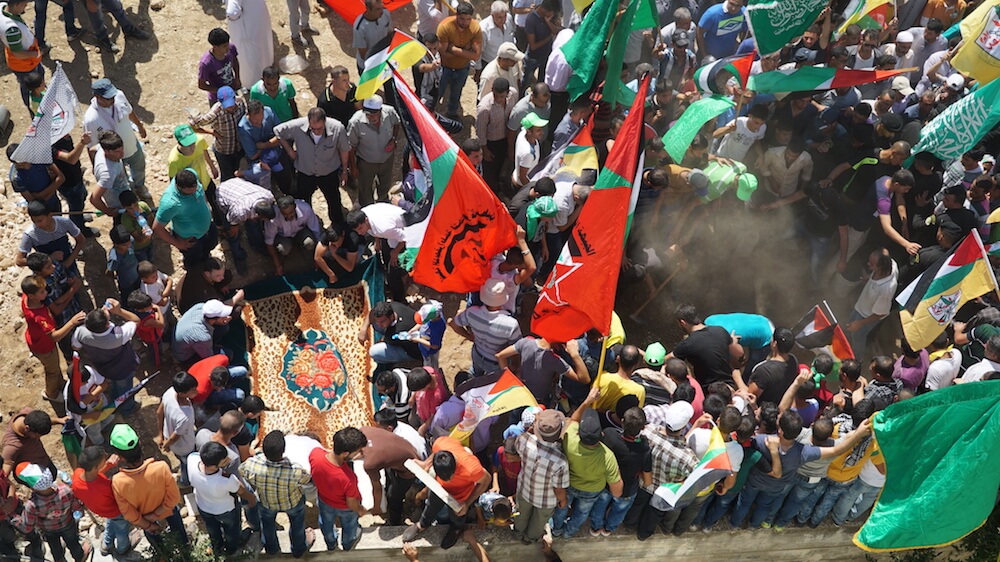
Hundreds of mourners from the northern West Bank poured into the hamlet of Duma to lay to rest a second Palestinian killed today after succumbing to wounds from a settler arson attack last week. Sa’ad Dawabshe, father of baby Ali Dawabshe who burned to death in the attack, died in the early morning hours in a hospital in southern Israel where he was being treated. His remains were transferred to his parents’ home outside of Nablus.
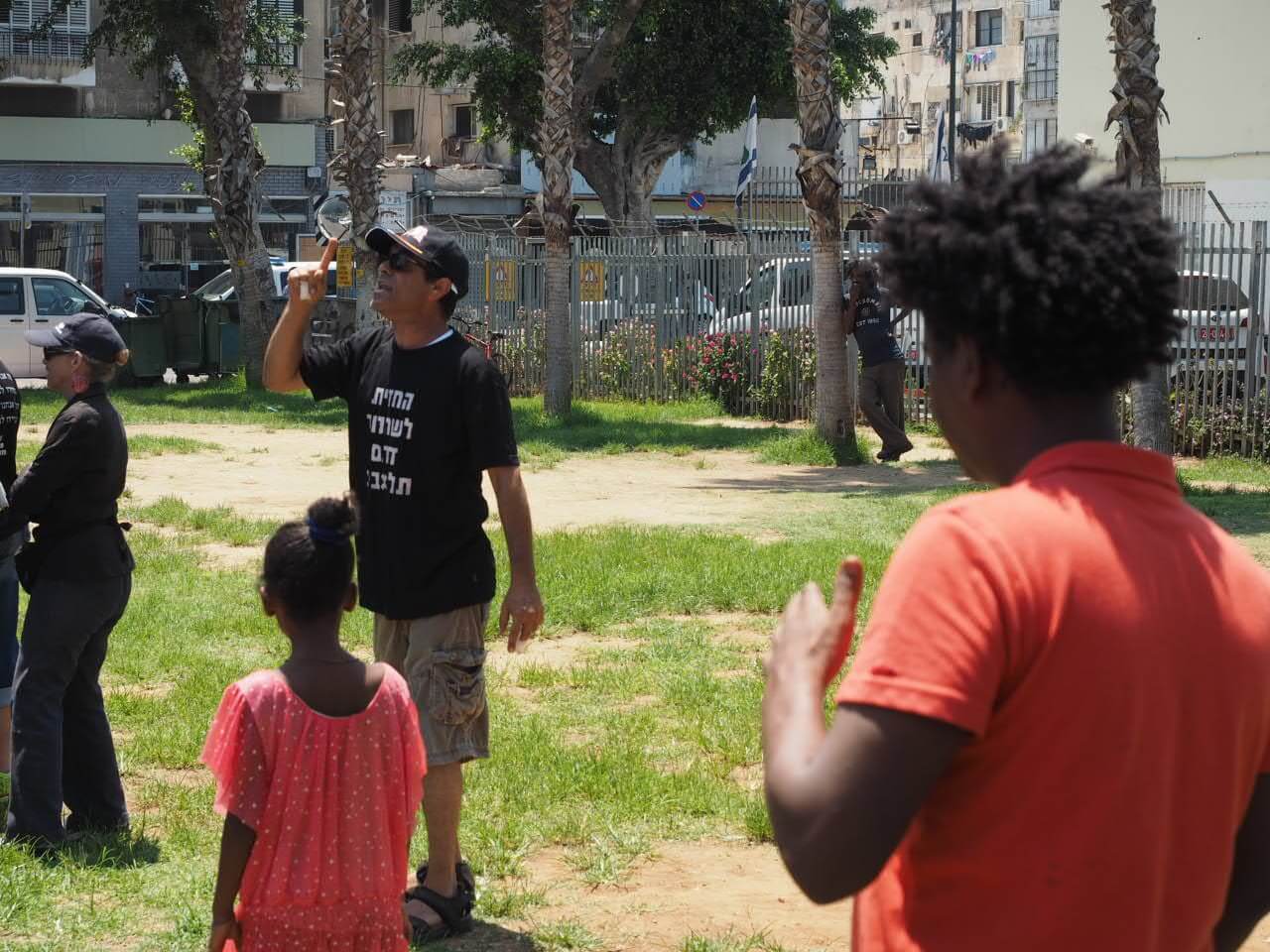
The various forms of extreme violence that occurred over eighteen hours this weekend– whether directed at Palestinians in the West Bank or African asylum seekers or Israeli Jews in a Pride Parade – are deeply rooted in a greater context of normalized racism
“I need symbols,” Maj. General (ret’d) Gershon Hacohen says, in likening Israeli attack on three landmark Gaza residential towers a year ago to the terrorist attack on the World Trade Center in 2001
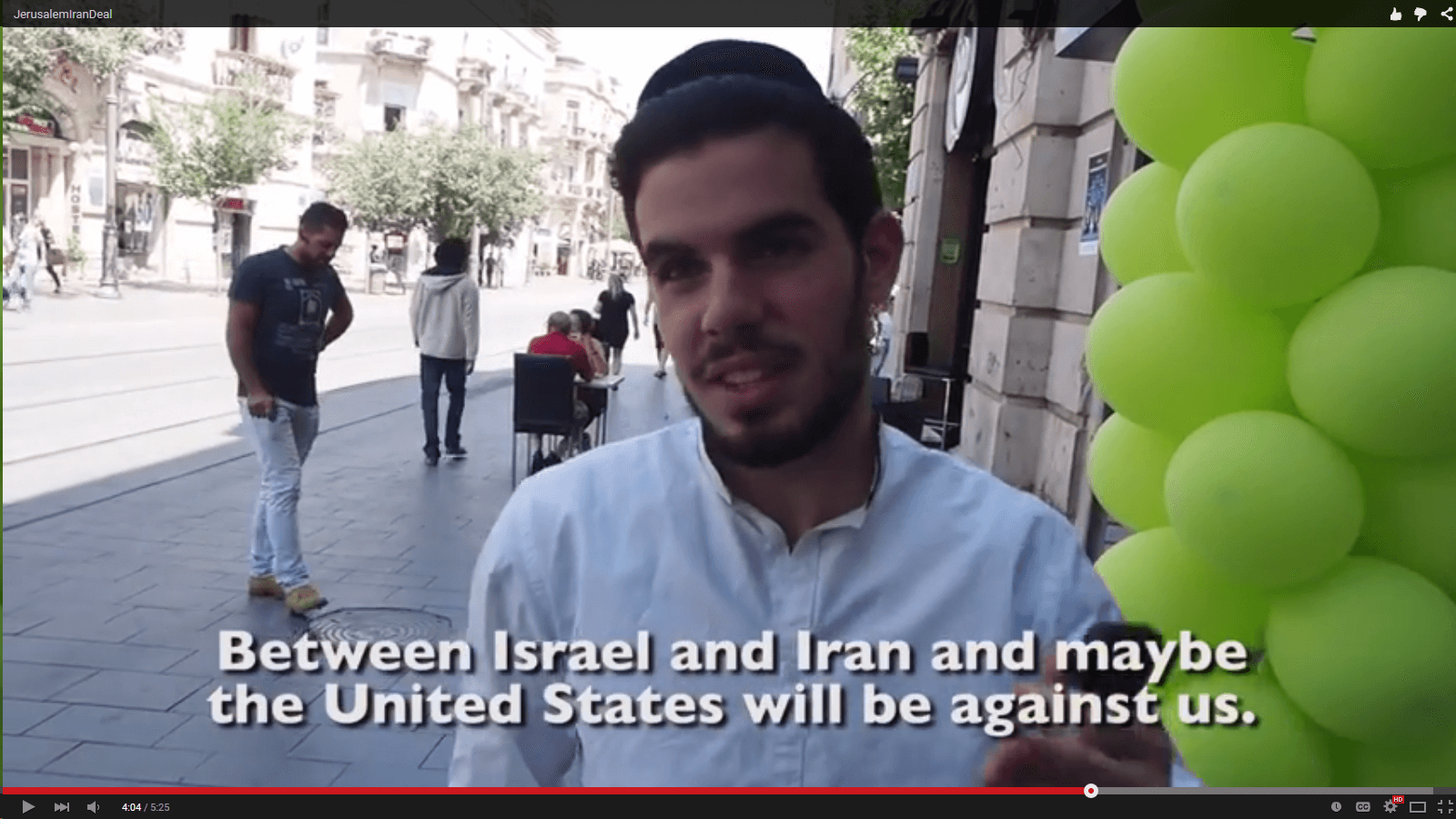
Days after the announcement of the Iran nuclear deal, Dan Cohen set out in West Jerusalem’s Yafo Street to find out what Israelis thought about the agreement. The range of responses reflected the continuous right-ward shift and the complete militarization of Jewish Israeli society against a backdrop of apathy.
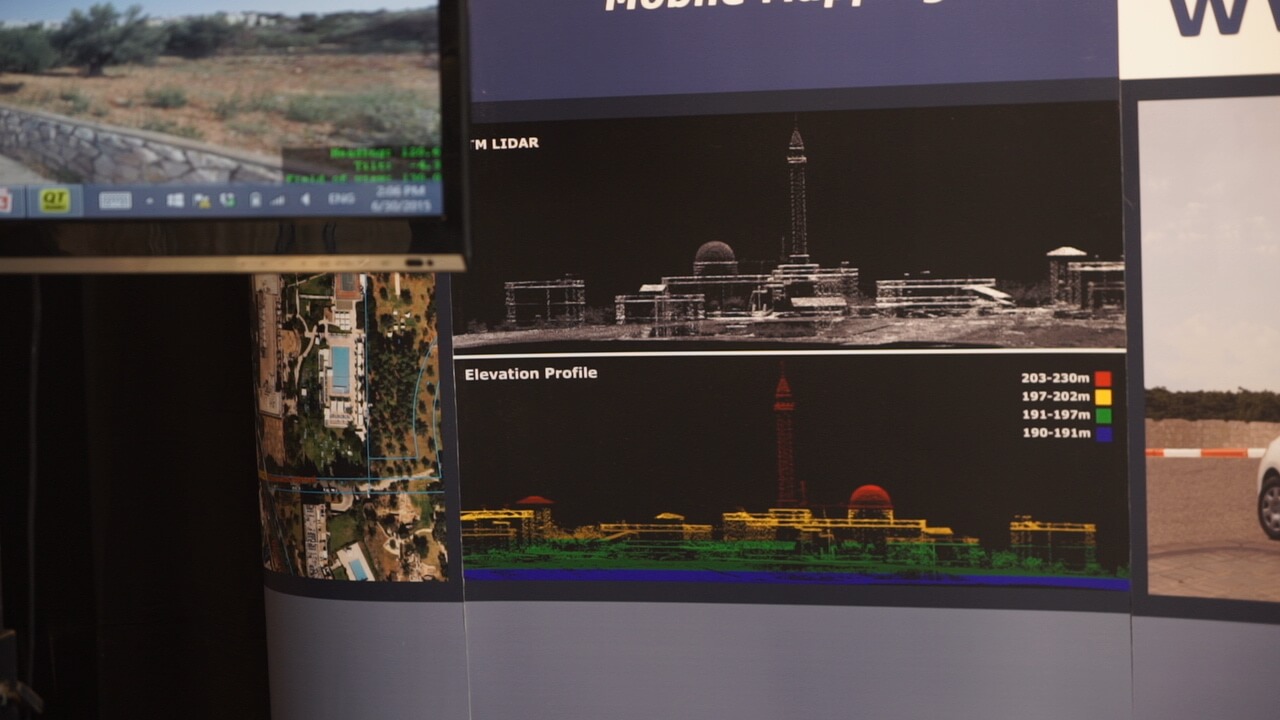
For Israeli military and security firms, occupied East Jerusalem’s population of 300,000 Palestinians presents unique challenges to develop new methods of enforcing occupation. One firm has sold a Google Street View-style mapping system to Israeli military and police agencies used to plan operations in occupied East Jerusalem to the smallest detail.
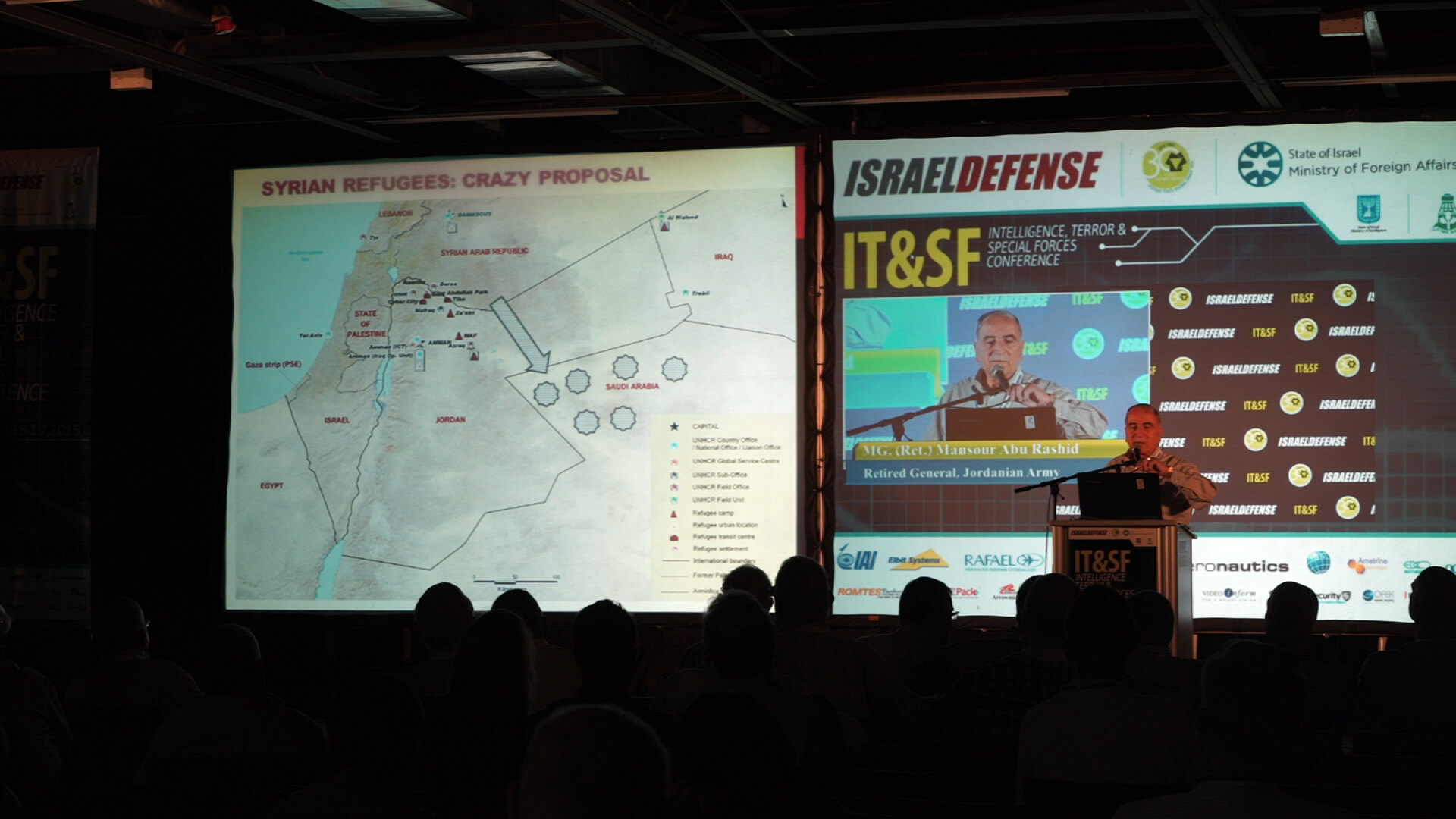
Last week, speaking at the Israel Defense conference on “Intelligence, Terror and Special Forces”, retired Jordanian army General and former Chief of Intelligence Mansour Abu Rashid unveiled what he called a “crazy proposal” to open a corridor to push fleeing Syrian refugees through Jordan into Saudi Arabia. The plan received the most boisterous applause of the two-day conference from the crowd of mostly Israeli military-intelligence officials.
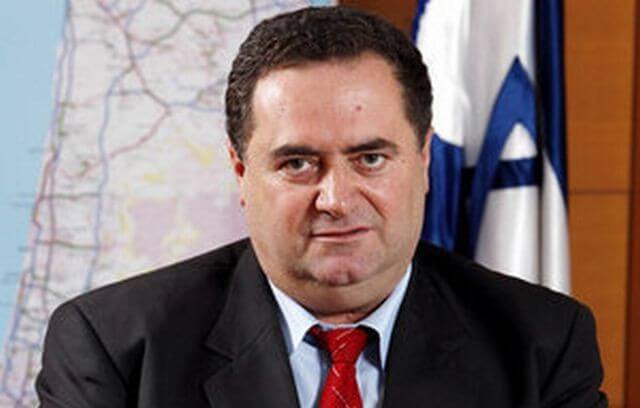
As attendees sipped lattes and browsed the latest intelligence technology for sale last week at a Tel Aviv defense conference, Israeli Minister of Intelligence and Transportation Yisrael Katz shared plans to build an Israeli-controlled island off the coast of Gaza as a way for Israel to “disengage” from the embattled strip while maintaining the eight-year-siege.