These are signs of the growing impatience of Iran’s Arab neighbors with Iran’s tactic of striking at them in response to Israeli or American attacks. But the anger of the Gulf states isn’t only reserved for Iran.


These are signs of the growing impatience of Iran’s Arab neighbors with Iran’s tactic of striking at them in response to Israeli or American attacks. But the anger of the Gulf states isn’t only reserved for Iran.

While the U.S. and Israel share a goal of weakening the one state that has challenged their joint agenda in the Middle East, Israel’s desire to achieve regional hegemony by any means necessary may not fare well for the U.S. and its own interests.
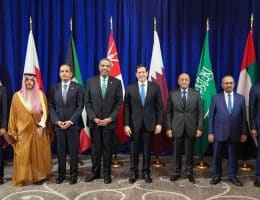
Iran’s retaliatory attacks on its neighbors, and the U.S. failure to plan for them, are forcing the Gulf Cooperation Council states to reconsider their regional strategies and their relationship with Washington.
The U.S.-Israeli war on Iran has been built on lies. Here is the truth about Iran’s nuclear weapons program, the claim that Iran was an imminent threat, and the lie that Trump has a plan for what happens next.

Saudi Arabia is shifting toward a major realignment of its foreign policy and global role. This goes far beyond its rivalry with the United Arab Emirates — it includes a complete rethinking of its relationship with the U.S. and Israel.

The first meeting of Donald Trump’s “Board of Peace” showcased the dystopian future the U.S. envisions for Palestinians. But even those plans might soon be eclipsed by Israel’s renewed full-scale genocide in Gaza.

Israeli Prime Minister Benjamin Netanyahu made a hasty trip to Washington this week to push Donald Trump toward war with Iran. Although little has been made public from the meeting, it appears Netanyahu has failed — for now.

The U.S. is once again threatening a war on Iran that could devastate the region. Trump knows Iran is not pursuing nuclear weapons, but that has never been the point. It is about removing Iran as the only actor in the region beyond U.S. control.

The plans for Donald Trump’s “Board of Peace” show that the goal is not just to make Gaza a playground for the wealthy, but to put it under permanent American occupation.

Long-standing crises in Palestine, Syria, Lebanon, Yemen, Sudan, Iraq, and Iran are deepening as the U.S. imprint on the Middle East shows no signs of weakening.