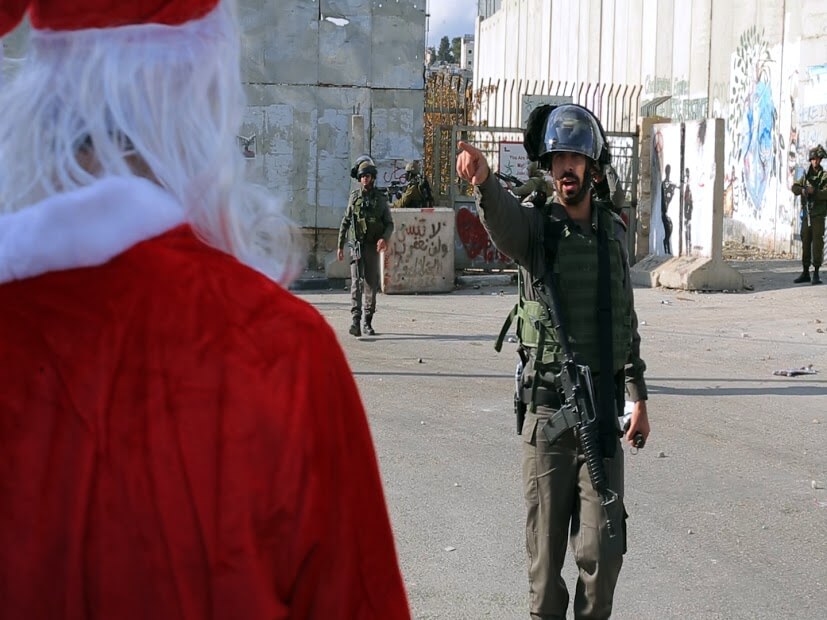
Over the weekend in the West Bank town of Bethlehem, men dressed as Santa Claus marched to the towering separation wall on a mission — to bring candy and gifts to Jerusalem. As marchers reached the wall, they were blocked by fully armed Israeli soldiers who know well that cameras from agencies around the world were pointed at them. Eventually, Israeli forces retreated behind the wall, shooting tear gas at the Santas from concrete towers. “We knew this would happen,” one of the Santas told Mondoweiss. “We didn’t expect to be allowed through, but it’s important we do something to show the world what’s happening here while people are looking our city. This is Bethlehem, tear gas and soldiers and walls and occupation. This is the holy land.”
Every morning, hours before dawn, around 30,000 Palestinian laborers make their way from the occupied West Bank, where they live, and enter Israel. These workers, desperate to keep their jobs, arrive at the checkpoints in the middle of the night to make it through in time. Abed Abu Shierra knows the men who cross through the Bethlehem 300 checkpoint well, as he serves them coffee on their way through every morning. “It started to get worse for people being stuck like this at the start of this new Intifada,” Abu Shierra says.
Mutaz Zawahra was having the time of his life in France on a youth program with two other friends when he got the news that his oldest brother had fallen dangerously ill. His brother, Ghassan, was on hunger strike in Israeli prison protesting his internment without trial or charge, and family members told Mutaz that his older brother may not make it through his strike alive. Mutaz returned home immediately to be with his family in Bethlehem, just in time for the start of the unrest that was about to erupt across the West Bank. Israeli forces shot and killed Mutaz during a particularly intense bout of clashes coined “A Day of Rage,” he was the 30th Palestinian killed in October. Sheren Khalel and Abed Al Qaisi report from the family’s commemoration ceremony for Mutaz, which was delayed so that Ghassan could have the honor of paying his respects to his brother after being released from Israeli prison.
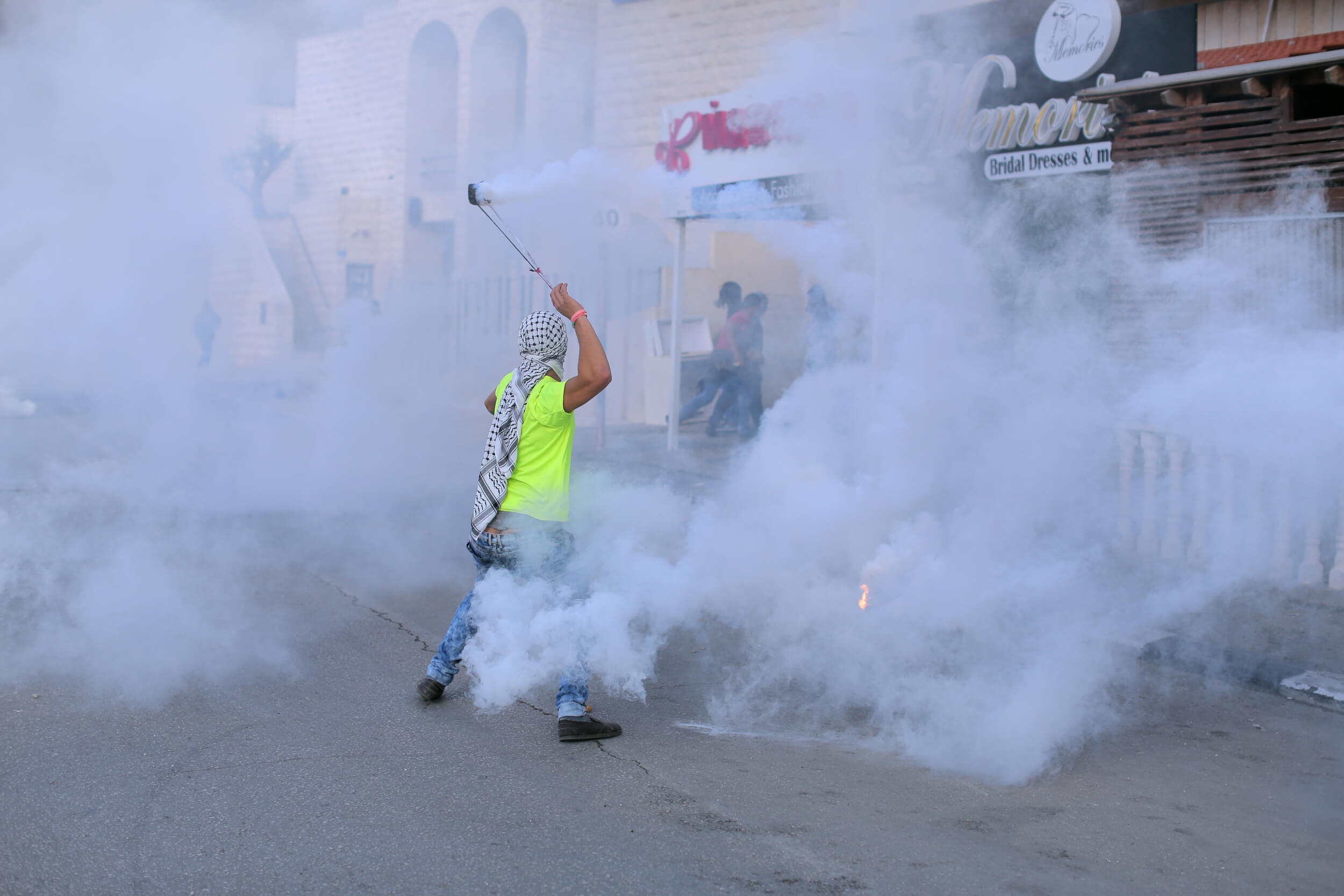
On Thursday evening Israeli forces stormed Aida refugee camp in the southern occupied West Bank city of Bethlehem. Jeeps descended on the camp from all entrances shooting off tear gas rounds indiscriminately as families rushed to close their windows, shoving cloth in any crevice that could allow the noxious gas to seep in, a well practiced drill in homes across the occupied West Bank. Tear gas is forbidden to be used during warfare under the Chemical Weapons Convention, but regardless of its supposed illegality and unknown side effects, one would be hard pressed to find a household in the occupied Palestinian Territory that does not know how to combat symptoms of the gas due to its frequent and heavy use by Israeli forces on Palestinians.
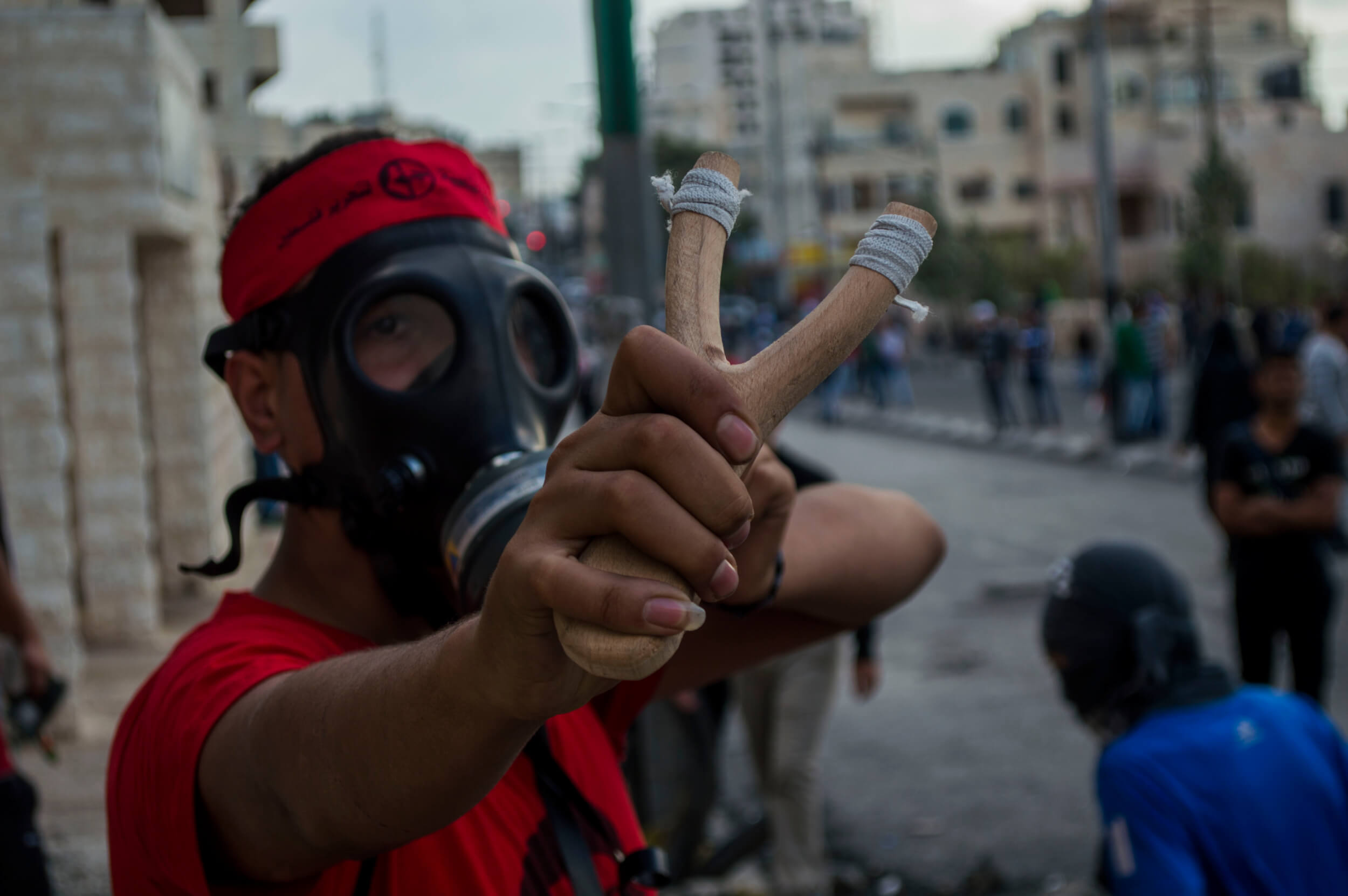
Sheren Khalel reports from the occupied southern West Bank city of Bethlehem where protests have been ongoing daily for more than a week and the vast majority of residents she spoke to do not see the situation calming anytime soon. Clashes in Bethlehem along Jerusalem-Hebron street are fairly common and this week it seems the entire community has stepped forward to help. In fact, most have called the current upheaval the start of the third intifada.
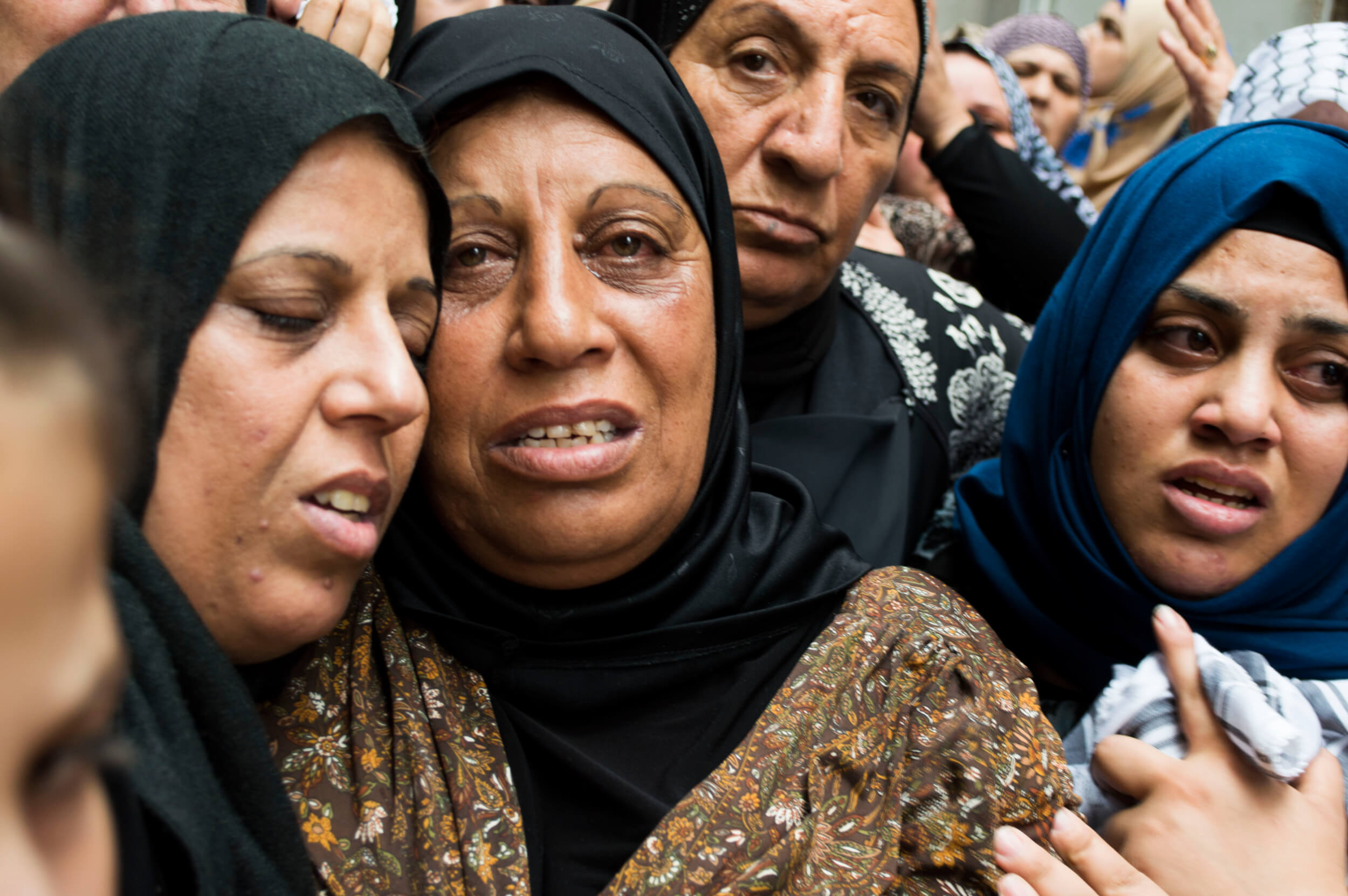
Israeli forces shot 13-year-old Abed Obeidallah in the chest, killing him almost instantly on Monday afternoon, right as protests were beginning in front of Aida refugee camp where the boy lived. A day later more than one thousand mourners laid the young teenager to rest in a cemetery just minutes away from the UN school Obeidallah had just left before he was shot.