At least 72 countries are set to meet on Sunday in Paris for the most recent effort in reaching a two-state solution in Palestine and Israel, neither of which are expected to be represented at the meeting. On Thursday, Israeli Prime Minister Benjamin Netanyahu openly criticized the conference, while Palestinian Prime Minister Rami Hamdallah reiterated his support for negotiations of a two-state solution saying he believed “only a negotiated two-state-solution will lead to an end of occupation and an agreement on all final status issues.” But Hamdallah’s sentiment does not seem to be echoed on the Palestinian street, where confidence in the two-state solution has taken a drastic hit.
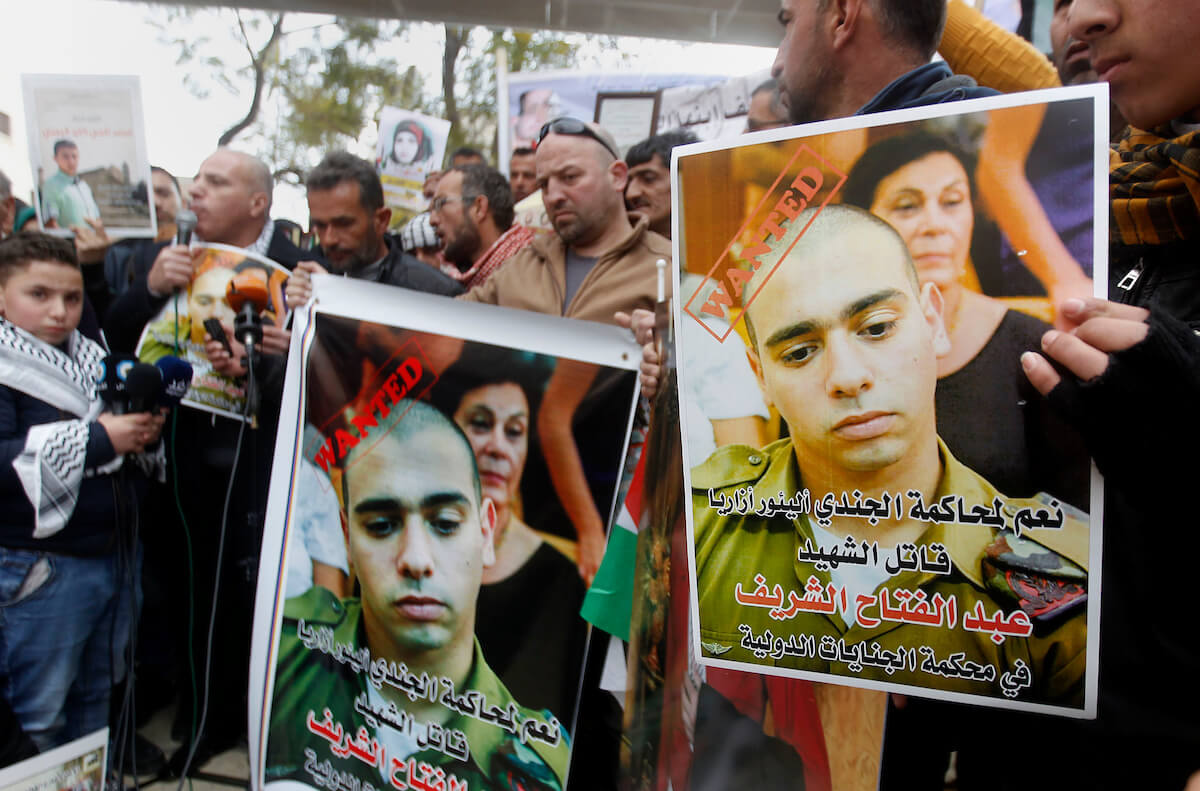
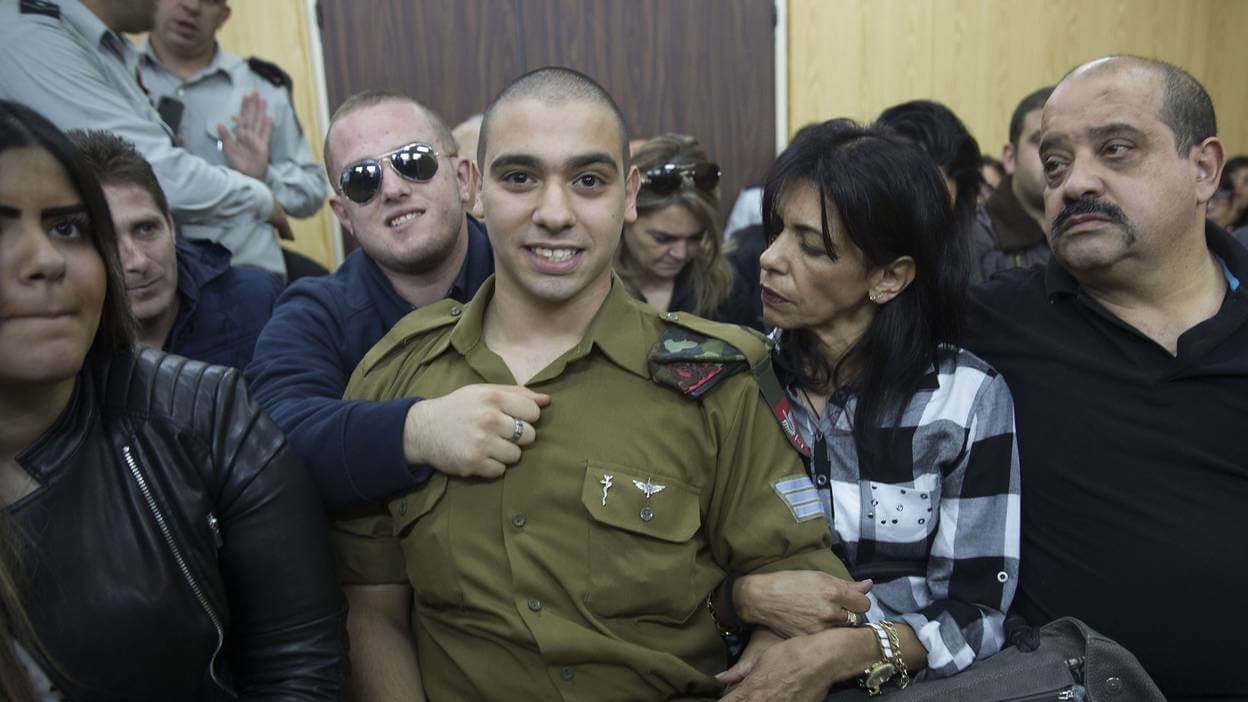
Emad Abu Shamsiyah first started receiving death threats in March, after a video he filmed for Israeli rights group B’Tselem, which captured Israeli soldier Elor Azaria shooting dead Abed al-Fattah al-Sharif, 21, was released to the public. Now, the manslaughter ruling against Azaria has translated into anger among Israeli settlers and Shamsiyah cannot walk the streets of his neighborhood without fearing for his life. “It was already bad before, but after the court ruling, all these threats started to come in through my Facebook, telling me I will die and that people want to murder me,” Shamsiyah tells Mondoweiss.
The Israeli military court ruling which found Sgt. Elor Azaria guilty of manslaughter in the killing of Abed al-Fattah al-Sharif has revealed long-simmering fissures in Israeli society that, according to experts, point to a growing anti-democratic trend in the country and reinforce the lack of accountability for Palestinians within the Israeli justice system.
In March, Ramzi Abu Ajamia got word that Israeli forces were looking for him. Terrified of getting arrested, Ramzi stopped sleeping at home and going to school. He succeeded in dodging Israeli forces for five months before he was spotted at clashes during an Israeli night raid on Dheisha refugee camp. Israeli forces spotted the boy on the streets around 1 a.m., and fired. Ramzi was shot in both legs and doctors were only able to remove the two bullets in his right leg. Ramzi underwent six surgeries over the course of a few weeks before he was sent home to recover. Then a few days into Ramzi’s homestay, Israeli forces stormed his house, blasting off the family’s front door before raiding the home and arresting the injured 13-year-old. “That night I had a feeling they would come for me, I was sitting up in my bed waiting,” Ramzi told Mondoweiss, both legs still bandaged and unhealed.
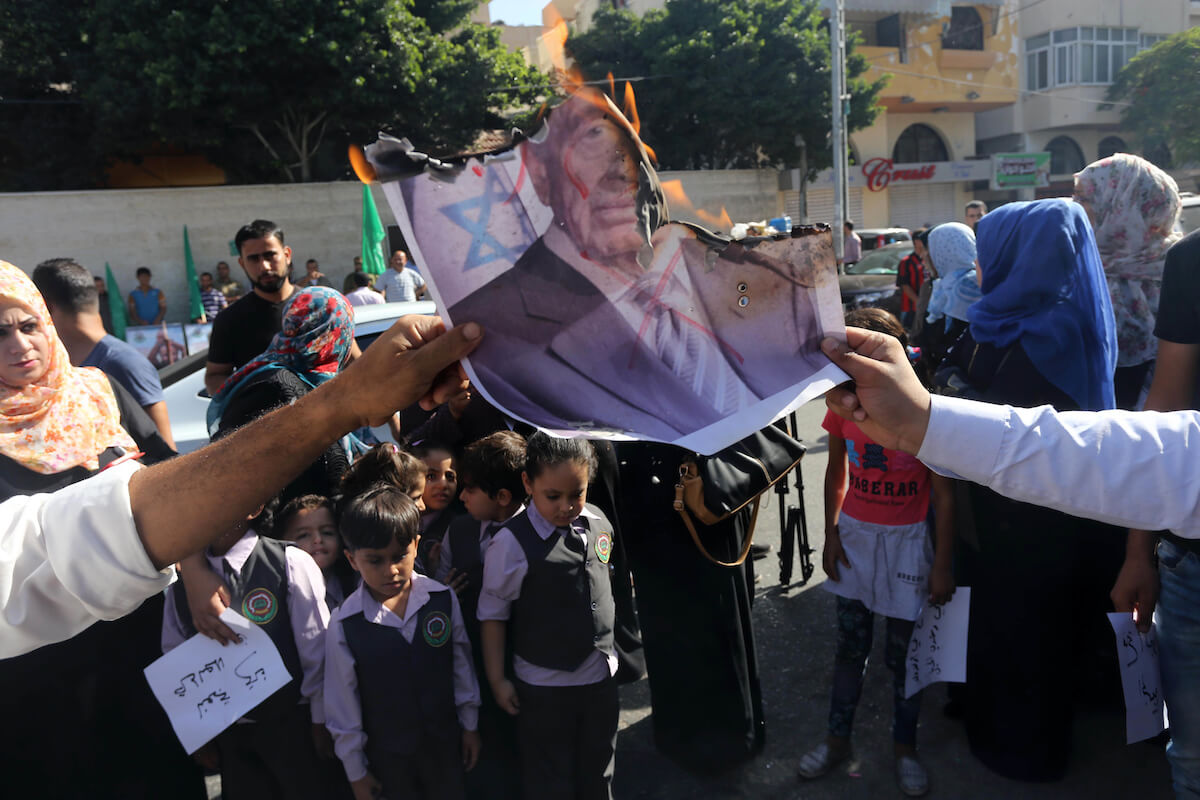
Osama Abu Arab, a well-known official at the Palestinian Authority’s military liaison office, was arrested by PA forces on Saturday after publically criticizing Palestinian President Mahmoud Abbas’s decision to attend Shimon Peres’s funeral. Hours after Abu Arab’s arrest, an Abbas administration official said in an Israeli Radio interview that Abbas had “no regrets” in his decision to attend the funeral. In Beit Jibrin refugee camp, one young man, who asked to remain anonymous, told Mondoweiss that Abbas’ attendance at Peres funeral was just another indicator that the Palestinian President was “not on the side of the people.”
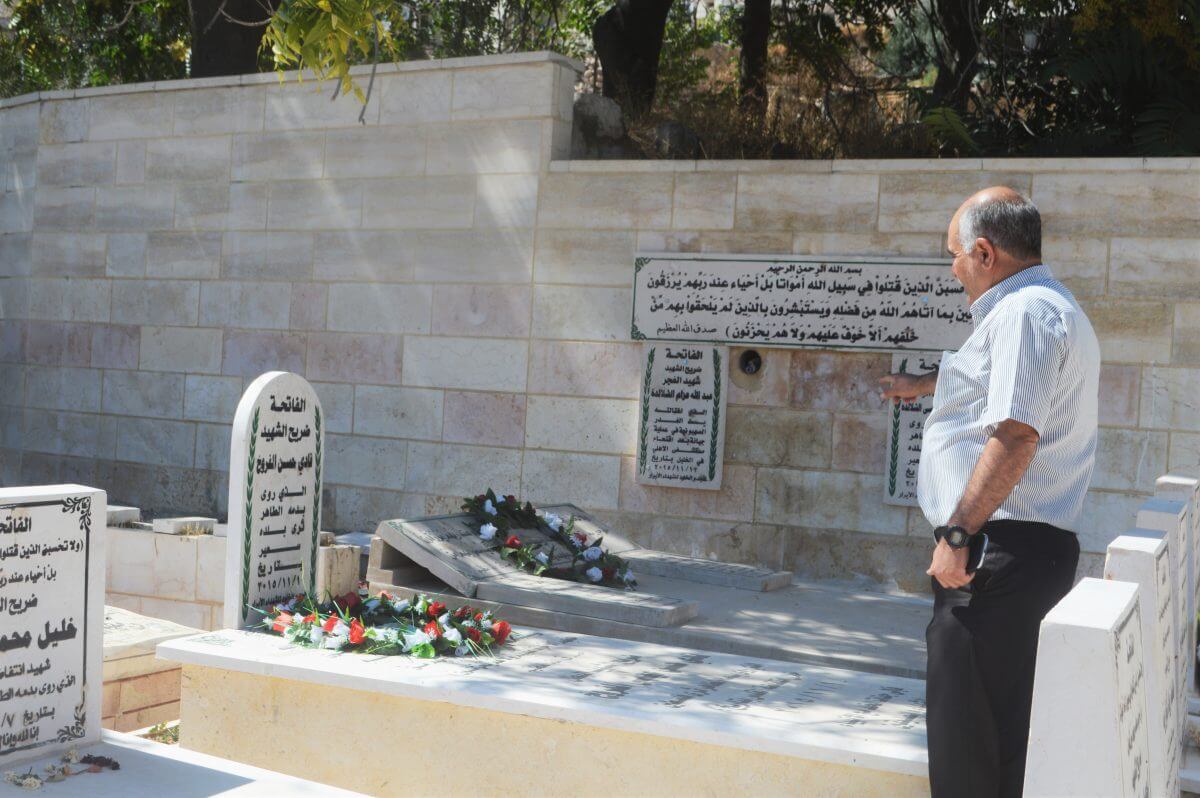
A year ago the Martyrs’ Cemetery in Sair, a town located in the southern occupied West Bank, was marked with graves a decade or more old. Today more than half the tombs are marked with dates from the past eight months. The village has been one of several epicenters of violence since the start of upheaval in October. Residents have endured the town being blockaded by Israeli forces, punitive home demolitions and thousands have had their Israeli work permits confiscated by authorities. The mayor of Sair village, Kayyed Jaradat tells Mondoweiss that Israel’s actions against the village have only fanned the flames of violence.
The Boycott, Divest and Sanction campaign has made huge strides in the occupied West Bank over the past two years, but campaign organizers are no where near done. At the start of Ramadan, the campaign, partnered with several other local community and BDS initiatives across the occupied West Bank, set out with a mission: To get Israeli products off Ramadan dinner tables.
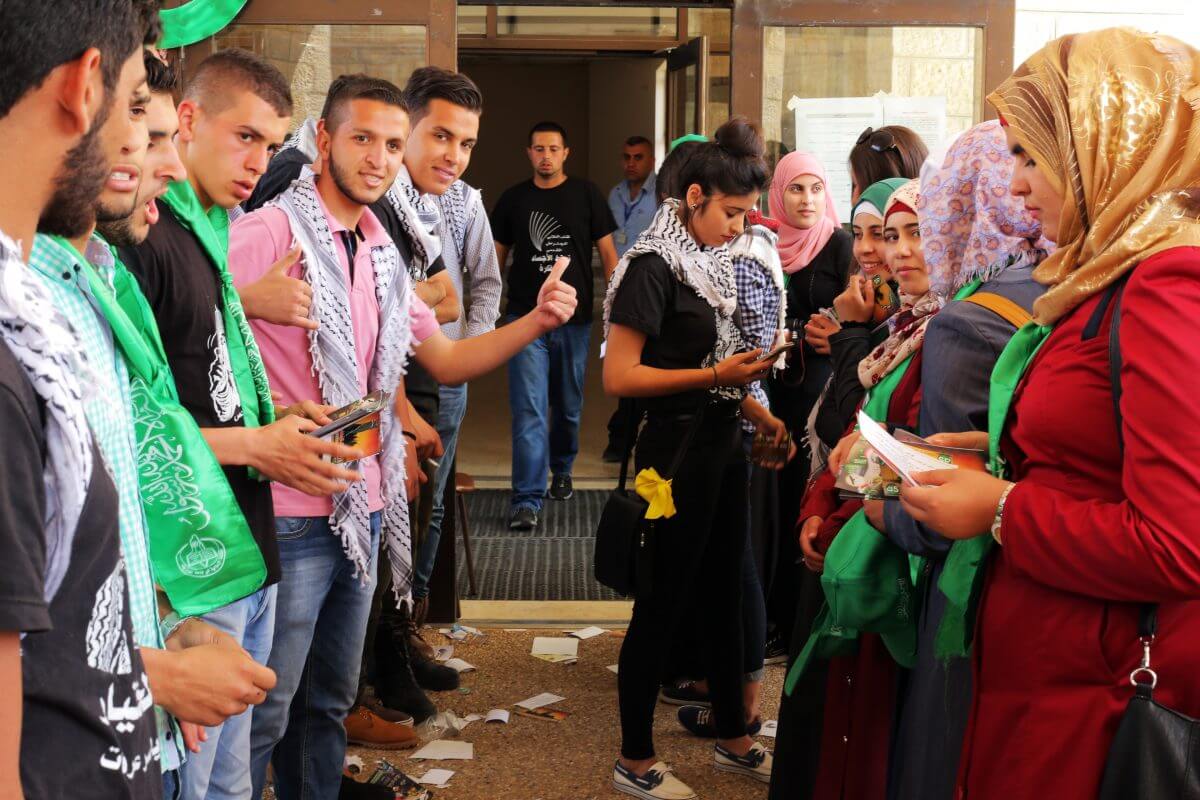
In the occupied West Bank student government elections are the only democratic bellweather of popular opinion, and are taken seriously both by the local population and political analysts. Although the vast majority of student body presidents have been men, Dana Rwaidy, Nawras Abd Addayem and Bahader Rezqallah were all recently elected president at universities in Bethlehem, Salfit and Tulkarem, the latter two cities considered more conservative parts of the West Bank. Rwaidy said she was happy to see that women have started to be more represented in higher education, but stressed that Palestine has a history of female leaders, both in the political sphere and in its resistance. “I don’t feel like my winning presidency is something I should focus on for too long, of course it is a great achievement, but it is just one step in where I am going in life, and there will be much bigger achievements to gain later because there is no restricting how far women can go in this country,” Rwaidy said.
Several hundred Palestinians marched through Bethlehem on Sunday in commemoration of the 68th anniversary of the Nakba, when an estimated 750,000 Palestinians were forcibly expelled from their homes and hundreds of others are believed to have been killed. The theme of the march this year was the “Train of Return,” and a massive train was made by volunteers from the three refugee camps in Bethlehem city for the march. “The idea behind the train was to show that we will return to our original villages,” Mohammed Abu Srour, one of the volunteers who helped build the train told Mondoweiss. “It is a simulation of our dreams to come back to our land.”