The Israeli Knesset on Monday passed a controversial new law that allows the Israeli government to expropriate private Palestinian land in the occupied West Bank and East Jerusalem, making more than a dozen Israeli settlements legal under Israeli law. It is the first time in history that the Knesset has imposed Israeli civil law the occupied West Bank, which is under Israeli military and civilian rule. Xavier Abu Eid, a spokesperson for the PLO’s Negotiations Affairs Department said the law essentially “legalized theft of Palestinian land” adding that the legislation “negates peace and the possibility of the two-state solution.”
Mohammed al-Qiq, a Palestinian journalist who spent 94-days on hunger strike last year to challenge his administrative detention—Israel’s policy of imprisoning Palestinians without charge or trial—announced Monday a second hunger strike, this time against his re-arrest. Al-Qiq’s wife, Fayha Shalash, told Mondoweiss that the proceedings, which were held in Ofer Military Court, were illegitimate, “This whole thing is just a way to put Mohammed back in jail, they have no proof of anything against him, they just want to keep him away from everything.”
The Israeli Knesset on Monday night is scheduled to vote on the so-called “Regularization Bill,” which, if passed, will appropriate hundreds of hectares of Palestinian land in the occupied West Bank by legalizing — under Israeli law — thousands of settlement units built on privately owned Palestinian land. The bill would legalise at least 3,921 Israeli settlement units in the occupied West Bank built in contravention of Israeli and international law. The Palestine Liberation Organisation called the bill a “declaration of war.”
Five of Europe’s largest pension funds have — against EU directives — invested up to €7.5 billion ($8.09 billion) in businesses linked to illegal Israeli settlements, Danish investigative news team Danwatch, reported on Tuesday.
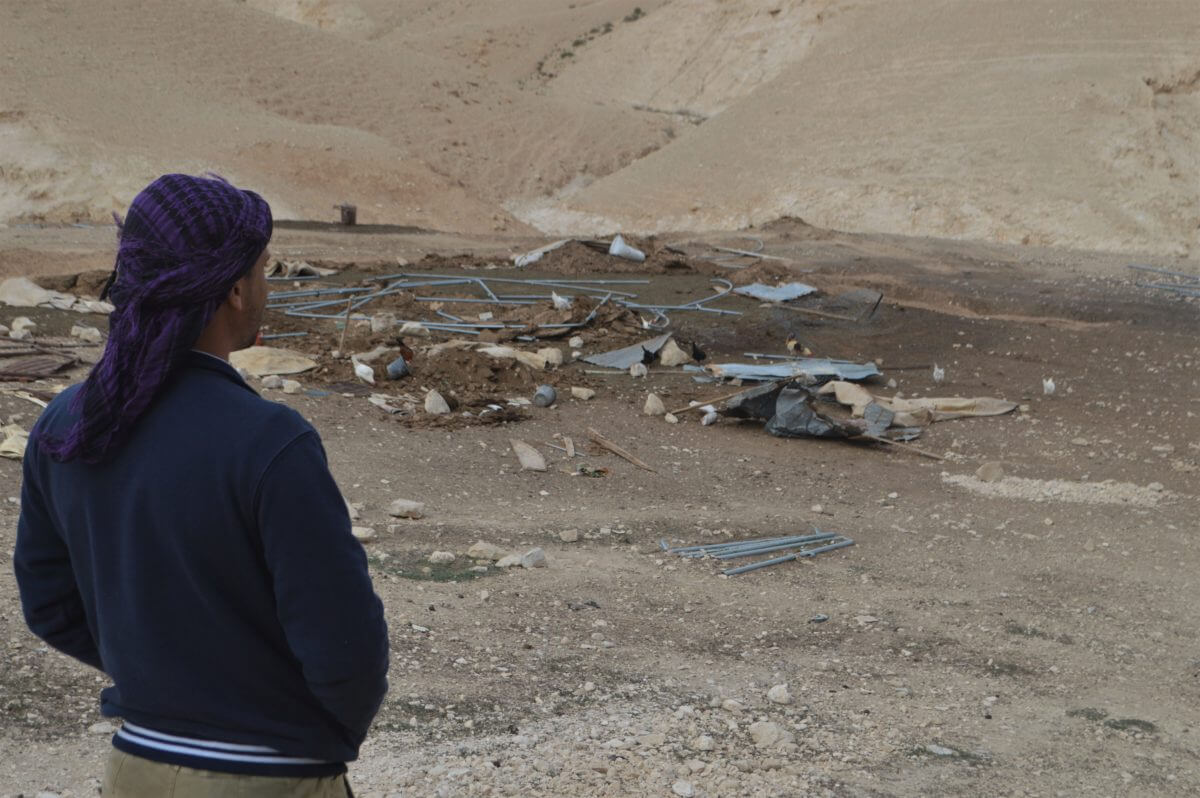
Last Wednesday Mohammed Jahalin and his family were ordered out of their houses in the Jahalin Tribe Bedouin encampment west of Jericho and watched as the metal blades of Israeli bulldozers smashed through their homes. In 2016, Israeli forces demolished homes, particularly Bedouin homes, in record numbers and in the first 23 days of 2017, Israeli forces demolished 119 Palestinian-owned structures, leaving 177 Palestinians displaced. “They keep tearing down our homes, and it’s so expensive to rebuild,” he said. “But we don’t know what else to do, we are refugees, we don’t own land, we have nowhere else to go. Tell us where to go where we can continue our way of life and we can do that, but right now we have nowhere else to go, this is our home,” Jahalin says.
News that Israel plans to build 2,500 new settlement units across the occupied West Bank was met with criticism on Wednesday from the international community and Palestinians, while an Israeli settler group called the move a “disappointment.”
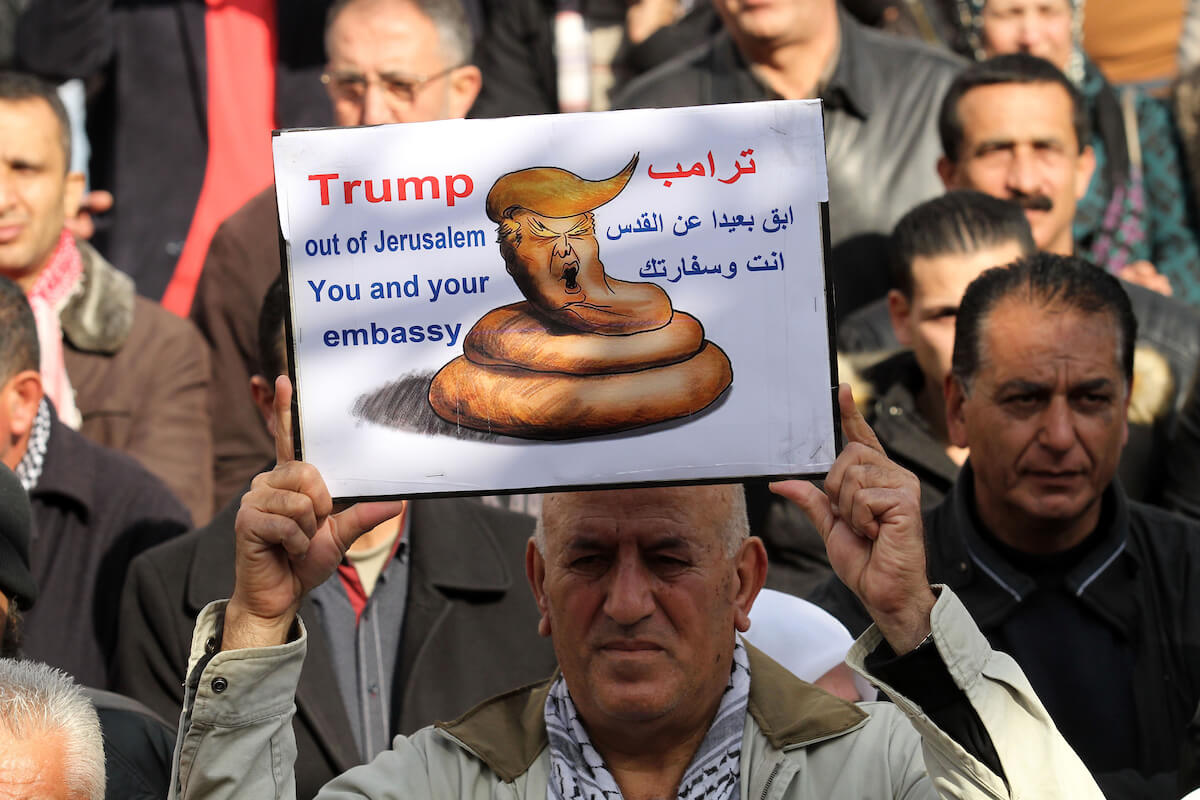
As Americans gather across the country in a mixture of celebration and protest following the inauguration of U.S. President Donald Trump, Palestinians in the occupied territory are expressing their own concerns of what a Trump presidency will mean for them.
Controversy erupted on Wednesday over conflicting reports regarding an incident in Umm al-Hiran, a Palestinian Bedouin village facing demolition in the Negev, where two people — one Palestinian civilian and an Israeli police officer — were killed. Palestinian witnesses said Israeli forces shot at a truck driving through the village, making the driver lose control and run over an officer, while Israeli officials have reported that the Palestinian was shot and killed after purposefully running over and killing the Israeli officer. Grainy drone footage, released after the incident, allegedly shows Israeli forces opening fire before the driver sped up and hit the officer.
A peaceful march broke out into clashes on Sunday, after Palestinians gathered in the occupied southern West Bank city of Bethlehem to demand Israeli authorities release the remains of Palestinians killed by Israeli forces to their families for burial. Samir al-Khadour, the husband of slain Majd al-Khadour, said, “To see all these people here gives me hope that I will get my wife’s body back one day.”
Qusay Hassan al-Umour, 17, was shot dead during clashes in Tuqu village on Monday afternoon. While the Israeli army says youth in the village had started a “violent riot”, locals say less than a dozen teens were throwing rocks at Israeli military jeeps before the shooting began. Sheren Khalel reports from Tuqu as thousands take to the streets in mourning and the al-Umour family struggles with the devastating news. “They have destroyed me. May God bring them to justice,” al-Umour’s mother tells Khalel.