
Israeli forces have demolished every home in the Bedouin village of Khirbet Taha in the northern West Bank district of Nablus during three separate demolitions since the start of the year. The village’s only school was also destroyed, leaving children to study in a dilapidated 100-year-old mosque — the only structure left standing in the village.
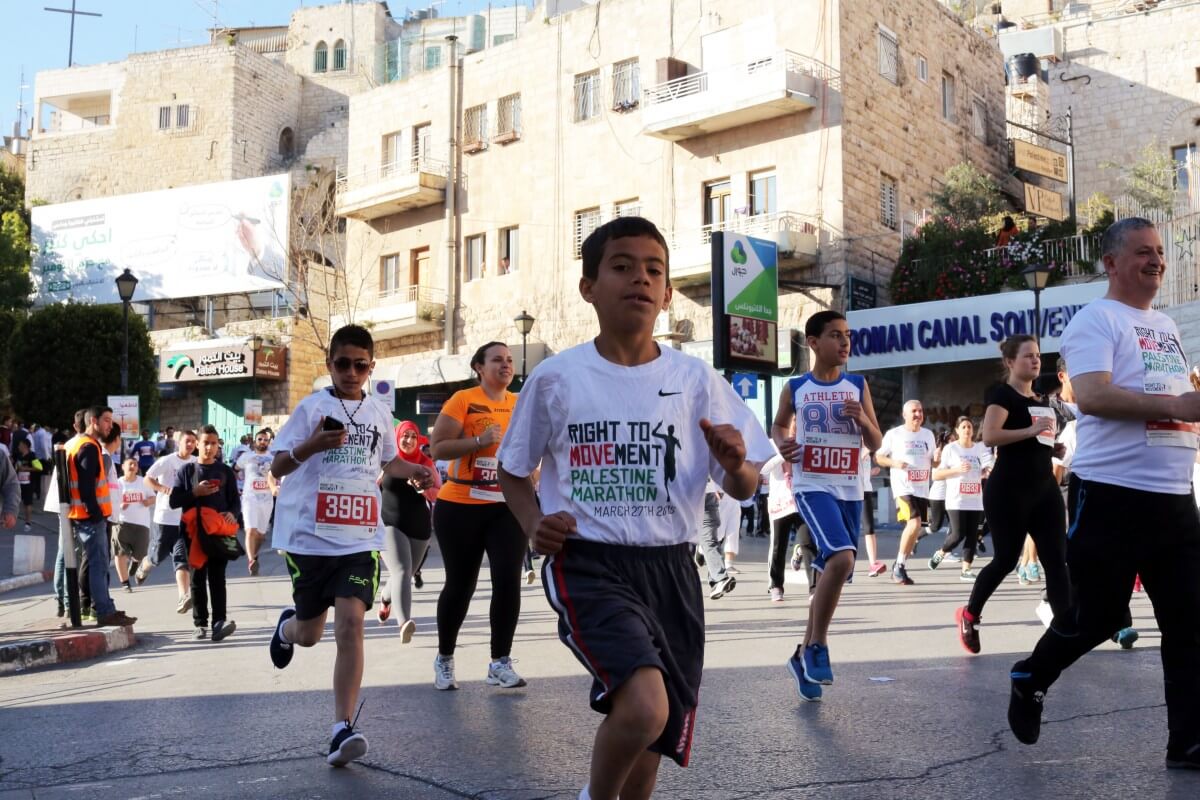
Runners woke up at dawn on Friday in the southern occupied West Bank city of Bethlehem, ready to take on the Freedom of Movement Marathon in the city. The marathon stretches across the city, quite literally running through two refugee camps, and circles around twice. As locals will ready explain, there is not space for a 42 kilometer route through Bethlehem, so unlike most marathons, the track has to double over two 21 kilometer paths.

Palestinians across the occupied West Bank on Wednesday gathered to commemorate the 40th anniversary of “Land Day.” The first Land Day, on March 30, 1976, saw thousands of Palestinians take to the streets in protest of the confiscation of thousands of acres of Palestinian land in the northern Galilee region of Israel. During the protest, six demonstrators were shot dead and over 100 were wounded. Forty years later, Palestinians are still taking to the streets in protest of massive Israeli land grabs.
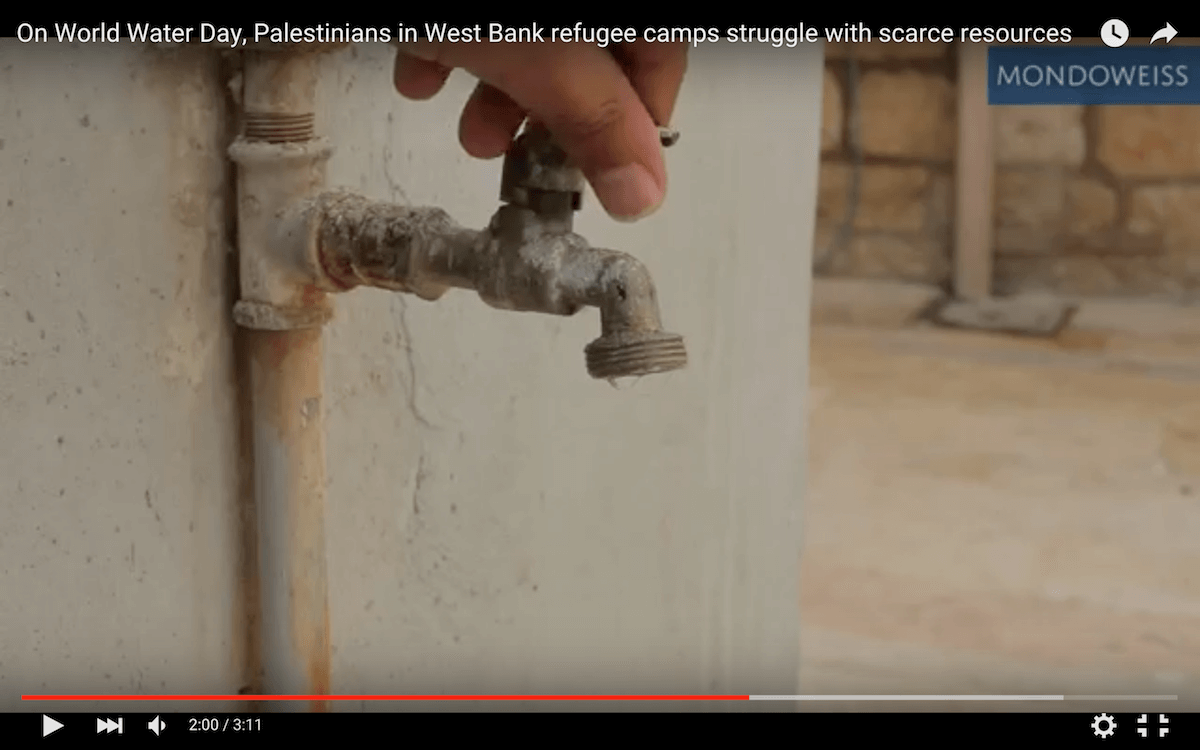
As the world celebrates World Water Day this week, Palestinians in refugee camps across the occupied West Bank are preparing for the summer, when water becomes scarce. While the World Health Organization recommends 100 liters of water per person per day, Palestinians in the occupied West Bank use less than 73 liters, with those in refugee camps using even less. In Israel, residents use an average of 183 liters per person, per day. In Bethlehem’s Beit Jibrin camp, one young man takes Mondoweiss around the in and outs of the water issues the camps face each year.

Dozens of Palestinian students marched in the occupied West Bank city of Bethlehem to encourage business owners to get behind the Boycott Divestment and Sanctions movement on Sunday. Ibrahim Subhay, a 22-year-old student in Bethlehem, told Mondoweiss that his main goal was to educate business owners on the importance of the BDS movement, “We can’t ask the international community to support us, and not do our part to support ourselves.”

On March 13, 11-year-old Khalid Ishtawy joined the thousands of other children injured by Israeli forces, when he was shot in the thigh in the northern occupied West Bank village of Kufr Qaddum during a protest. This past weekend other children joined the village’s weekly protest to honor their injured friend. Abed Al Qaisi and Sheren Khalel interview some of the young protesters who say they are demanding their right to be like children in the rest of the world, and letting their injured friend know they support him.
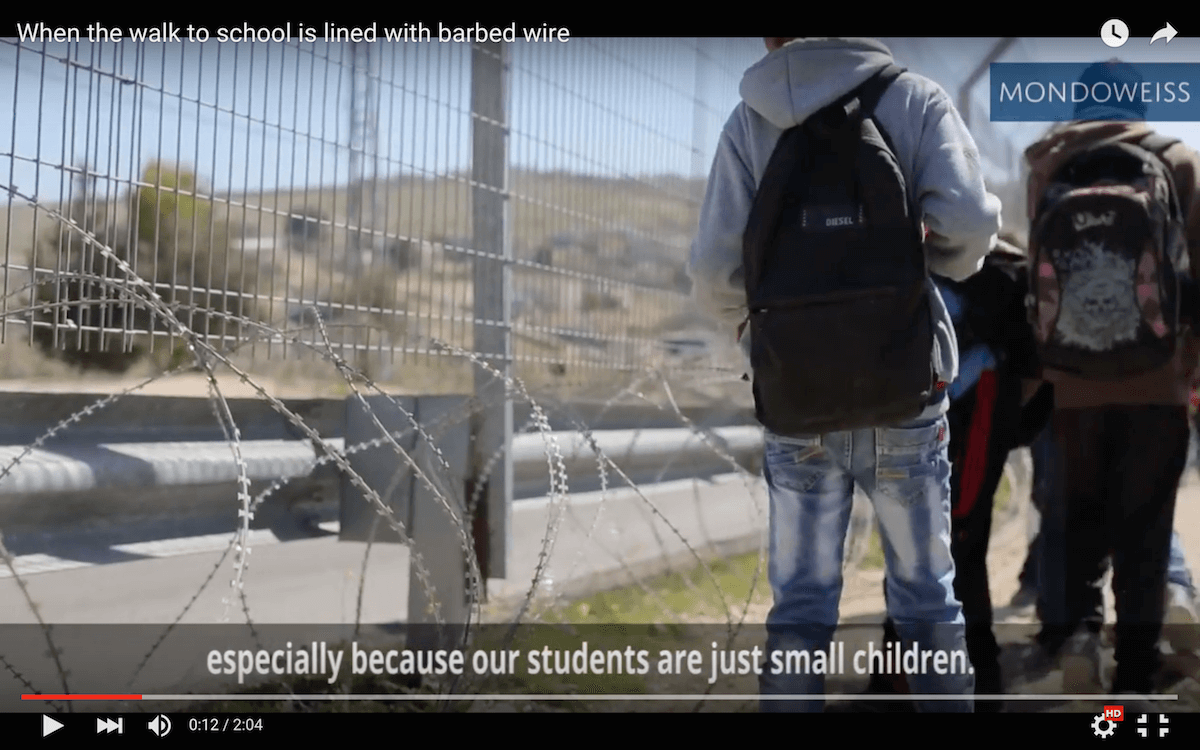
On Feb. 10, Israeli forces installed a section of fence a few hundred meters long, lined with barbed wire, along a dirt path taken by school children in the southern occupied West Bank district of Bethlehem’s Tuqu village. Mondoweiss spoke to some of the students and teachers who take the path to school everyday, and witnessed children as young as five getting caught in the barbed wire.

Muhanned Qafesha, a resident of Tel Rumeida in Hebron, takes Mondoweiss through the arduous journey residents of the city have been subjected to since Israel made the town a closed military zone in November. Israeli soldiers detain and harass filmmakers Sheren Khalel and Abed Al Qaisi as they attempt to report Qafesha’s story.

Filmmakers Sheren Khalel and Abed al Qaisi wanted to know exactly how much the children who live in Bethlehem’s Aida and Beit Jibrin refugee camps understood about the military occupation going on around them, and how normal they believed their lives were. With their parents permission, Khalel and al Qaisi asked five children from the streets of the two camps what they thought. All of the answers were spontaneous and unrehearsed, and as it turned out, the kids understood — and have experienced — quite a lot.

Tourists, political leaders, activists and residents of Bethlehem gathered right in front of the Nativity Church Thursday night with an unusual message. With Christmas just days away, the city of Bethlehem erected what they call a “Resistance Tree” — an olive tree which was recently uprooted by Israeli forces from a nearby neighborhood, was placed in the center of the main square, overlooking the towering Christmas tree and historical Nativity church. Instead of baubles and tinsel, the Resistance Tree was decorated with tear gas canisters clinking together like bells, photos of Palestinians recently killed or detained, Palestinian national scarves and sling shots.