Although 74 years have passed since the Nakba, many Palestinian refugees hold onto possessions from their original homes and villages where their families were expelled from in 1948. Old keys, handwoven dresses, musical instruments, antique pottery, and old farming equipment all serve as a reminder of life before Israel was established.
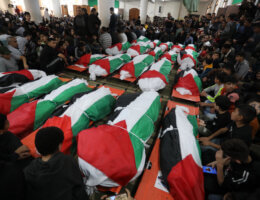
Mothers checked on their sons and told them to stay home Monday night in Gaza as the sound of Israeli warplanes spread terror across the sky.
Every year, millions of Palestinians anxiously await the beginning of the holy month of Ramadan, a beloved and cherished month by Muslims around the world. And while many people find great joy in this month, the sweetness of Ramadan in Gaza is often soured by the effects of the Israeli siege on Gaza, which is inevitably felt every day, even during the holiday.
On March 30, thousands of Palestinians attended the yearly commemoration of Land Day in Gaza. Tareq Hajjaj walked through the crowd and asked attendees – “What does Land Day mean to you?” Answers varied, but most included the statement: “the land means our existence.”
Prices are rising in Gaza due to the war in Ukraine. “What do I have to do with this war that is making the price of flour go up nine shekels?” a beleaguered taxi rider in Gaza city asks.
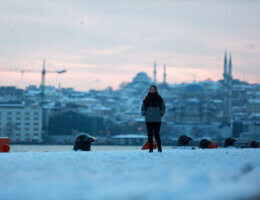
As the global climate crisis continues to worsen, many families in Gaza are feeling the devastating effects of climate change. These impacts are compounded by Israel’s 14-year siege on the territory as well as repeated attacks, including the war last May. Hussni Mohanna, the spokesperson for Gaza City’s emergency committee, tells Mondoweiss that the city tries its best to alleviate the infrastructural issues caused by the wars, but the odds are stacked against them. With the limited budget and resources it has, it cannot keep up with the rapidly changing climate.
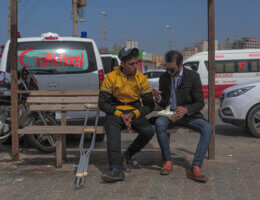
The death of 14-year-old Osama Sarsak reflects the perilous conditions in which many Gazans find themselves.
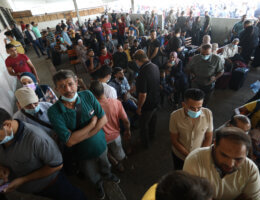
3,400 Gazans received their national Palestinian ID cards for the first time following a rare approval from the Israeli government, which controls the Palestinian population registry in the occupied territory, and has put a freeze on issuing IDs for over a decade.
Welcome to the first installment of Palestine Letter, Mondoweiss’s new email newsletter where our Palestine-based correspondents will share a behind-the-scenes look at life and work under Israeli occupation. In this edition, Tareq Hajjaj shares how the impact of torrential floods in the Gaza Strip have been exacerbated by years of Israeli attacks.