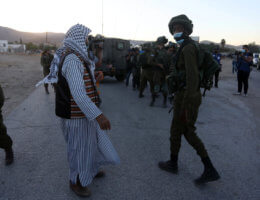
Video footage taken by residents of Tuqu shows Israeli military forces escorting a large flatbed truck out of the village in the middle of the night. On the bed of the truck is a massive stone, alleged to be a baptismal font that dates back to the sixth century A.D.
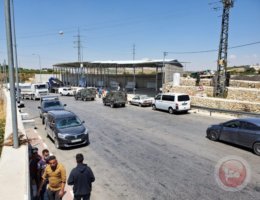
Earlier this week, Israeli forces issued an order threatening to demolish a field hospital in Hebron, the epicenter of the coronavirus outbreak in the occupied West Bank.
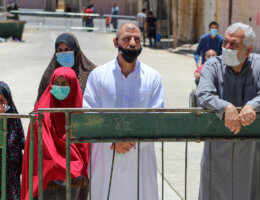
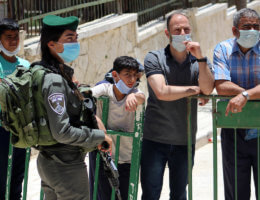
As of Tuesday afternoon, the Palestinian death toll from COVID-19 stands at 47 people and climbing. The vast majority of deaths have been recorded in the West Bank, specifically in Hebron, the epicenter of the outbreak.
Leaders are struggling to maintain control over the virus, as the number of cases soared past 5,000 cases this week. On July 4th, the Ministry of Health said all of its ventilators were being used by both COVID-19 and chronically ill patients.
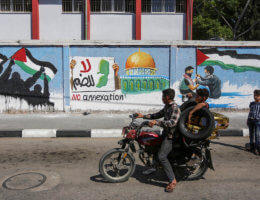
With every passing day, the prospect of annexation and what that means for Palestinians living under occupation becomes more and more unclear. What exactly happened, and what’s going to happen in the near future? We answer some of your questions here.
The threat of political disaster and an uncontrollable outbreak are pulling ordinary Palestinian citizens in different directions, with little guidance from the government and leaders as to what the near future might look like.
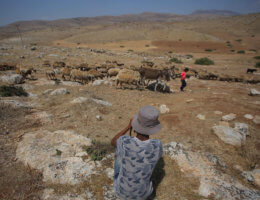
As annexation day approaches, Palestinians on the ground are gearing up for a new reality, one they say they’ve been forced to get ready for for years. Zayd Sawafta, a farmer and mayor of the small village of Bardala, tells Mondoweiss that even when annexation does go through, Palestinians aren’t leaving. “We have learned from experience,” Sawafta says. “They will do everything they can to kick us off this land and take it for themselves, but this time, we are not leaving.”
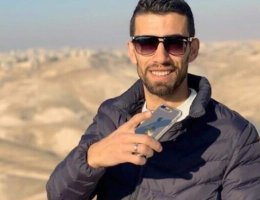
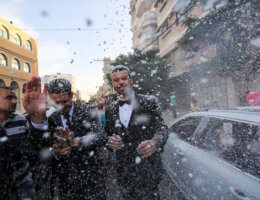
Ahmad Erekat, 27, was killed by Israeli forces on Tuesday outside Bethlehem while on his way to celebrate his sister’s wedding. Family and friends are in shock. “It’s tragic,” Dr. Abdallah Abu Hilal, a friend of the family, tells Mondoweiss. “To see the house all decorated, and ready for a wedding. And then to see what was supposed to be the wedding hall, now turned into a wake.”
Restaurants and cafes are still open and at full capacity, and there seems to be a common mentality that because most cases in Palestine have had mild or no symptoms, “even if I get sick, it’s not going to be that bad.”