In the past five days, the Palestinian Ministry of Health has announced at least 20 new coronavirus cases in the West Bank, with the majority of cases reported in rural towns and villages in the Hebron district.
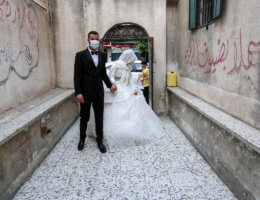

In the past five days, the Palestinian Ministry of Health has announced at least 20 new coronavirus cases in the West Bank, with the majority of cases reported in rural towns and villages in the Hebron district.

“We must remember that George Floyd didn’t die due to a lack of oxygen. He died because of a lack of justice,” Palestinian artist Taqi Spateen tells Mondoweiss.

The inextricable similarity between the murders of George Floyd and Eyad El-Halaq has reinvigorated the longtime bond between the struggle for Palestinian liberation and the fight for black liberation in the US.

Israeli Prime Minister Benjamin Netanyahu and his government are facing pushback over plans to annex large swaths of the occupied West Bank as early as next month, with Israeli and Palestinian protestors taking to the streets to voice their opposition to the plans over the weekend.

Palestinians in the occupied West Bank City of Bethlehem gathered on Tuesday outside the Church of Nativity, the birthplace of Jesus, to hold a vigil in honor of George Floyd and Eyad al-Halaq. Mahmoud Zawahreh, a local activist, told Mondoweiss that “it is important for Palestinians to stand with all the oppressed people in the world, of all nationalities, who are the victims of racism and persecution.”

It’s been two days since Ranad al-Halaq’s only son, 32-year-old Eyad al-Halaq, was gunned down by Israeli police in the Old City of Jerusalem, where he was enrolled at a center for Palestinian adults and children with disabilities. “He was the light of my heart, the light of my eyes, my soul, my angel.”

Eyad al-Halaq was on his way to a school for children and adults with disabilities where he was a student when Israeli police spotted a “suspicious object that looked like a pistol” and shot him. After killing him, officers found that al-Halaq was unarmed.

The firing of a veteran Associated Press cameraman is causing a stir in Palestine after allegations that the Palestinian Authority had a hand in the matter.

Since the beginning of April, Israeli forces have been documented shooting holes into the water tanks on the rooftops of people’s homes in Kafr Qaddum. B’Tselem has concluded that “the shooting is deliberate”, and described the damage to the tanks as “sheer abuse” and “an illegal act of collective punishment.”

The Palestinian Authority officially declared an end to the coronavirus lockdown in the occupied West Bank on Monday, nearly three months after the first state of emergency was declared.