Being a foreigner in Palestine is complicated and Nora Lester Murad’s latest book collects essays from the men and women who found themselves living in Palestine, navigating both their privilege and the occupation.


Being a foreigner in Palestine is complicated and Nora Lester Murad’s latest book collects essays from the men and women who found themselves living in Palestine, navigating both their privilege and the occupation.
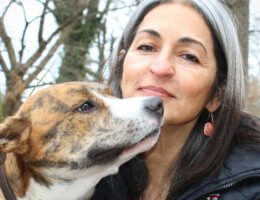
Sexual and gendered practices in Arab society stand at the core of the novel “Against the Loveless World,” with author Susan Abulhawa going full force in a critique of patriarchy: With the exception of the Palestinian underground heroes of both sexes, most gendered interrelations in the novel reflect poorly on the male players.

‘We Are Many’ tells the story of the protests of February 15th 2003, when 30 million people across the world said no to the Iraq War. It’s an inspiring story of resistance, but it also demonstrates how that historic day has shaped our current world.
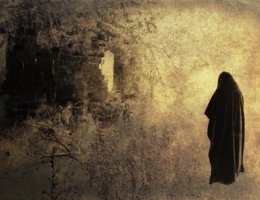
“Cry, the beloved country,” a showcase of Gil Mualem-Doron’s work from 2013 onward, is a critical look at the Israeli government’s practices and the consequences on both the Palestinian and Israeli people.
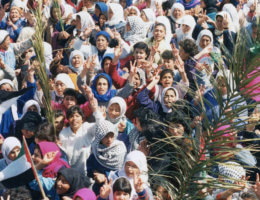
Julia Bacha’s two documentaries, Budrus (2009) and Naila and the Uprising (2017), represent important contributions to the cultural struggle against Israeli apartheid—though watching them at this historical juncture feels somewhat bittersweet.
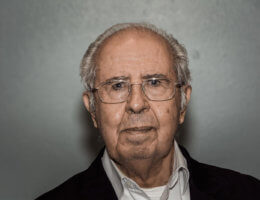
Salman Abu Sitta was uprooted from his family lands near Beersheba during the Palestinian Nakba in 1948 and the trauma has informed his entire life as a refugee and scholar. “I looked back at the smoldering ruins, at the meadows of my childhood, golden with the still-unharvested wheat. What had we done to them? Who were these Jews anyway?”
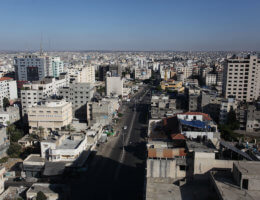
Amid turmoil in Gaza from Israeli attacks and the spread of the coronavirus, Haider Eid shares a celebration of Palestinian life and resistance.

Susan Abulhawa’s new novel, Against a Loveless World, “has given readers of Palestinian writing a beautiful new horizon within which to imagine freedom.”
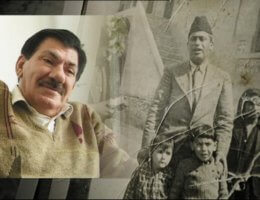
Samir Naqqash is perhaps the most prolific modern Iraqi-Jewish writer, yet his work was ignored for decades by the Israeli academy. The recent Hebrew publication of his novel “Shlomo the Kurd, Me and the Time,” which was originally written in Arabic, will hopefully change that.
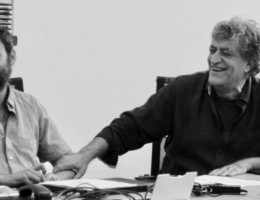
Even though Israel is surrounded by Arab countries, rules over millions of Palestinians, and that over half of the Israeli Jewish population originates from Arabic-speaking countries, more literature is translated from Swedish into Hebrew than from Arabic each year. The Forum of Arabic-Hebrew Translators seeks to change this through promoting suppressed Palestinian narratives to an Israeli audience. It is “a political model […] to decolonize the colonial relations between the languages,” co-founder Yehouda Shenhav explains. To “serve as a model for shared sovereignty in Israel-Palestine in the Middle East, so as to be a model for politics itself”.