Andrew Ross’ “Stone Men” is a sobering book in many ways. The subtitle tells the real story: just as Israel could not exist without the land of Palestine, so the country could not be built without the steady toil, skills, and dependability of Palestinian stonemasons.
What motivates the criticism of Israel by Jews in the diaspora? Bruce Robbins talks with Bonnie Honig, one of the most insightful and original political theorists of her generation, who argues by targeting the Jewish diaspora in order to manufacture uncritical solidarity, Israel created, paradoxically, a sense of obligation to criticize Israel.
Sara Burback travels from Washington DC to the West Bank city of Bethlehem to participate in the 2019 Palestine Marathon. Burback says it is a “special opportunity to run through Bethlehem and join runners from all over the world in defense of the basic human right to movement.”
In Shoshana’s latest installment, what she appreciates most about Ramallah on Thursday night (party night) is how committed her friends are to partying, with no hesitancy to dance, an appreciation of letting loose. Shoshana thinks it is a world away from the tension she often encounters in Jerusalem.
A new documentary called WitchHunt points out the narrow room for debate over alleged antisemitism in the British Labour Party. Anti-Zionist Jews are excluded as unrepresentative of British Jews. And why is it okay to talk about antisemitism and Zionism in Britain without asking a Palestinian what their direct experience of Zionism has looked and felt like?
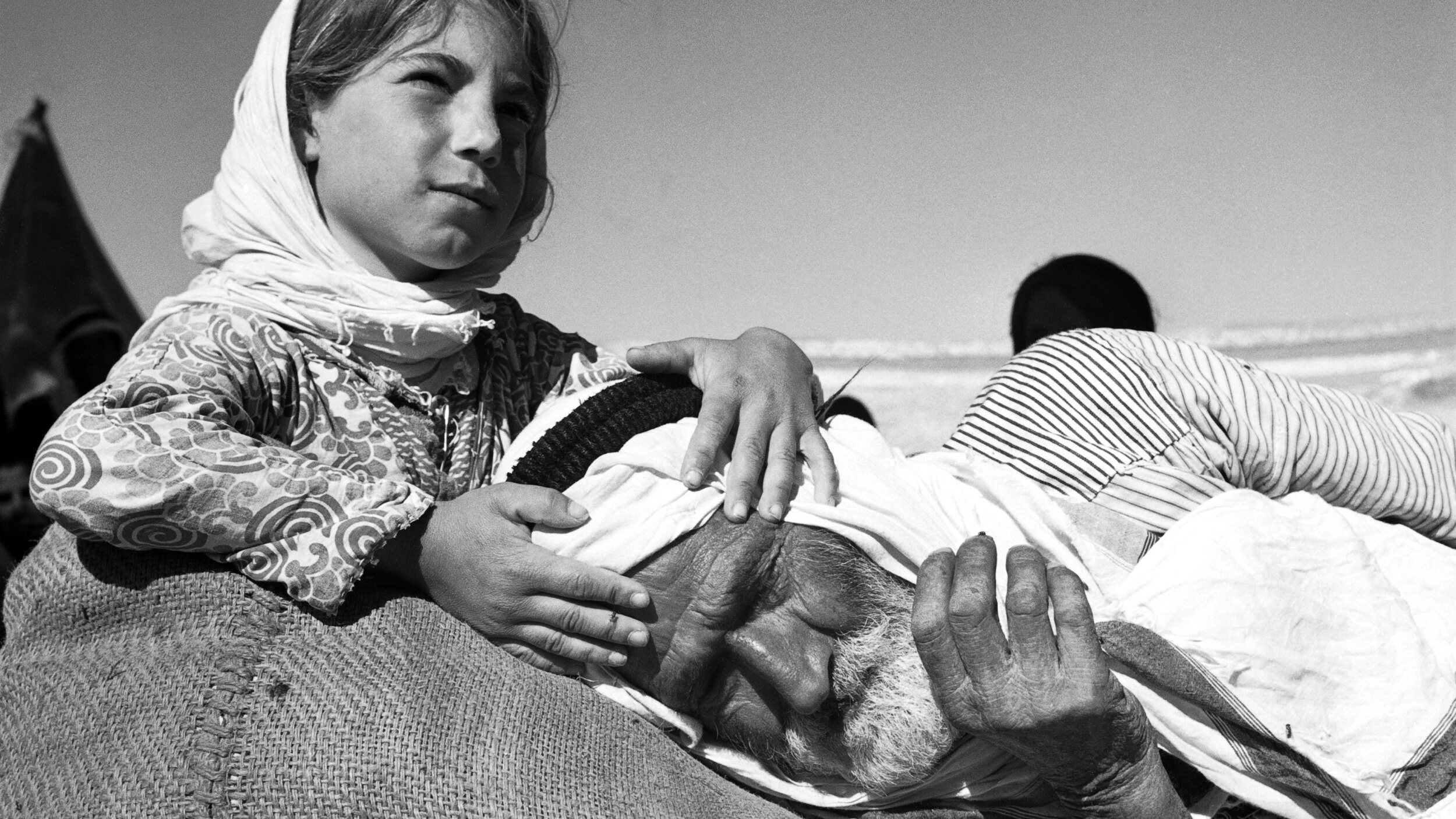
“Even a thousand films on the Nakba would not suffice,” says Ahlam Muhtaseb, co-director with Andy Trimlett of a new film, “1948: Creation & Catastrophe,” which is based in part on interviews with survivors, many of them of advanced years. The film has been subject to protests by Israel supporters, and a screening in West Hollywood was scratched under pressure in December, now rescheduled for March. Stephen Shenfield interviews the co-directors.
Shoshana, an American in Palestine, visits Jaffa and finds that it’s different from the movies, “I don’t like Jaffa. In my all-consuming Palestine obsession, I find it frustratingly Israeli. I hear so much Arabic but see no Palestinian flags. It feels generalized and deracinated.”
Marc Ellis writes that the rescinding by the Birmingham Civil Rights Institute of an award to Angela Davis raises issues about the Black-Jewish alliance and the ability of Jews to set parameters for African Americans to speak on Jewish questions, including Israel. There is a war over that question. The Jewish establishment sees Angela Davis as an enemy. Jews of Conscience see her as an ally.
Marc Ellis on the passing of Amos Oz: “Like Wiesel, Amos Oz was a witness to the destruction and reemergence of Jewish life in the formative events of the Holocaust and the birth of the state of Israel. What they also experienced but couldn’t fathom was the formative event of Palestinian freedom as a demand on Jewish history. In missing the next question of Jewish life, while trying to deflect and demean those who did, Oz’s liberal Zionist witness became tarnished and, like Wiesel’s Holocaust consciousness, fated.”