Benjamin Netanyahu’s security cabinet announced a decision that Israel “would work to prevent the collapse” of the Palestinian Authority as Mahmoud Abbas seeks to re-establish PA control in Jenin.


Benjamin Netanyahu’s security cabinet announced a decision that Israel “would work to prevent the collapse” of the Palestinian Authority as Mahmoud Abbas seeks to re-establish PA control in Jenin.
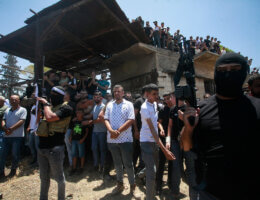
The resurgent resistance in Jenin shows that a narrow refugee camp with limited capabilities can slow an entire army and preserve its capacity to resist.

Twelve Palestinians, including at least four youths, were killed by Israeli forces in Jenin this week during a massive military operation on the Jenin refugee camp that lasted 48 hours. Over 120 Palestinians were also injured during the raid.
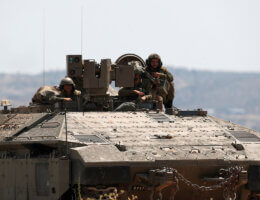
Israel has made it clear that this is not the end of its operations in Jenin, and the latest raid has left Palestinians asking, is Israel moving towards a Gaza-type model in Jenin?
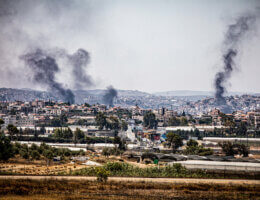
After failing to eliminate the Palestinian resistance in Jenin despite repeated invasions, the Israeli army has now launched its largest attack on the city in over 20 years, including over 150 armored vehicles and 1,000 ground troops.

The transfer of unprecedented powers over the occupied West Bank to Itamar Ben-Gvir and Bezalel Smotrich has deepened the rift between Israel’s military-security establishment and the rising settler bloc.

The Israeli army has redoubled its efforts to crack down on armed resistance in the West Bank, but its recent raid on Balata refugee camp ended in failure as the wanted resistance fighters evaded capture.

Armed resistance in the West Bank is caught between the combined efforts of Israel and the Palestinian Authority to undermine its growth.
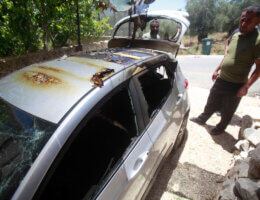
The Israeli settler movement and state both work toward the same goal: the colonization of Palestine, and the repression of resistance to that colonization by the native population.

The Flag March continued the Zionist war on Jerusalem, while the assault on Palestinian resistance renewed itself following a deadly Israeli raid on Balata refugee camp, leaving 3 Palestinians dead.