As Israelis were evacuated from Jewish-only communities in the Galilee due to fires this month, Hatim Kanaaneh reflects, “Are you aware that within recent memory your own residential locales had Palestinian names and were inhabited by humans, some of whom with features not really different from your own and who were before their expulsion actually part of the best educated nation in the Middle East? They lived right where you live now but without all those fire-hazardous pines.”
It has been one month since Israel’s unofficial July 1st deadline to annex the West Bank passed. According to data gathered by Mondoweiss from local Palestinian news reports, from July 1st to the 31st, there were at least 25 reported incidents of Israeli settlers attempting to seize Palestinian land, setting up new outposts, attacking Palestinians, vandalizing Palestinian homes, mosques, and vehicles, and burning down Palestinian crops and agricultural lands.
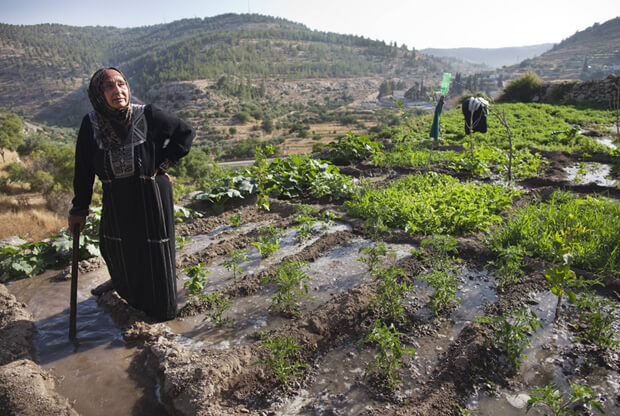
Israel has been itching to run its Separation Wall across the occupied valley of Battir for years, a move that would surely destroy that valley. But Battir has UNESCO status because of its agricultural traditions, including terraced irrigation and heirloom apricot and cucumber, and this has put Israel’s plans on hold for the time being.
Israel’s High Court ruled to freeze state plans to build a part of Israel’s “separation” barrier that would have gone through the middle of Battir, a victory for the farming village of 5,000 people located west of Bethlehem in the southern West Bank. Mondoweiss speaks with Hassan Muamer about what the ruling means for the village and for Palestinians.