Tag

Boycott Divestment and Sanctions

Browsing

Israel is now walking a tightrope above very unpredictable waters of public opinion in the west. The overwhelming wave of opposition to Russian aggression is justifying boycott, divestment and sanctions as well as resistance as responses to the Russian military occupation, measures for which Palestinians have vainly sought western approval. And meanwhile, Israel is playing footsie with Russia so as to maintain its freedom to conduct missile attacks in Syria against Iranian targets.

You see no universal Western outrage over the US support for the Saudi blockade on Yemen, which has killed an estimated 377,000, most of them children dead of famine. The Western press sometimes does report on Western atrocities, but with nothing approaching the rage it reserves for the crimes of our enemies. If there isn’t a constant drumbeat of stories about our atrocities as there is for Putin’s, and pundits aren’t constantly agonizing over our need to do something, the unspoken message is that our crimes simply aren’t that important or bad. Yes this is an argument for whataboutism– but you must be a moral imbecile to think there is something wrong with it because of that.  

“The first Intifada was a struggle to end Israeli occupation by establishing an independent Palestinian state in the occupied territories,” political scientist Ian Lustick writes. “I supported that struggle. Tragically, it failed. Three decades and half a million settlers later, that objective is no longer attainable. The BDS movement has effectively taken its place as a grassroots popular movement, based on an absolute commitment to nonviolence, a long-term strategy, a fundamental commitment to equality, and insistence on the realization of Palestinian rights, rather than calling for a specific kind of institutional arrangement.”

A highlight of the Israel lobby conference held at the National Press Club by the Washington Report on Middle East Affairs last Friday was a speech by singer/songwriter Roger Waters in which he read from letters to musicians urging them not to play Israel in line with the call of the BDS campaign. When Australian singer Nick Cave performed in Israel in 2018, he rejected Roger Waters and Brian Eno’s call to respect the BDS boycott campaign, saying it was “cowardly and shameful.” Waters says he responded to the “louche” artist with disbelief, rage and sorrow. “We hurl our glasses in the fire of your arrogant unconcern and smash our bracelets on the rock of your implacable indifference.”

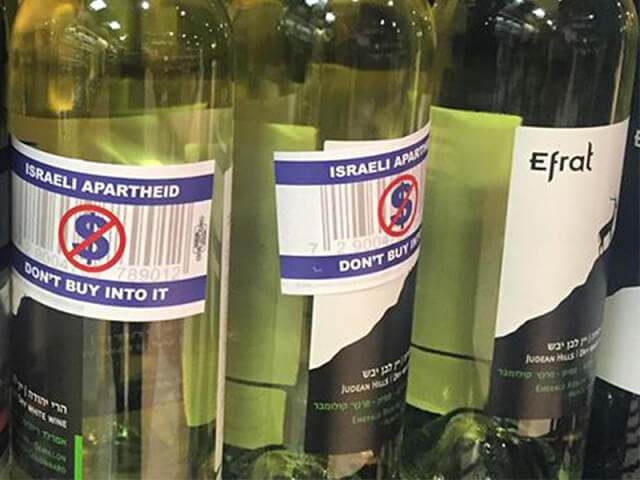
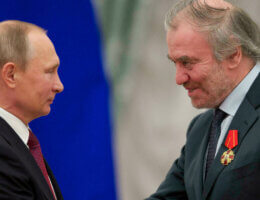
Witnessing a wave of public calls for action, western governments and institutions have enacted sweeping boycotts and cancellations of Russian artists and Russian products over the Russian invasion of the Ukraine. But for many years the Palestinian BDS call has been rejected by European governments and U.S. states despite public support and the reports of human rights groups. If supermarkets removed Israeli products and theaters canceled performances by those who vocally support Israeli actions, we would hear the actions denounced as antisemitic for “singling out the Jewish state.”

Qalandiya checkpoint. A Palestinian woman throws stones at Israeli border policemen during a rally ahead of International Woman's Day, at Qalandiya checkpoint near the West Bank city of Ramallah March 7, 2015. Photo by Shadi Hatem (c) APA Images

The first time I was called a “self-hating Jew” was almost 15 years ago by someone I considered a close friend. It stung and I felt confused. Why does supporting Palestinian rights make me self-hating? And what does that have to do with my Judaism? Israel/Palestine seemed like a clear-cut situation to me. How could taking a country away from the people who had been there for centuries be right? 15 years later I have never felt stronger in my stance as a self-loving anti-Zionist Jew.