Tag

Boycott Divestment and Sanctions

Browsing

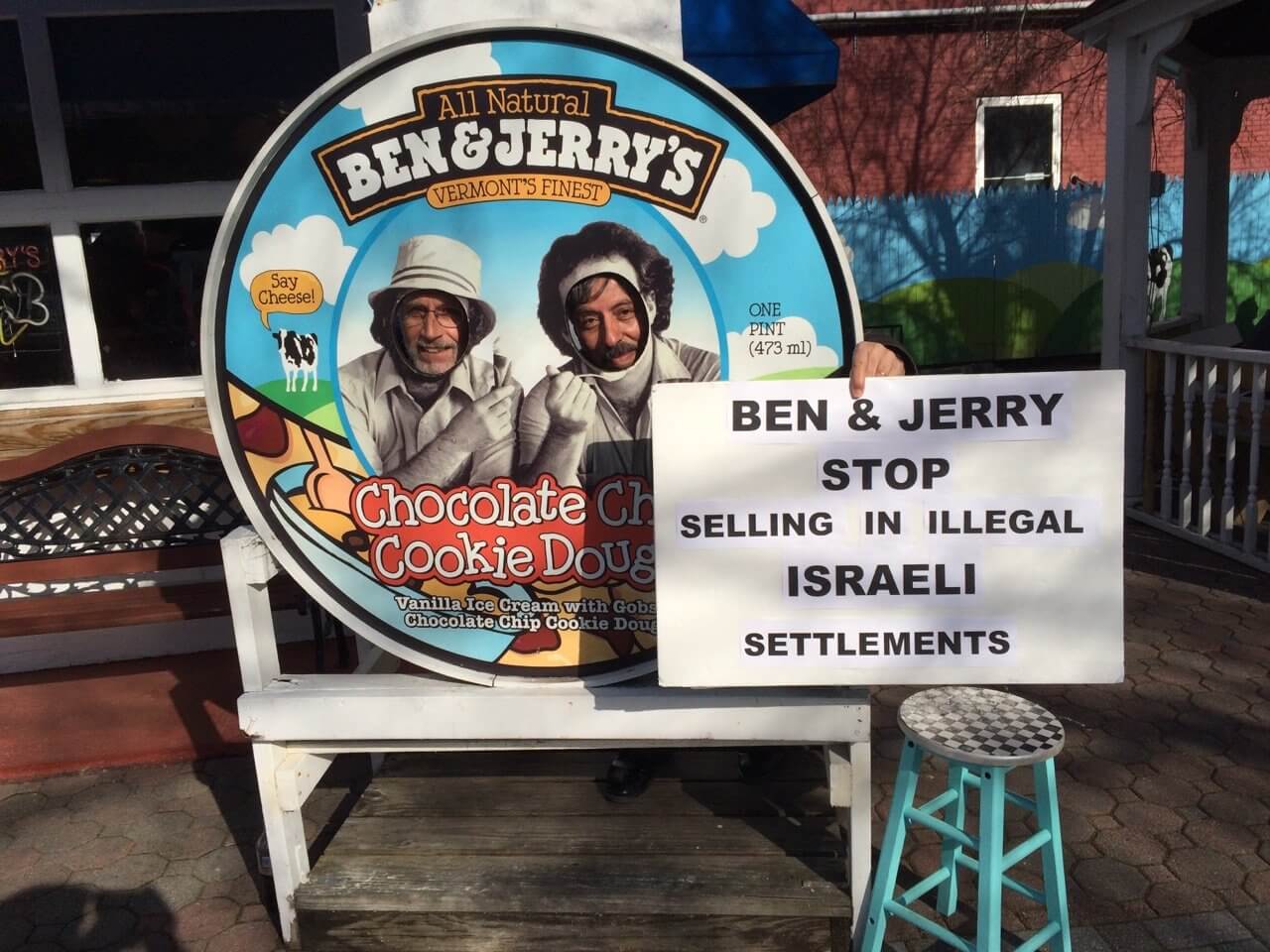
Shalev Hulio, the Israeli spyware-maker who is at the center of an international controversy, says the BDS campaign pushed the investigation of his company, and Ben & Jerry’s decision to stop selling in occupied territory. Hulio is right that a new era of accountability has begun for Israel.

(Photo: Vermonters for Justice in Palestine)

Michael Arria talks with Vermonters for Justice in Palestine member Wafic Faour on how the group’s grassroots campaign to pressure Ben & Jerry’s led to the company’s groundbreaking announcement this week. “There’s one direction we’re going in. We are struggling against an apartheid regime and we saw what happened in South Africa,” Faour says. “If we continue working and educating the public and these leaders continue with their incoherent messaging, we will win.”

Ben & Jerry's bombshell announcement on July 18, 2021.

Jewish organizations’ reflexive opposition to the Ben & Jerry’s decision not to sell in occupied territory, because it strengthens BDS and is somehow “antisemitic,” shows that being Jewish means being ‘anti-Palestinian’. These organizations have constructed a Jewish identity, theology and ethics around the denial of Palestinians to peacefully protest and call for global solidarity. Thankfully, there are pro-BDS alternatives in Jewish tradition.

On Monday Ben & Jerry’s announced that it would stop selling ice cream in Israeli settlements in the occupied Palestinian territory. The Israeli government has promised to fight the move “with all our might” and ask every state in the U.S. to target the company. Palestine activists say the move is yet another sign of how BDS is entering the mainstream.

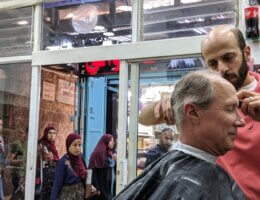
Richard Smith gets a haircut in Jerusalem on his first trip to Palestine, 2019.

“In Hebron, I saw what to me looked like two Americans coming towards us, but they were escorted by four or five Israeli soldiers with rifles. And I was hoping to have a conversation with them. But before I got too close– the rifle kind of came out, to push me away, when it was clearly evident that I’m a tourist. It was an unnecessary reaction. Because I wasn’t at all threatening. But these were American dignitaries, and I think it was part of the deal. To illustrate this is a dangerous place. ‘Okay, we’ll take you to Hebron, but you need to have a five-soldier escort.’ That’s the narrative that is played up. Our security is paramount no matter what happens.”