Lost in the uproar over Donald Trump’s Gaza comments was another bombshell: the White House will soon announce its position on annexation of the West Bank. Signs indicate it will fully support expanding Israeli control over the occupied territory.
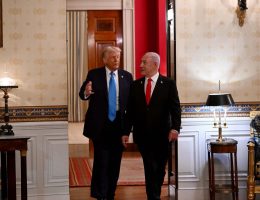

Lost in the uproar over Donald Trump’s Gaza comments was another bombshell: the White House will soon announce its position on annexation of the West Bank. Signs indicate it will fully support expanding Israeli control over the occupied territory.
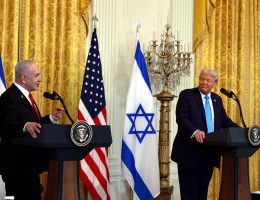
Donald Trump’s suggestion that the U.S. should “take over” Gaza was met with confusion and outrage by many elected officials. Still, some pro-Israel voices and at least one prominent Democrat fully embraced the idea.

On Tuesday Israeli Prime Minister Benjamin Netanyahu became the first foreign leader to meet Donald Trump in The White House during his second term. During the meeting, Trump doubled down on previous suggestions to remove Palestinians from Gaza.

The Israeli army is expanding its offensive in the northern West Bank and employing some of the same tactics that it has used in Gaza over the past 15 months, including the mass expulsion of residents, airstrikes, and large-scale demolitions.

The Israeli army is launching offensives in the northern West Bank as Israeli politicians, emboldened by Donald Trump, seek to realize their dreams of annexation.

Israel is continuing an offensive on the West Bank city of Jenin that analysts say is meant to appease the settler movement as it pushes the government to exert more control over the occupied territory in preparation for annexation.

After 15 brutal months in Gaza, a ceasefire begins with prisoner exchanges. Netanyahu claims victory despite unmet goals, Biden’s strategy falters, and Trump forces a deal. Amid political maneuvers, the Palestinian struggle for liberation remains steadfast.
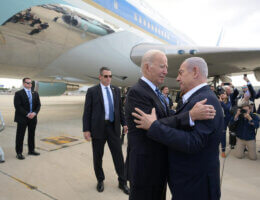
The Biden administration could have delivered the same ceasefire agreement last year, but they refused to exert pressure on Netanyahu.

In the wake of a ceasefire, many will try to force the discourse into a binary of victory and defeat. But as the dust settles, a true picture emerges: one of the fragility of the Israeli colony, and the transformative power of resistance.
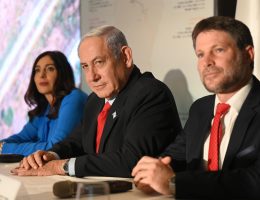
As of Friday a ceasefire deal still hung in the balance. After delays by Netanyahu, Israel’s cabinet finally convened to deliberate on a vote. But even if the deal goes through, all signs are pointing to Israeli plans to sabotage it after phase one.