UNRWA employees wear face masks outside a UN clinic in Deir El-Balah, in the center…
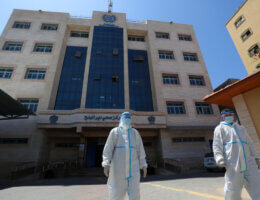

UNRWA employees wear face masks outside a UN clinic in Deir El-Balah, in the center…
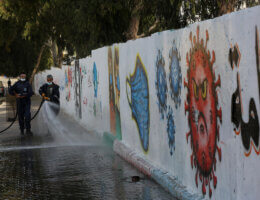
Earlier this week residents of Hebron staged protests against the Palestinian Authority (PA) over renewed COVID-19 lockdowns across the West Bank, sparking clashes and confrontations between armed civilians and PA security forces.

Due to the rising numbers, the government announced a full-scale one week closure in select districts of the West Bank.
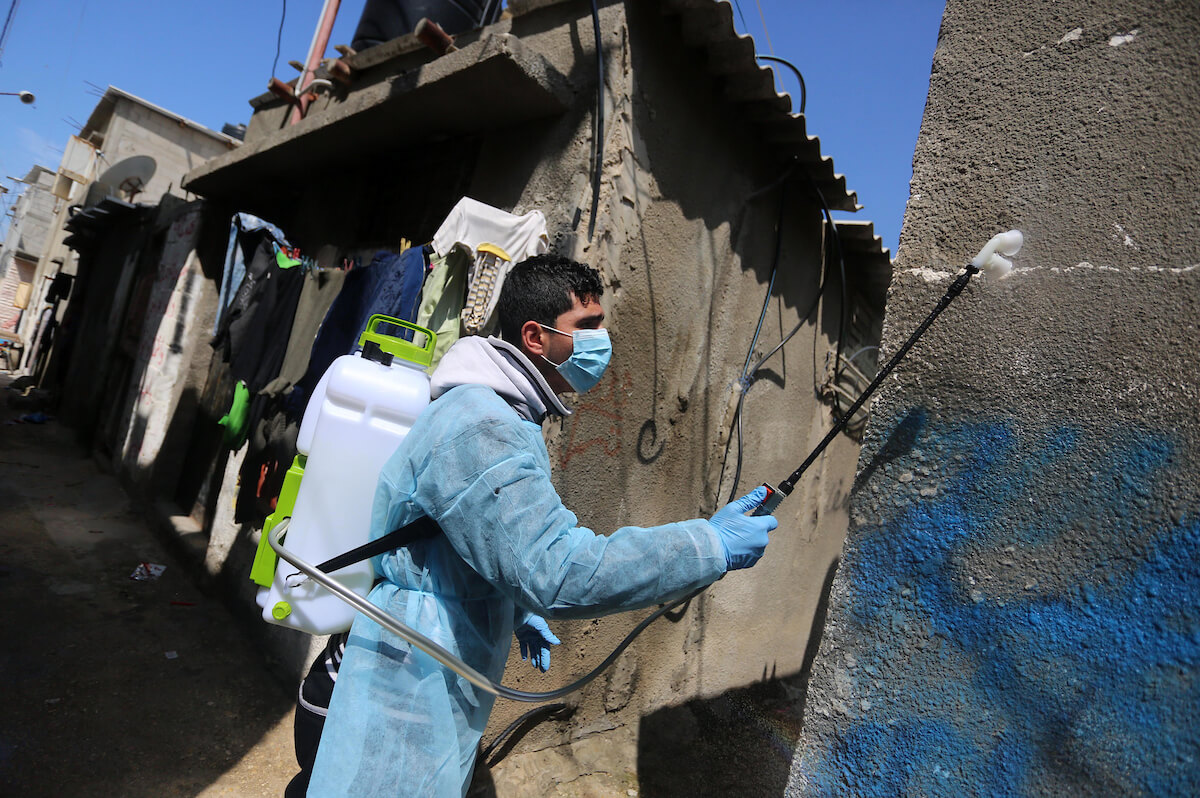
Palestine saw the highest rate of daily infections of the coronavirus since the beginning of the pandemic in the past 24 hours, following the first weekend of newly imposed lockdowns in the West Bank.
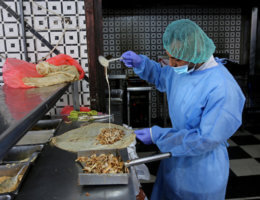
Palestinians are trying to enjoy the cooling temperatures and beauty of things like the olive harvest as much as they can, before another spike in the coronavirus, flu, or any other unforeseen challenges that 2020 is sure to throw this way.
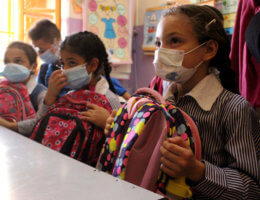
Half a year, and nearly 54,000 cases of the virus later, the devastating effects that the coronavirus pandemic has had on the Palestinian economy and society are just now becoming clearer.

While the rate of COVID-19 infections in Israel has skyrocketed in the last week, Palestinian health officials are reporting more promising numbers, with the Ministry of Health reporting an 80% recovery rate among COVID-19 patients in Gaza, the occupied West Bank, and East Jerusalem.

The Palestinian Minister of Health Mai al-Kalia told the Voice of Palestine radio on Tuesday that Israel “obstructed” the entry of 100,000 COVID-19 testing swabs that were destined for the West Bank. As a result, the Ministry will only have enough swabs to last them for three days, after which time the West Bank would run out.
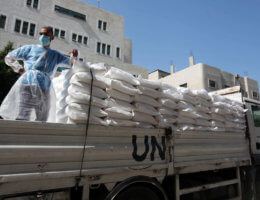
It’s been six months since the lives of Palestinians in the occupied West Bank were…
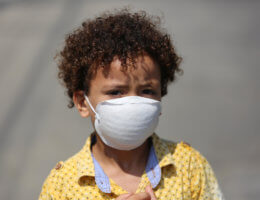
What started off as fear of the unknown, has now settled into somewhat of a feeling of indifference, and detached acceptance. It’s not that people don’t care about getting sick or spreading the virus, but more so that they are tired of their lives being put on hold for something that at this point seems inevitable.