Bob Feldman, who protested at Columbia University in 1968, on the student uprising today, “I would tell these students: people will always remember what you did today . . . and I believe they have accomplished much more in 2024 than we did in 1968.”
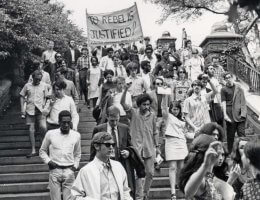

Bob Feldman, who protested at Columbia University in 1968, on the student uprising today, “I would tell these students: people will always remember what you did today . . . and I believe they have accomplished much more in 2024 than we did in 1968.”

The student uprisings against Israeli genocide are a stunning new force in U.S., representing a mass movement that demands that our politicians cease to sideline Palestinian human rights. “Edward Said once said, ‘thank God for the students.’ I just want to echo those words from this tortured place,” Susan Abulhawa said from Gaza.
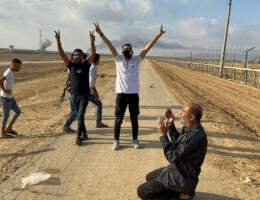
The media will demand that we condemn the Palestinian resistance. We must refuse.
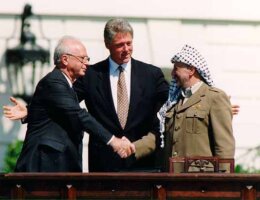
It was clear from the start the Oslo Accords were designed to fail. Early critics were derided as “anti-peace,” but the lesson from Oslo is to read the writing on the wall.
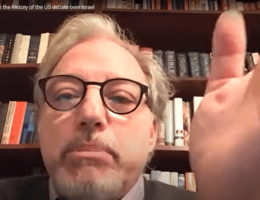
The last three Democratic presidents took a “cautionary tale” from Jimmy Carter and decided not to push the issue of Palestinian justice because it might cost them a second term, says Eric Alterman.
Zionism not only seeks to dismember Palestinian life and connectedness, but also the threads of signification that nurture steadfastness and resistance.
Noura Erakat writes in the book, “A Land With a People,” that the volume tackles power head-on, “charting the struggle against Zionism within the Jewish communities that Zionism purportedly serves. Its anti-Zionist Jewish stories are critical to decolonization.” Dr. Hatim Kanaaneh relates that the book traces some of his own history with the organization “Jewish Voice for Peace,” as he struggled to bring Palestinian narratives to a global audience.
As the current disastrous phase of Anglo-American colonialism sinks even deeper into chaos and anarchy, causing untold suffering in the Arab and Muslim worlds and elsewhere, thoughtful reflection and careful analysis become more urgently needed. Heeding Edward Said’s call, Haider Eid uses literature to “de-orientalize the orient” in Gaza.
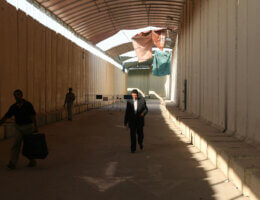
Emad Moussa recalls his first trip out of Gaza, with his grandfather, as the pair rode by their original village of Al-Sawafir Al-Gharbiyya, now ruins sheltered by cactuses and trees. “He was, like every other Palestinian, a nomad traveling across a landscape of memory,” Moussa writes. “Like all others, his memory was premised on three main motifs: the praise of a long-gone paradise lost; the lamentation of a present defined by military occupation; and, the hopeful visualization of a return to Palestine, where justice will finally be served.”

From the indomitable poet Fadwa Tuqan to the fearless medic Razan Al-Najjar, Ancestors of Palestinian Liberation marks seven decades since the Nakba by telling the stories of seven Palestinians whose lives and work helped to build a steadfast foundation for the ongoing struggle for Palestinian liberation. Yes Razan only lived 21 years, but she faced huge obstacles with courage and compassion, and died during a remarkable moment in Palestinian history.