As a journalist I have listened to countless stories of Nakba survivors. They would always say, “we thought we would return.” I never imagined that in my lifetime I would be witnessing another Nakba, and saying the same thing.
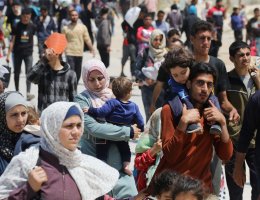

As a journalist I have listened to countless stories of Nakba survivors. They would always say, “we thought we would return.” I never imagined that in my lifetime I would be witnessing another Nakba, and saying the same thing.
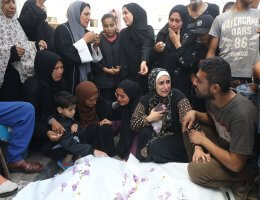
Palestinians brace for an invasion in Rafah as Hamas is expected to respond to a new ceasefire proposal. Meanwhile, Israel continues airstrikes on Gaza, and Gaza City’s municipality says that half of its water wells have been destroyed.
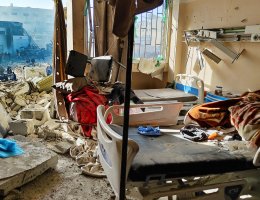
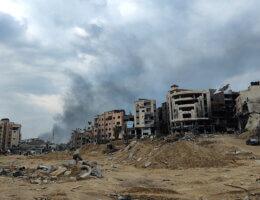
Dozens of bodies are still being recovered from the rubble of a destroyed and burnt al-Shifa Hospital, following a two-week Israeli raid and siege on the hospital.
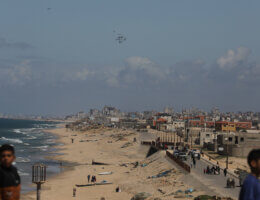
Thousands of Palestinian worshippers have been denied access to pray at al-Aqsa Mosque in Jerusalem for Ramadan’s first Friday prayers, while Israeli forces have committed another massacre against Palestinian aid-seekers in Gaza City.

The “flour massacre” marked a new phase in Israel’s starving of northern Gaza when the army opened fire on crowds waiting for aid trucks. “Our lives must have become so cheap for so many people to die this way,” a witness told Mondoweiss.
“It is true that there are many people who prefer to flee and search for a safe place outside the Gaza Strip, but this is not the case for the majority of people…It is not easy to start life again away from a homeland that you love.”
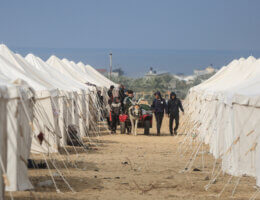
Israel’s genocidal war of expulsion is nothing like the people of Gaza have ever seen — not this generation, not their parents’ generation, and not the generation that survived the Nakba.
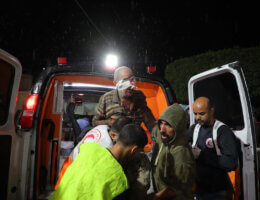
Israeli forces took dozens of Palestinians captive inside Al-Shifa and bombed their way into floors and rooms. The Palestinian health minister warned of a massacre to be committed in the complex.

The Gaza Strip has one of the highest unemployment rates in the world – more than 50% – and an exceptionally young population. As more young people fall in love under the blockade, couples are turning to loan agencies to get married, and falling into crippling debt in the process.

Over 16,000 housing units were damaged during the recent Israeli attacks on Gaza, and 1,800 units were completely destroyed. While that destruction is immense, what those numbers don’t capture is what else was lost in those places — the irreplaceable photos, keepsakes, and possessions and that made each a home.