The IMF and World Bank are conditioning reconstruction funds on Lebanon’s normalization with Israel and disarming Hezbollah. In the Dahiya suburb of Beirut, the people who’ve lost their homes in the war think this is unacceptable.


The IMF and World Bank are conditioning reconstruction funds on Lebanon’s normalization with Israel and disarming Hezbollah. In the Dahiya suburb of Beirut, the people who’ve lost their homes in the war think this is unacceptable.
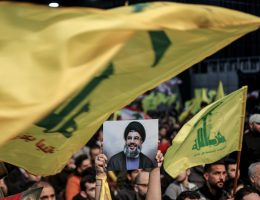
Israel and the U.S. are trying to install an anti-Hezbollah leader as president of Lebanon, hoping to eliminate the military presence of the resistance in southern Lebanon. But it’s not the first time Israel has interfered in Lebanese politics.
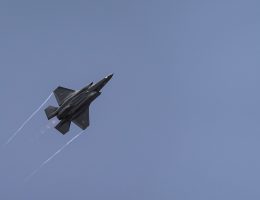
Israel’s use of 80 bunker-buster bombs to assassinate Hasan Nasrallah has raised concerns that it is using depleted uranium in its bombardment of Lebanon. We need an impartial investigation given Israel’s track record of using prohibited weapons.
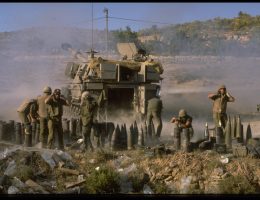
In Gaza and Lebanon, Israel is projecting its force while burrowing itself deeper into a quagmire. While it may achieve brief operational successes, it fails to extinguish the spirit of the resistance or coerce it into submission.

Iran announced that its barrage of ballistic missiles was in retaliation for the assassination of Ismail Haniyeh in Tehran and Hasan Nasrallah in Beirut.

Hezbollah’s Deputy Secretary General said Hezbollah’s military capacities remain intact, while Israel has reportedly informed the U.S. that an Israeli ground invasion of southern Lebanon is “imminent.”
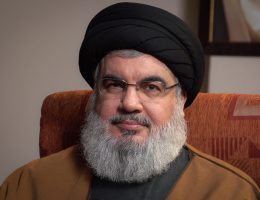
Considered an icon of resistance against Israel and one of the most influential political figures in the Arab world, Hasan Nasrallah was killed by a massive Israeli airstrike that leveled an entire residential block in Beirut’s Dahiya district.
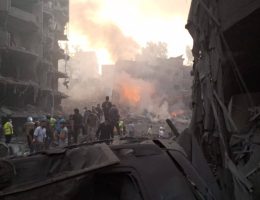
Israel completely flattened at least six residential buildings in Beirut’s southern Dahiya district with 2000-pound bombs amid claims that Hezbollah leader Hasan Nasrallah was the target.
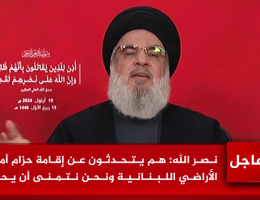
Following the Lebanon pager explosion attacks, Nasrallah said an Israeli invasion would be a “historic opportunity” to target Israeli forces. Earlier in the week, Israel razed an entire residential block in central Gaza, killing at least 40 people.
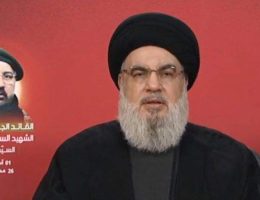
In a strident speech on August 1, Hezbollah leader Hasan Nasrallah said that the fighting with Israel has “entered a new phase” that goes “beyond supporting Gaza,” vowing an “inevitable” response to Israel’s Beirut bombing.