Trump’s “Operation Economic Outcast” to impose secondary sanctions on countries trading with Iran is a tacit admission of U.S. military defeat. But sanctions haven’t worked for 47 years, and Iran won’t let the U.S. decide when the shooting war ends.

Trump’s “Operation Economic Outcast” to impose secondary sanctions on countries trading with Iran is a tacit admission of U.S. military defeat. But sanctions haven’t worked for 47 years, and Iran won’t let the U.S. decide when the shooting war ends.
This week, Dr. Adam Hamawy, a surgeon who volunteered in Gaza amid the genocide, won New Jersey’s 12th District primary. The win is obviously another loss for the Israel lobby, but it goes beyond simply adding another critic to Congress.
Trump claims Iran has been weakened, but analyst Sina Toossi says it’s the U.S. that is desperate for a deal. Mondoweiss speaks with Toossi about the gains Iran has made during the war with the U.S. and Israel and what comes next.

Israel bombed Tehran’s Rafi-Nia synagogue in the middle of the Jewish holiday of Passover. The attack revealed, to a shocking degree, Zionism’s willingness to treat Jewish life as disposable in the service of its ideological project.

Michael Arria speaks with Afshin Matin-Asgari about his new book, “Axis of Empire,” and how the history of Iran–U.S. relations offers crucial context for understanding Trump’s current war.

Trump faces a disaster of his own making in Iran. He had no plan to address Iran’s predictable retaliation, including closing the Strait of Hormuz, but even if he did, he faces another problem: Israel, his disastrous choice for a partner in crime.
A month into the Iran war, it is clear that Israel aims to disrupt any possible off-ramp the Trump administration and Iran may be looking for to end the fighting, and that Iran, not the U.S., is the key actor that will determine how the war ends.

Every year since 1953, the Irish Prime Minister has visited the United States on St. Patrick’s Day. This year, a chorus of Irish citizens and opposition parties called on the PM to boycott this year’s visit over Trump’s actions in Gaza and Iran.
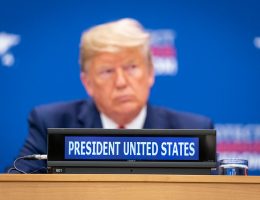
You know a war probably isn’t going well when the President starts threatening media outlets with treason charges. And as the situation in the Middle East inevitably gets worse, Americans can expect more First Amendment threats.
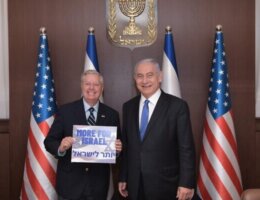
As the war on Iran unfolds, it’s clear that most Americans, including many on the right, don’t support it. Nevertheless, warmonger Republican Senator Lindsey Graham continues to boast about his role in helping Israel push the U.S. into war.