The protest was the latest in a number of anti-PA demonstrations by Palestinians in Jenin in recent weeks, marking yet another fissure in the deepening rift between Palestinians and the PA.
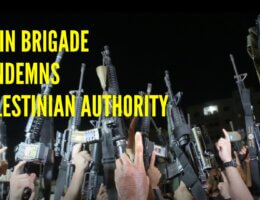

The protest was the latest in a number of anti-PA demonstrations by Palestinians in Jenin in recent weeks, marking yet another fissure in the deepening rift between Palestinians and the PA.

Following the Israeli army’s withdrawal from the Jenin refugee camp this week, outraged Palestinian youth confronted Palestinian Authority security forces in the city, accusing them of being “collaborators” with the Israeli occupation.

The past month has been nothing less than traumatic for the Palestinian people.
The massacre in Jenin, ongoing invasions, arrests, home demolitions; 36 people have been killed, eight of them children. Adam Ayyad, 15, was aware that a Palestinian under Israeli apartheid is always a potential target. The handwritten will he carried in his pocket the day he was shot began with the following words: “There were a lot of things I wished I could do, but we live in a country where realizing your dreams is impossible.”
Palestinians are enduring the rise to power of one of the most brazenly racist and brutal governments in the Israeli state’s history. But, however grim the reality looks for Palestinians, this may also be the moment of change.
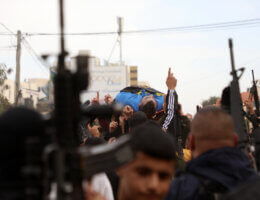
The next escalation is already here.
It feels very different from previous cycles of resistance and repression, as if Palestine is on the brink of something closer to an uprising.
While the many possible futures of Palestinian resistance remain formless and kaleidoscopic, the colonial constant ensures that resistance will have a future.
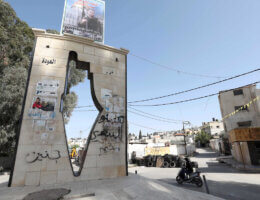
The Jenin refugee camp has been in the spotlight since Israeli Prime Minister Naftali Bennett’s announced that there would be “no limits” to a massive West Bank military operation following a deadly attack in Tel Aviv on April 7. Shatha Hanaysha speaks with residents and leaders in the camp about living under the constant threat of Israeli raids, and the history that is driving the Palestinian resistance.

From approximately April 3-17, 2002 Israeli military forces stormed the Jenin refugee camp, killing more than 50 Palestinians and making 13,000 people homeless. Jennifer Loewenstein remembers touring camp in the aftermath, and the media’s indifference to the onslaught.
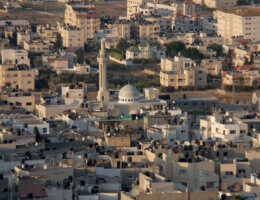
Last week an Israeli district court ruled against a Palestinian filmmaker and actor, Mohammad Bakri in a defamation and libel case, ordering him to pay hefty compensation to an officer in the Israeli military who was accused of carrying out war crimes in the 2002 documentary “Jenin, Jenin.” Ramzy Baroud says the verdict can be understood within two contexts: one, Israel’s regime of censorship aimed at silencing any criticism of the Israeli occupation and apartheid and, two, Israel’s fear of a truly independent Palestinian narrative.
B’Tselem’s finding that Israel is an apartheid regime and Israel’s banning of the film “Jenin Jenin” sends Dr. Hatim Kanaaneh back to his wrenching visit to the scene of the Jenin massacre a month afterward in 2002.