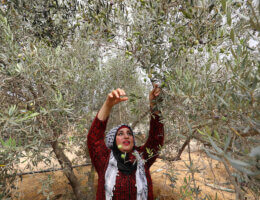
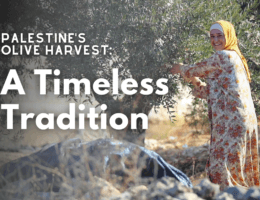
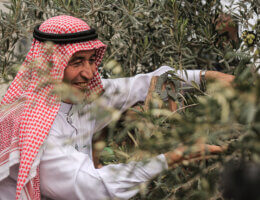
Ahmed Abu Alreish is 93 years old and I joined him to harvest olives from his land. I returned home with a bottle of olive oil which carries some of Ahmed’s stories about Palestine. That night, I assembled my siblings under the olive tree beneath my window, and I poured everything I heard from Ahmed into their ears.
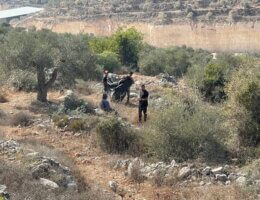
Palestinians in the occupied West Bank town of Beita have been struggling to access their land for the olive harvest due to the Israeli military’s continued occupation of Jabal Sabih. “No matter what, we will not leave this land,” Beita resident Ammar Hamayel tells Mondoweiss. “We grew up here, we learned here what it means to be Palestinian and what the land means to us. I will not leave here until my soul leaves my body.”
The olive harvest in Gaza was down by 65% this year, leaving many farmers without enough crop to sell. Experts say this dip was due to rising temperatures from climate change.
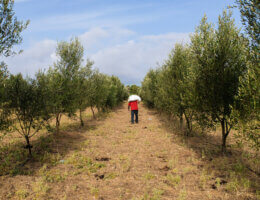
Mahmoud Nasser documents the olive harvest in Beit Hanoun, which he says is not only a means of survival for many Palestinians but also a symbol of their cause and history.
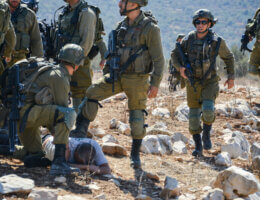
A photo of an armed Israeli soldier, surrounded by dozens of his fellow soldiers, standing on the back of a Palestinian man as he lie face down in the ground went viral on Palestinian social media this week.
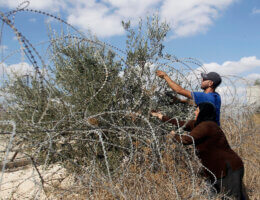
The photo was taken in the midst of a brutal Israeli crackdown on activists as they attempted to escort a group of Palestinian farmers to their land in order to harvest their olive trees in the al-Ras area west of Salfit, in the northern occupied West Bank.
Every year Palestinian farmers experience violence during the olive harvest. This year for Sukkot, Ilana Cruger-Zaken is inviting others to join her in supporting their resilience.
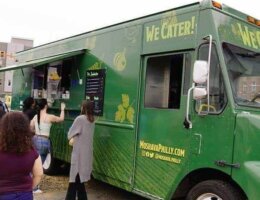
You can’t food-wash apartheid. Naming a Philadelphia food truck “Moshava” after a colonial tradition is appropriate considering that its supposed Israeli menu is predominantly Arab food, appropriated by Israel much the same as they’ve appropriated Palestinian lands, home, and heritage. There is nothing Israeli about shawarma, hummus, falafel, or arayes, all of which predate the state of Israel by a few dozen centuries.
In this episode of the Mondoweiss Podcast, Yumna Patel discusses her visit with Palestinian farmers who were attacked by Israeli settlers, and Michael Arria talks about the outcome of the 2020 election.
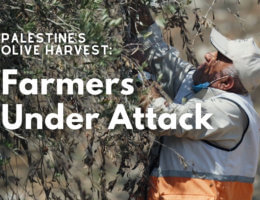
The Israeli settlers in the Nablus district are notoriously violent, and are routinely recorded as attacking Palestinians and their property year round. But once the olive harvest comes around every year, settlers typically focus their attacks onto Palestinian farmers and their olive trees.