“After 24 years the flag of Palestine has been lowered and taken down from the post, to be substituted by the flag of Israel,” Israeli Education Minister Naftali Bennett proclaims


“After 24 years the flag of Palestine has been lowered and taken down from the post, to be substituted by the flag of Israel,” Israeli Education Minister Naftali Bennett proclaims

The Israeli Knesset on Monday passed a controversial new law that allows the Israeli government to expropriate private Palestinian land in the occupied West Bank and East Jerusalem, making more than a dozen Israeli settlements legal under Israeli law. It is the first time in history that the Knesset has imposed Israeli civil law the occupied West Bank, which is under Israeli military and civilian rule. Xavier Abu Eid, a spokesperson for the PLO’s Negotiations Affairs Department said the law essentially “legalized theft of Palestinian land” adding that the legislation “negates peace and the possibility of the two-state solution.”

Historian Avi Shlaim reveals a shift in his thinking on Israel and Palestine: Zionism was a colonial project well before 1967. And the US and Britain have traded roles as mother country.

“We will soon be the majority!” says a huge billboard in the heart of Tel-Aviv. Written in Arabic and showing Palestinians with Palestinian flags it is meant to frighten Jewish Israelis into supporting a two-state solution. The Israeli press is reporting that many Israelis “erroneously thought this to be a hostile takeover of the media by Palestinian terror organizations,” but the campaign is actually the work of a ‘liberal’ organization from the center of Israeli politics.
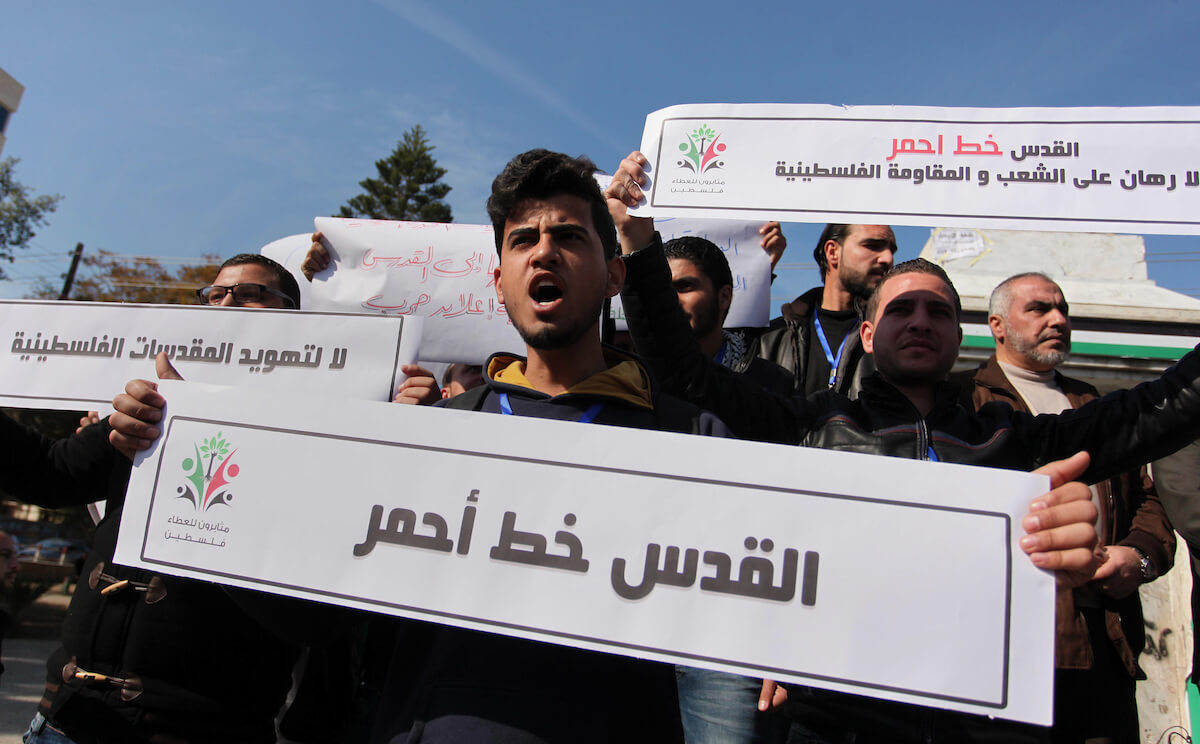
Is a two-state “solution” still possible? Or is it time to push for one state with equal rights for all? Palestinian youths in Gaza respond to the Paris Peace Conference.
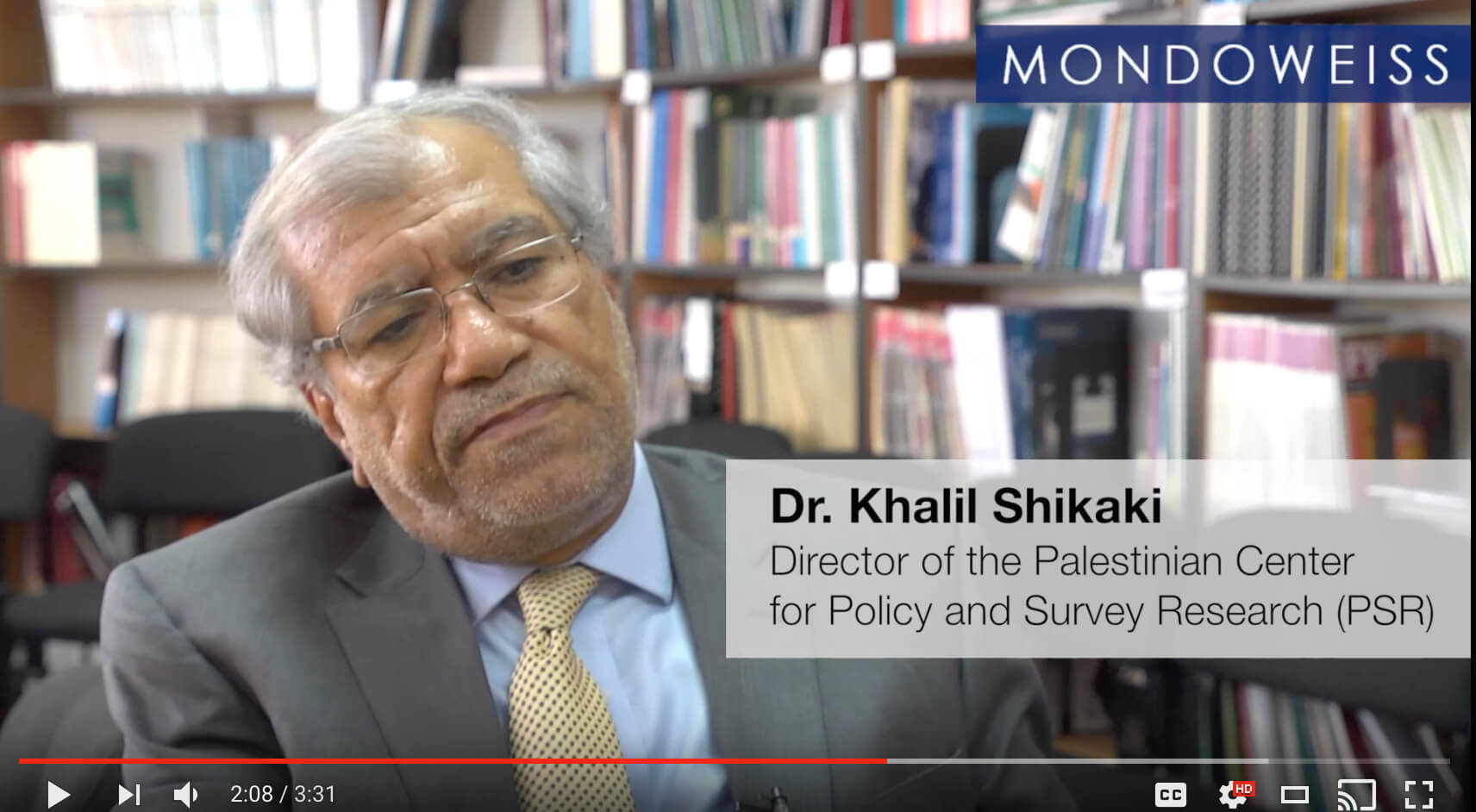
A central question of the Middle East Peace Process remains: can the two-state solution be saved? On Sunday, a conference in Paris will try to relaunch the moribund peace process and the French Initiative has been warmly received by the Palestinian leadership as a final chance to save the two-state-solution: “Two states today is possible. Tomorrow, it might be too late” warned Muhammad Shtayyeh, Fatah Central Committee Member, who nevertheless remains optimistic. “The reality on the ground, the demography on the ground, the geography on the ground, shows that a two-state solution is still possible today”. However, Palestinian public opinion no longer reflects this official position. A recent poll shows that 65% of Palestinians no longer believe the two-state solution is viable due to ongoing settlement expansion. “The more people think the two-state solution is no longer viable, the more likely they it is that they will shift and support a one-state solution” explains Dr. Khalil Shikaki, Director of the Palestinian Center for Policy and Survey Research.

At least 72 countries are set to meet on Sunday in Paris for the most recent effort in reaching a two-state solution in Palestine and Israel, neither of which are expected to be represented at the meeting. On Thursday, Israeli Prime Minister Benjamin Netanyahu openly criticized the conference, while Palestinian Prime Minister Rami Hamdallah reiterated his support for negotiations of a two-state solution saying he believed “only a negotiated two-state-solution will lead to an end of occupation and an agreement on all final status issues.” But Hamdallah’s sentiment does not seem to be echoed on the Palestinian street, where confidence in the two-state solution has taken a drastic hit.
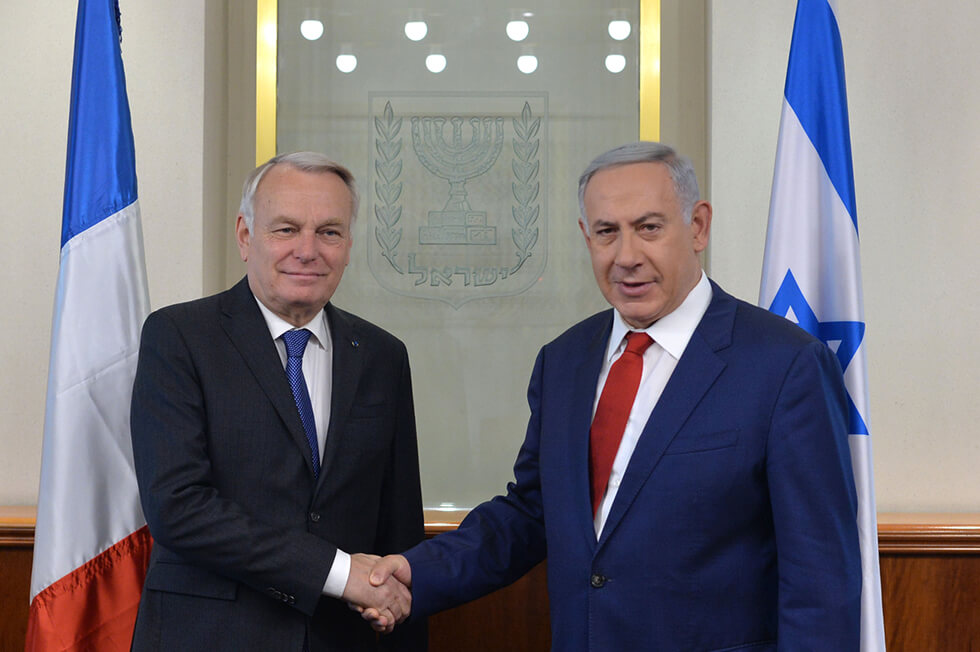
On Sunday, January 15, members of the international community will convene in Paris for the ‘Middle East Peace’ conference, which seeks to “fully [end] the Israeli occupation that began in 1967.” Al Haq’s Shawan Jabarin writes, “Tried and tired approaches will not yield new results. With the occupation entering its 50th year, it is time for the international community to learn from the failures of previous peace and negotiation processes that have facilitated Israel’s continued violations of international law and denied Palestinians their fundamental right of self-determination. It is time to take concrete actions that will stop Israel in its tracks.”

In his recent speech ‘Remarks on Middle East Peace’ John Kerry misrepresented a central issue: The wish among Israelis and Palestinians for a one-state solution.
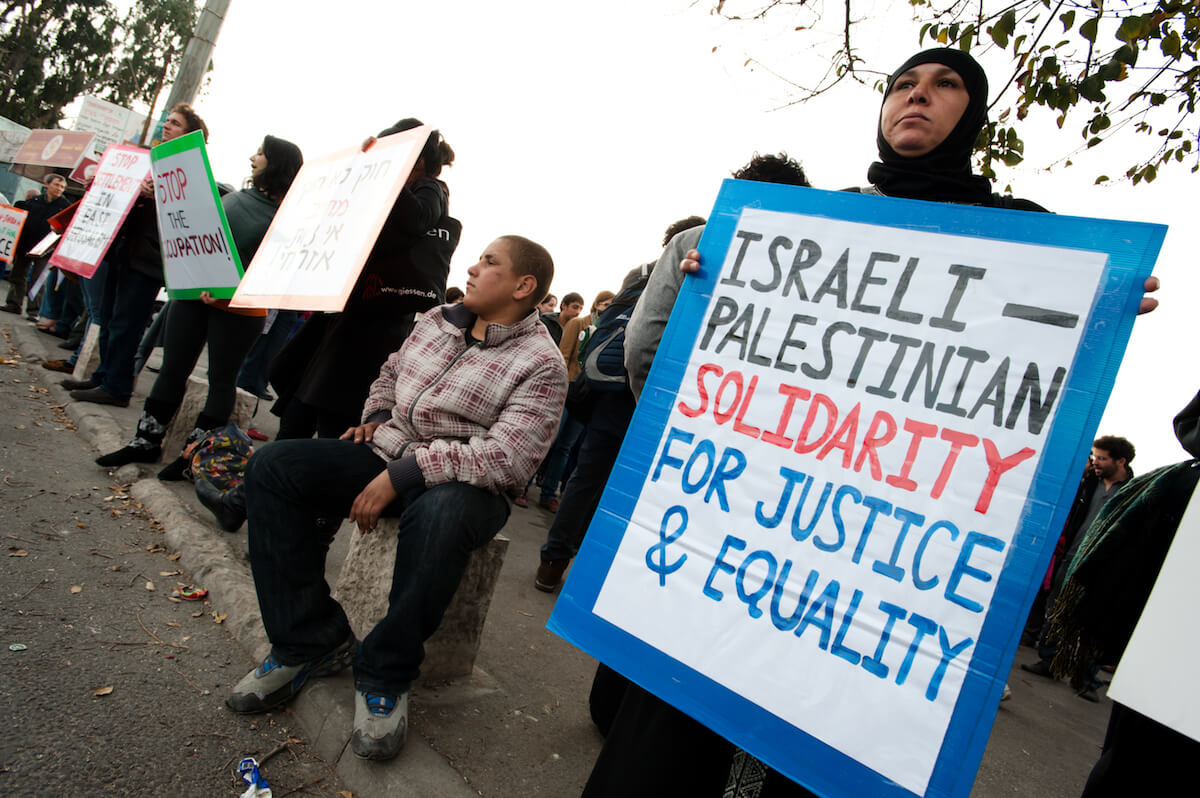
Jeff Halper writes: Suffice it to say that a just peace will not come from Israel or governments, or from the collaborationist Palestinian Authority. A just resolution will only come when Palestinians and their Israeli allies come together pro-actively, in good faith and with a determination to resolve the situation justly. And it will take the form of a one-state solution – a bi-national, democratic state – because that is the only option Israel and Kerry have left us with.