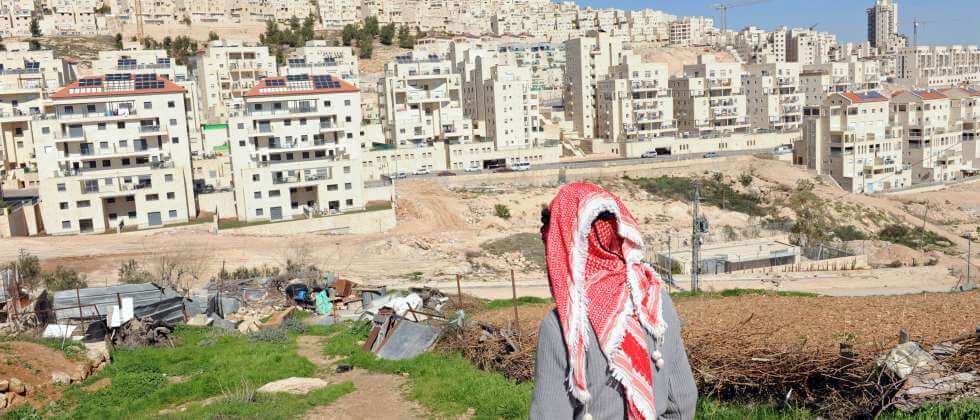
Due to years of activist support for the threatened village of Susiya in the occupied Hebron Hills, the New York Times, the State Department, and the European Union have told Israel to leave the Palestinians alone. Will demolition plans move forward?
Subhiya Abu Rahme, 60, propped up on her elbows and recounted her son’s last morning before the Israeli army killed him. Six years ago on April 17, 2009 Bassem Abu Rahme, 30, was shot in the chest with a tear gas canister in his West Bank hometown of Bil’in outside of Ramallah. The morning was a scorcher. Bassem went into the bathroom to cool off, musing, “I will shower or I will die.” Once clean and dressed, he walked to the garden behind the house. “I was working. He told me don’t tire yourself. It’s not good for you,” Subhiya said, relaying Bassem’s final words to her.

Boldly defying the U.S., the international community, and the Palestinian people, Netanyahu said in the clearest terms possible, “If I am elected there will be no Palestinian state.” What Netanyahu stated publicly is what has been true of all of Israel’s prime ministers, whether from the left, the center, or the right. For the past 22 years, all have been lying and misleading the world, pretending to seek peace with the Palestinians while pursuing policies to ensure there will never be peace and never be a Palestinian state. The irony is that the greatest of all these liars is the one who finally told the truth and we should thank him for it.
Ahmed Moor responds to a recent post on Michael Manekin and Peter Beinart’s sunless one-state prognostications. They claim equal rights in Palestine can’t work. Moor says their arguments are bad – and they make bad arguments in service of Jewish privilege in Palestine.
What is absent from much of the discussion of one state in Israel/Palestine is how this just state is to be structured economically and politically. Ellen Isaacs says that any movement which is going to enlist a mass movement in the call for a single just state must address the needs of the non-owning majority of Arabs and Jews on both sides of the wall.
Within days of Palestinians announcing they would join the International Criminal Court (ICC), Israeli Prime Minister Benjamin Netanyahu announced his country would stop transferring customs revenue to the Palestinian Authority. The punitive move was expected to lead to a crisis for the Palestinian leadership as government services would collapse across the West Bank. But the Palestinian Authority had an unexpected back up plan. The Arab League has agreed to provide emergency funds to cover the VAT-taxes frozen by Israel. This Arab League safety net will help the Palestinians avoid the expected temporary bankruptcy and allow them to move forward with pressing for war crimes at the ICC. In fact, financial support from the Arab League was a key component, along with joining the ICC, of long-term strategy to pressure Israel into negotiations.
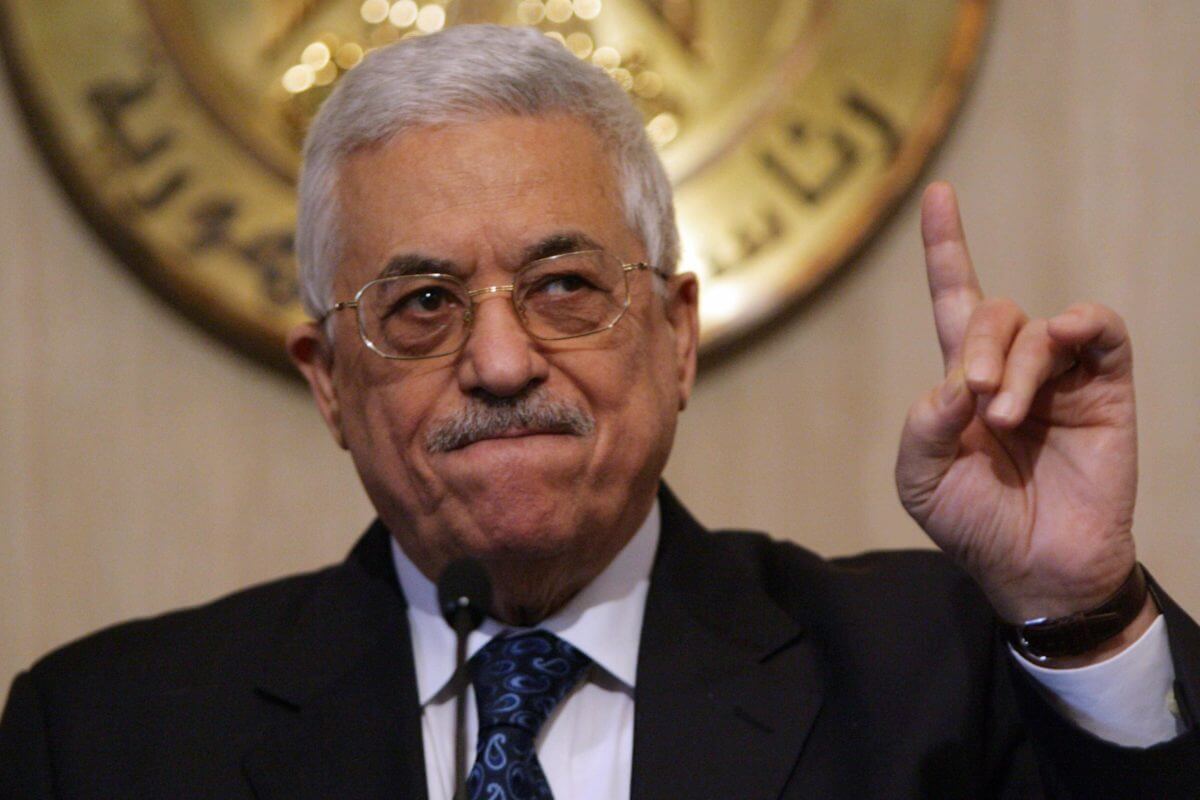
A day after begin rebuffed by the UN Security Council on a bid to end the occupation, Palestinian president Mahmoud Abbas has surprised the world by signing the Rome Statute, to be able to bring charges against Israel to the International Criminal Court. The US and Netanyahu seethe.
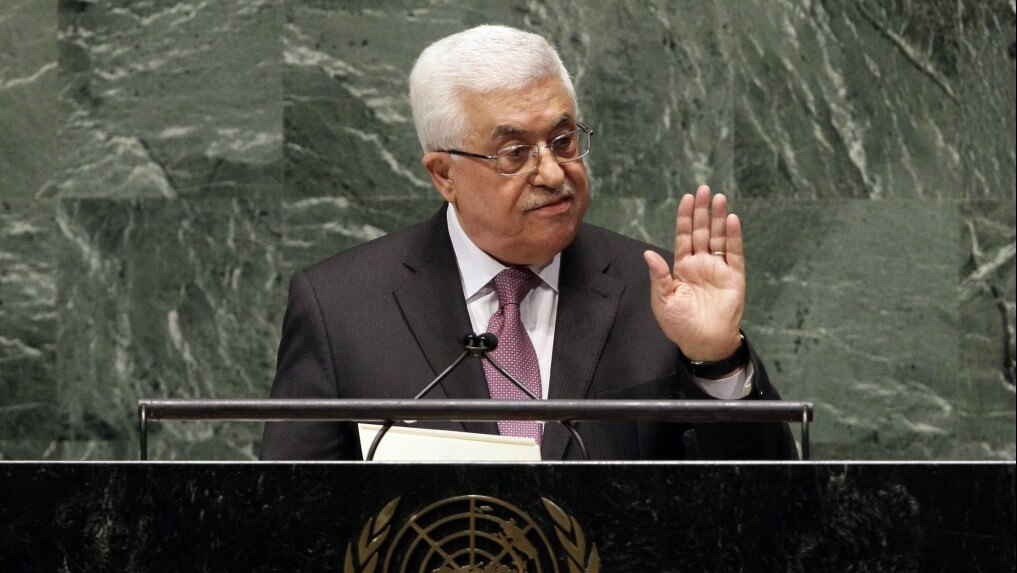
The Palestinian leadership’s resolution to end Israel’s occupation through negotiations failed to pass the United Nations Security Council Tuesday evening. While Palestinian leaders had hoped to garner the nine votes needed to be approved by the 15-member council, only eight countries supported the measure. The United States and Australia voted against it while five others abstained. U.S. Ambassador to the UN Samantha Power said, “We voted against it because we know what everyone here knows, as well—peace will come from hard choices and compromises that must be made at he negotiating table. Today’s staged confrontation in the UN Security Council will not bring the parties closer to achieving two-state solution.”
Late Monday evening Jordan submitted an updated version of a draft resolution seeking to end Israel’s occupation to the United Nations Security Council. The latest document maintains a 2017 deadline for an end to the Israeli occupation but contains a handful revisions, with substantive changes on the status of Jerusalem and Israel’s separation wall.
Early this morning Jordan submitted to the United Nations Security Council (UNSC) a draft resolution on behalf of the Palestinians to end Israel’s occupation of territory occupied in June 1967 through a negotiations process. The resolution would be the first to call for a third-party security presence to “guarantee and respect the sovereignty of a State of Palestine,” but it puts no deadline on Israel’s withdrawal.