In an exclusive interview with Mondoweiss, senior Hamas leader Mousa Abu Marzouk discusses Operation Al-Aqsa Flood’s goals and accomplishments, international Palestine solidarity, and what comes next after a year of Israeli genocide in Gaza.
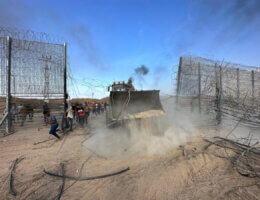

In an exclusive interview with Mondoweiss, senior Hamas leader Mousa Abu Marzouk discusses Operation Al-Aqsa Flood’s goals and accomplishments, international Palestine solidarity, and what comes next after a year of Israeli genocide in Gaza.
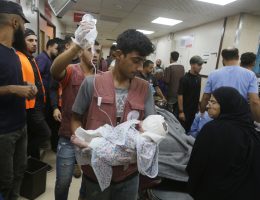
Israel has killed 150 people across Gaza since Iran launched its retaliatory ballistic missile attack against Israel. Meanwhile, Israeli airstrikes continue across Lebanon, with the death toll reaching into the thousands.
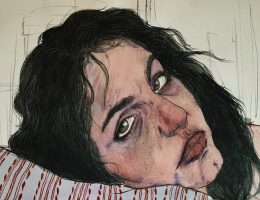
Bayan Abu Nahla’s artworks belong to the state of love and longing that we call Palestine.

Media sources have misunderstood how the leadership of Hamas operates, drawing simplistic binaries between the “moderate” Ismail Haniyeh and the “extremist” Yahya Sinwar. In reality, Hamas decision-making is far more institutionalized.

Israel’s old policy of containing armed resistance in the West Bank is over. Palestinians are now wondering whether the war on Gaza has expanded to the West Bank.

Watching the Gaza genocide from Beirut’s Shatila refugee camp brings back painful memories to Palestinians who lived through siege and war, but it is also providing inspiration to a new generation with hope of a liberated Palestine.

In 2021, Israel killed 22 members of Palestinian artist Zainab Alqolaq’s family in an attack on their home in Gaza. Today, Alqolaq is struggling to survive the current genocide, yet she’s determined to see justice prevail.

Hamas isn’t blocking a ceasefire in Gaza, Israel is. Netanyahu has systematically sabotaged negotiations at every turn, and his current demands for military control over Gaza ensure they will fail.

In a testimony obtained by Mondoweiss, a resident of Shuja’iyya recounts his motivations for wanting to join Hamas’s al-Qassam Brigades to fight against the Israeli army.

Israel’s genocidal assault on Gaza brought a polio epidemic to the besieged enclave. Palestinian public health expert Yara Asi explains what this latest development could mean for public health in Gaza and the world.