On the Nakba’s 75th anniversary, the Zionist war against Palestinian refugees is alive and well, as refugee camps continue to be besieged by the Israeli army in the attempt to quash resistance.
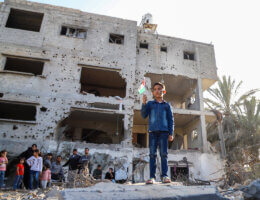

On the Nakba’s 75th anniversary, the Zionist war against Palestinian refugees is alive and well, as refugee camps continue to be besieged by the Israeli army in the attempt to quash resistance.

Despite the continued denial of the Nakba by Zionists, Palestinian refugees have not forgotten what was done to them. And more than four generations later, they have not given up on the hope that they will return.
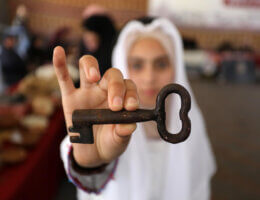
The younger generation of Palestinian refugees in Gaza carry memories of their original villages, even though they’ve never been to them. 75 years after the Nakba, they still dream of return.
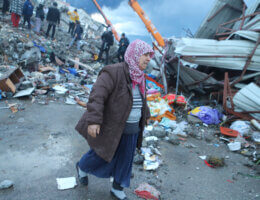
As the death toll from a devastating earthquake in Syria and Turkey continues to climb, dozens of the dead have been identified as Palestinian, and thousands of refugees have been newly displaced.

Palestinian refugees that died at sea when their boat capsized as they sought asylum in Europe left behind bereaved families amid worsening conditions in Lebanon.

Amena al-Ashkar avoided writing about the Sabra and Shatilla massacre even though she grew up a kilometer away. On the massacre’s 40th anniversary, she finally made the painful pilgrimage. “We have talked about this for so long now, but nobody cares that we were slaughtered like chickens…I am not going to do this right now, or ever again,” a Palestinian woman who survived the Sabra and Shatilla massacre tells her.

The longest refugee tragedy in the world is that of the Palestinians, who were forcibly uprooted from their homes in 1948. The right of return remains the essence of the Palestinian cause.
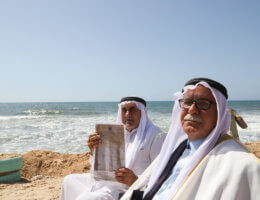
For nearly three decades, Palestinians were told, even by their leaders, that the Nakba is a thing of the past. However, with Palestinian reality worsening under the deepening system of Israeli settler colonialism and apartheid, Palestinians now understand that they have no possible alternative but their unity, their resistance and the return to the fundamentals of their struggle.

Although 74 years have passed since the Nakba, many Palestinian refugees hold onto possessions from their original homes and villages where their families were expelled from in 1948. Old keys, handwoven dresses, musical instruments, antique pottery, and old farming equipment all serve as a reminder of life before Israel was established.
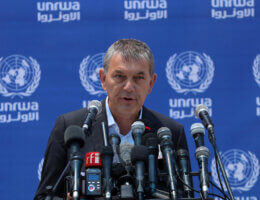
There are troubling signs that UNRWA’s mandate might be coming to an end. Any attempts at canceling or redefining UNRWA’s mission will pose a serious, if not an unprecedented challenge for Palestinians.