In an interview by Robert Cohen on his latest book, “Finding Our Voice,” Marc H. Ellis explains there is only one question for Jews today, after the Holocaust, the creation of Israel and the occupation of Palestine — What side are you on?
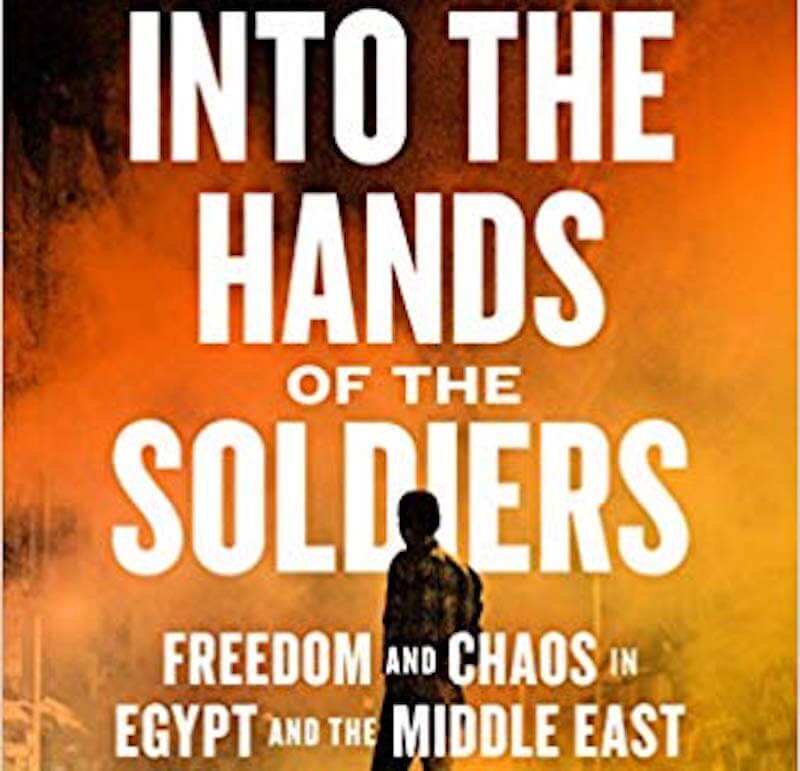
Anyone deluded enough to believe that Israel truly wants democracy to spread in the Middle East must read David D. Kirkpatrick’s outstanding first-hand account of the 2011 uprising in Egypt and its ugly aftermath, “Hands of Soldiers: Freedom and Chaos in Egypt and the Middle East.”
A Palestinian Boyhood, the new autobiography by Palestinian writer Reja-e Busailah, relates a remarkable story about overcoming the challenges of growing up blind in Palestine in the years up to and including the 1948 Nakba, which uprooted his family. Georgia Beeston: “Simply written, the book takes the reader through the author’s daily life, underlining the everyday challenges of the visually impaired.”
Reja-e Busailah’s memoir ‘In the Land of My Birth: A Palestinian Boyhood,’ is an unheralded masterpiece of the Nakba. A burgeoning scholar at 18, Busailah was forced out of Lydda with his family in 1948. This book’s poignant portraits of friends destroyed and traumatized by the Zionist militias tops any Israeli’s account of the Nakba.
Ronen Bergman’s book Rise and Kill First: The Secret History of Israel’s Targeted Assassinations tells that story of how from 1979 to 1983 very senior Israeli officials conducted a large-scale campaign of car-bombings that killed hundreds of Palestinians and Lebanese, most of them civilians. While the book has received the highest praise from reviewers, this secret operation has not been mentioned once. Remi Brulin writes this is a perfect illustration of the political discourse on “terrorism”: “The secret car-bombing operation Israeli officials conducted in Lebanon in the early 1980s represents a remarkable historical example of such ‘silences,’ and of the ‘rules’ that underlie the discourse on ‘terrorism’ and ensure that certain things simply ‘cannot be said,’ certain facts simply aren’t ever mentioned.”
Palestinian teenage poet Mohammad al-Kurd talks poetry and politics to Mondoweiss: “Being ‘apolitical’ is a privilege. Dinners in Palestine consisted of politics served and tabled before any food was. Expressive arms, opinionated and stubborn, persuaded and challenged whichever person had an opposing voice.” Al-Kurd’s first full-length poetry collection, “RIFQA” will be published later this year.
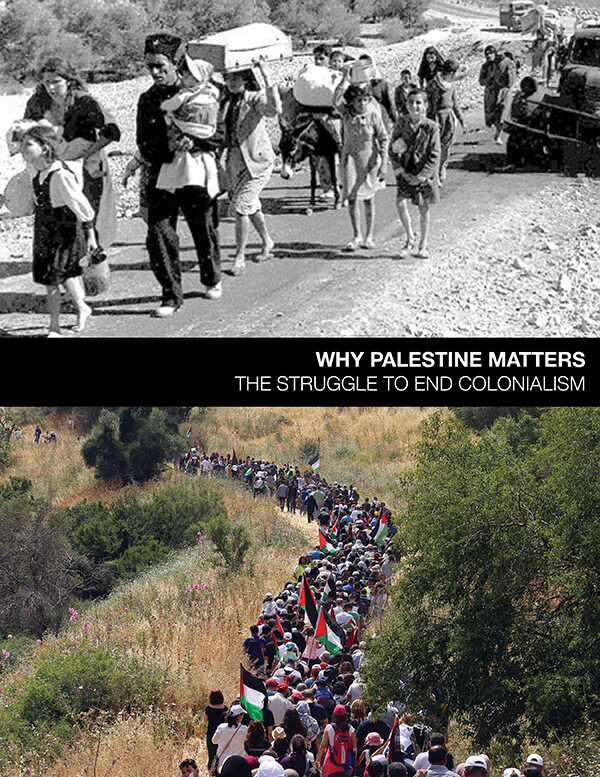
Nada Elia reviews ‘Why Palestine Matters: The Struggle to End Colonialism,’ a new book by the Presbyterian Church Israel Palestine Mission Network: “With Why Palestine Matters, the Israel Palestine Mission network of the Presbyterian Church is once again proving that it is serious in enacting solidarity, with a highly-readable book providing accessible analysis, online resources, discussion guidelines, and concrete action steps towards a solution.”
Dr. Vacy Vlazna reviews Ramzy Baroud’s new book ‘The Last Earth: A People’s Story of Palestine’ – “This is a dangerous book because by inviting us into an intimacy with the people of Palestine, it predicates compelling moral action to end the monstrous injustice; for this reason Baroud’s The Last Earth must be read and shared.”
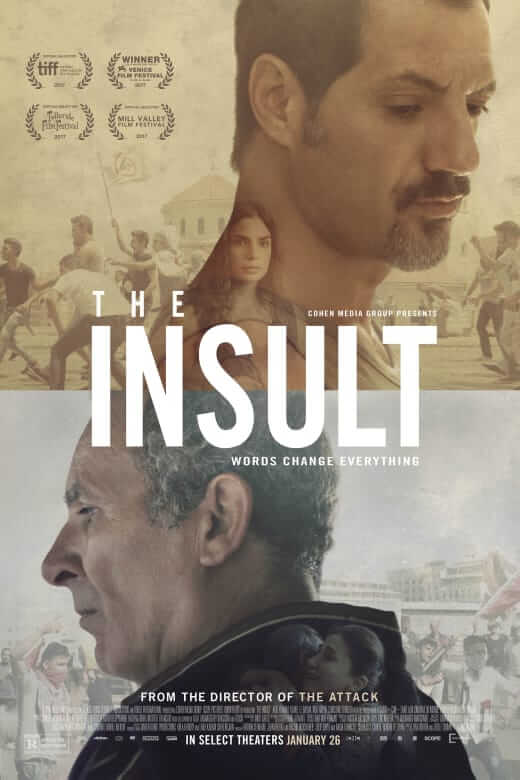
Controversy has arisen in recent weeks over the 2017 film, The Insult, Ziad Doueiri’s film and Lebanon’s submission to the 2018 Academy Awards. In a review, film scholar Terri Ginsberg says the movie is a vehicle for pro-Israel propaganda.
Human rights organizations Amnesty International, B’Tselem and Human Rights Watch stopped itemizing Israeli crimes in the 2014 assault on Gaza, the worst of them all, Norman Finkelstein documents in his impassioned record of war crimes against the strip, Gaza: An Inquest Into Its Martyrdom, published by the University of California Press.