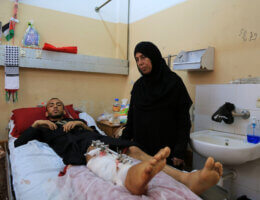
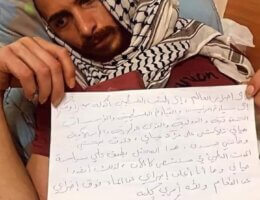
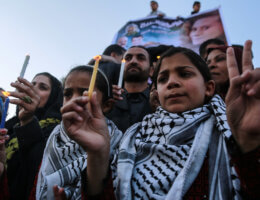
Ghadanfar Abu Atwan has been on a hunger strike for 62 days in protest of his administrative detention by Israel, and recently began refusing water. “His health situation is dire,” Warda Abu Atwan tells Mondoweiss. “We are scared that he could die at any moment.”
Testimonies from Palestinians detained at the Nazareth police station during the May uprising reveal graphic reports of extreme psychological and physical abuse at the hands of Israeli special forces. “It was a madhouse, there is no other way to describe it,” detainee Carlo Roushroush tells Mondoweiss.
How can torture be both banned and common practice? The answer lies in the Israeli Shin Bet’s history, where secrecy has prevailed.
Despite these requirements under international law, human rights organizations report children are poorly treated by the Israeli military justice system, including the use of solitary confinement for minors. This is unacceptable and is one of the key issues we should be focusing on, in holding Israel to account for its human rights violations against the Palestinian people.
Ramzy Baroud writes, “Of the dozens of Palestinian and Arab prisoners I interviewed in recent months for a soon-to-be-published volume on the history of the Palestinian prison experience, every single one of them underwent a prolonged process of torture during the initial interrogation, that often extended for months.”