Mahmoud Khalil is suing Trump to release communications between the administration and anti-Palestinian groups.


Mahmoud Khalil is suing Trump to release communications between the administration and anti-Palestinian groups.
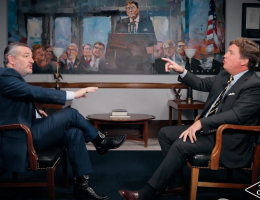
Mondoweiss interviews Andrew Day, senior editor at American Conservative, about the fierce debate over Israel (and Epstein) happening on the right, neoconservatism’s role within the Trump administration, and what a “post-Israel” GOP might look like.

The UN Security Council voted in favor of Trump’s “peace plan” for Gaza, effectively giving the U.S. and Israel the mandate to push forward their vision for Gaza’s future – a future that, notably, features no consideration for what Palestinians want.

The “Yellow Line” splitting Gaza in two is meant to be temporary according to Trump’s “peace” plan. However, the fact that those terms were intentionally left vague suggests that the partition of Gaza was the real goal all along.

The Trump administration’s recent efforts to target left-wing groups started with attacks on the Palestine movement, following the strategy established by pro-Israel organizations that worked for decades to pave the way for such repression.

The shocking arrest of British pundit and Israel critic Sami Hamdi is yet another example of how far-right commentators wield influence in the Trump administration.

Support for Israel is plummeting among the U.S. public, but Zionism dominates mainstream media more than ever. Several recent high-profile examples show the staggering disconnect between the media establishment and its viewers.
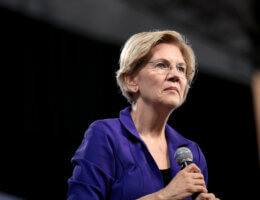
As Gaza flotilla activists share stories of abuse in Israeli detention, Democratic lawmakers are demanding that the State Department take action.

Gaza erupted in celebration as a ceasefire agreement between Israel and Hamas was reached on Thursday. But while there has been an outpouring of joy over the prospect of an end to the genocide, many are skeptical that it’s truly over.

Politico recently declared, “An Entire Generation of Americans Is Turning on Israel.” To the surprise of some, this massive political shift includes the Republican Party.