Israel has begun implementing its plan to end the Palestinian refugee issue by demolishing its most important symbol: the refugee camp.


Israel has begun implementing its plan to end the Palestinian refugee issue by demolishing its most important symbol: the refugee camp.

Palestinians displaced from refugee camps in the northern West Bank are demanding to return to their homes after an Israeli military takeover of the camps, and they fear that proposed U.S. plans for rebuilding the camps will completely erase them.
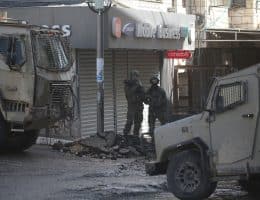
Following the Tulkarem Brigade’s first armed operation against Israeli forces in eight months, the Israeli army arrested over 1,000 Palestinians at random and marched them through the streets of Tulkarem, in an act of “collective vengeance.”

Six months since Israel’s expanded military assault on the refugee camps of Jenin and Tulkarem in the northern West Bank, over 42,000 Palestinian refugees remain forcibly displaced and have no stable access to food, water, or shelter.

Inside the human toll of Israel’s campaign of forcible displacement in the northern West Bank’s refugee camps.
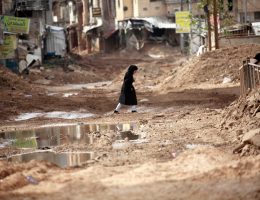
The Israeli army expanded its “Iron Wall” offensive in the northern West Bank, sending tanks into Jenin for the first time in two decades and announcing that displaced residents from Jenin and Tulkarem would not be allowed to return to their homes.

Israel has killed 55 Palestinians after one month of its ongoing “Iron Wall” offensive in the West Bank. Killings, mass displacement, and uncertainty are the new normal.
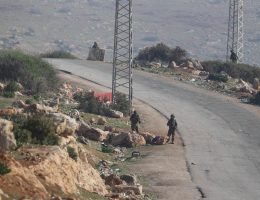
Palestinians say life has been “paralyzed” as Israel expands its military operations to Tulkarem and the northern Jordan Valley. Ground troops have been deployed, imposing curfews and carrying out home demolitions, forcibly displacing thousands.
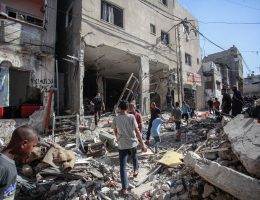
An Israeli airstrike on a residential building in Tulkarem killed 20 Palestinians in the first such attack in two decades. “We’ve been living through the occupation’s raids for more than a year now, but this was different,” says an eyewitness.

Since October 7 Israel’s crackdown on the West Bank town of Tulkarem has intensified. Raids are almost daily, have been more destructive and lethal, and have transformed the lives of more than 8,000 Palestinians living in the city’s refugee camps.