Two leading figures on the American left, Rob Malley and Chris Hayes, cannot openly discuss the role of Israel in foreign policy-making, specifically Sheldon Adelson’s influence over Donald Trump’s historic and tragic decision to scrap the Iran deal, a landmark of international diplomacy.

When Palestinian novelist Susan Abulhawa published a column in the Philadelphia Inquirer urging the Philadelphia Orchestra to cancel a trip to Israel because the country is slaughtering unarmed protesters in Gaza, Jewish leaders in the city flew into action, demanding that the paper publish a rebuttal and that editors take a training against BDS. The Israel lobby in action.
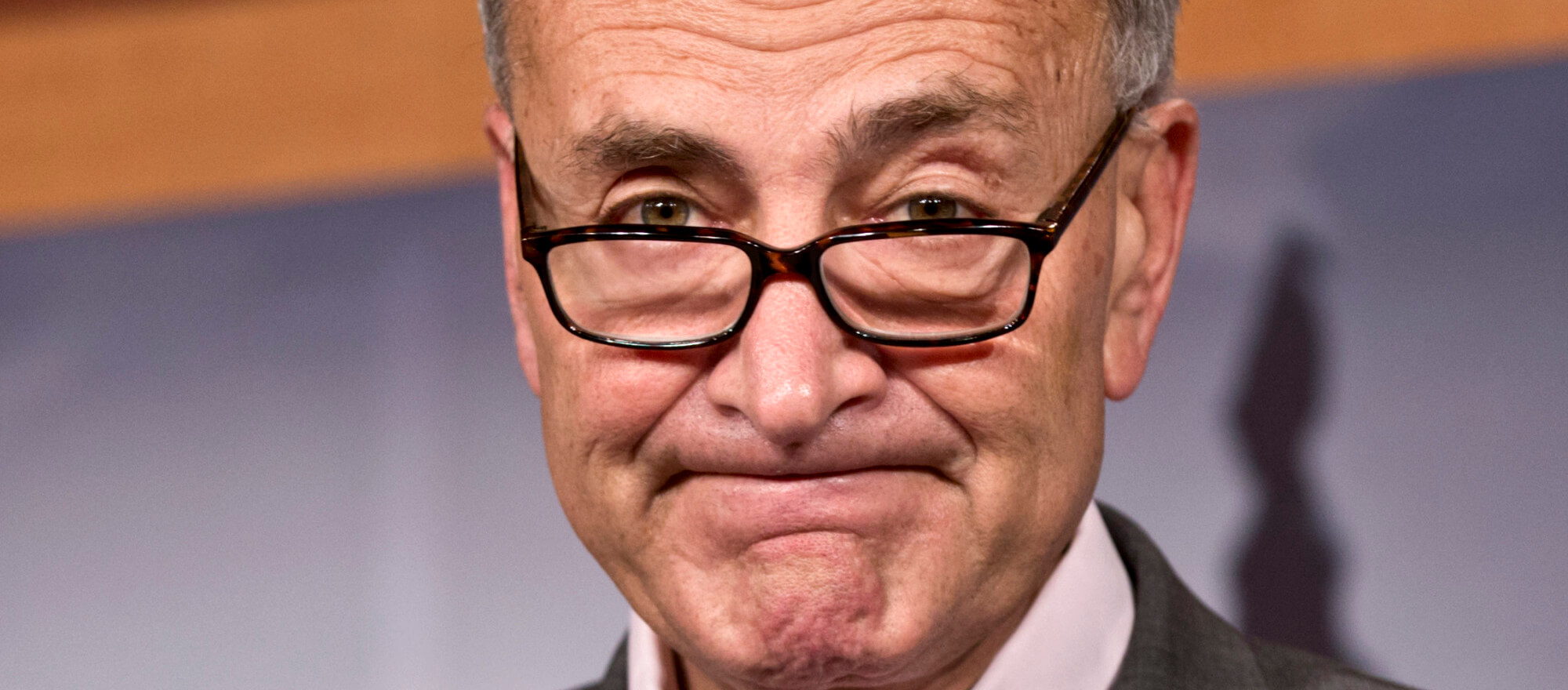
The Council on International Relations, a Gaza-based NGO, issued an invitation yesterday to Senator Chuck Schumer to come to Gaza so that he can see that he and the Palestinian community share many attributes, from humble origins to a high value for education. Schumer has had nothing to say about Israel’s killings in Gaza, despite pressure from young Jewish progressives.
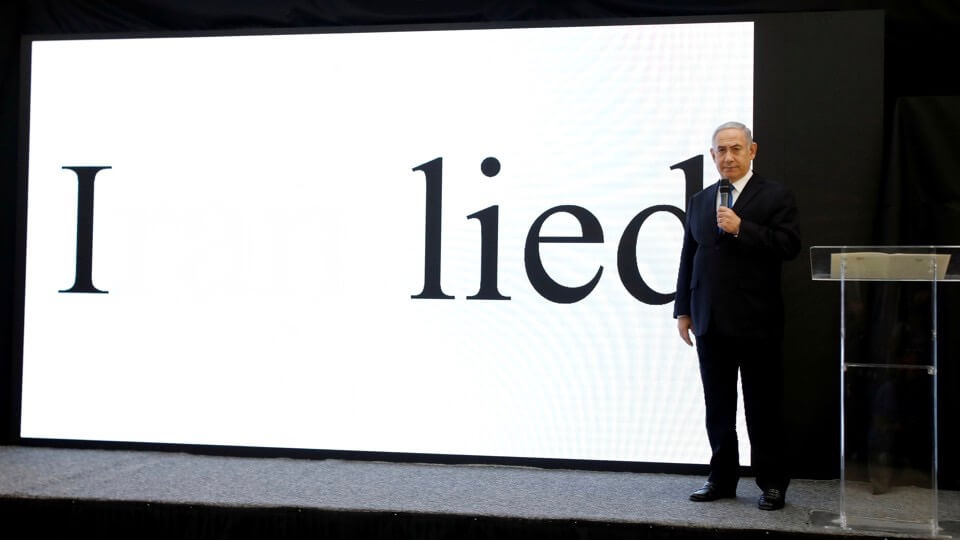
The good news from Benjamin Netanyahu’s speech on Iran’s “secret atomic archive” yesterday is that it was so cheaply theatrical that it is being widely dismissed as vaudeville. He used the word secret 15 times, and in the encore pulled back a black curtain on his evidence. The bad news is that the world doesn’t matter; Netanyahu is pushing war against Iran in Syria to one person, Donald Trump, who loves cheap theatrics.
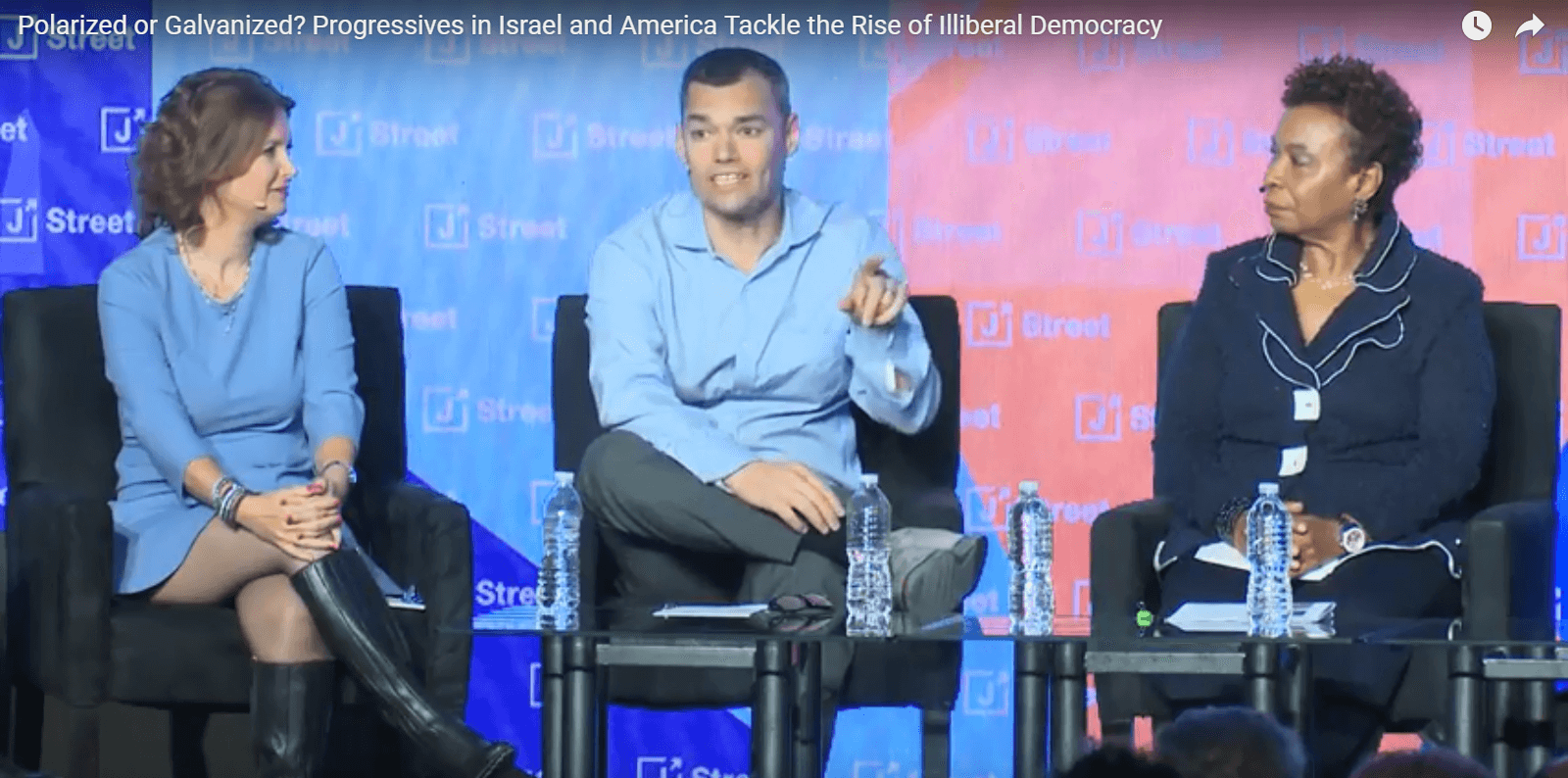
Peter Beinart is a leader in the Jewish discourse of Israel. He says that when young American progressives call for a one-state solution, this will become a “very, very powerful” force in U.S. politics, and that these young people will not mourn “the end of the Zionist dream.” And offering the Palestinians a state without Jerusalem is like “creating a country in Westchester that can’t get into Manhattan.”
Leanne Gale, a Yale law student, came out of the heart of the Jewish community to all-but support for the Boycott, Divestment and Sanctions movement (BDS) at the J Street conference. She said BDS is the most important nonviolent Palestinian movement in the world, that anti-Zionism is a living tradition in the Jewish community as a response to anti-Semitism, and that Jews should not seek to marginalize or suppress or seek an alternative to BDS, but should engage it in an effort to make Israel a liberal democracy.
The shame of the Jewish establishment: Rep. Jan Schakowsky says she never used the word “occupation” before last year, while Jeremy Burton of a leading Boston Jewish organization brags of a policy of refusing to debate Boycott, Divestment and Sanctions (BDS), even with other Jews. These people have their heads in the sand (or worse) and young Jews want none of it.
The silence of Jeffrey Goldberg, Bill Kristol, and Jennifer Rubin over Israel’s indefensible slaughter of Palestinian protesters on March 30, and the outspokenness against the atrocity of Bernie Sanders, David Rothkopf, Ayman Mohyeldin, and Chris Hayes, shows that the center has at last shifted in US discourse. American Jews have had it holding the bag for Israeli massacres.
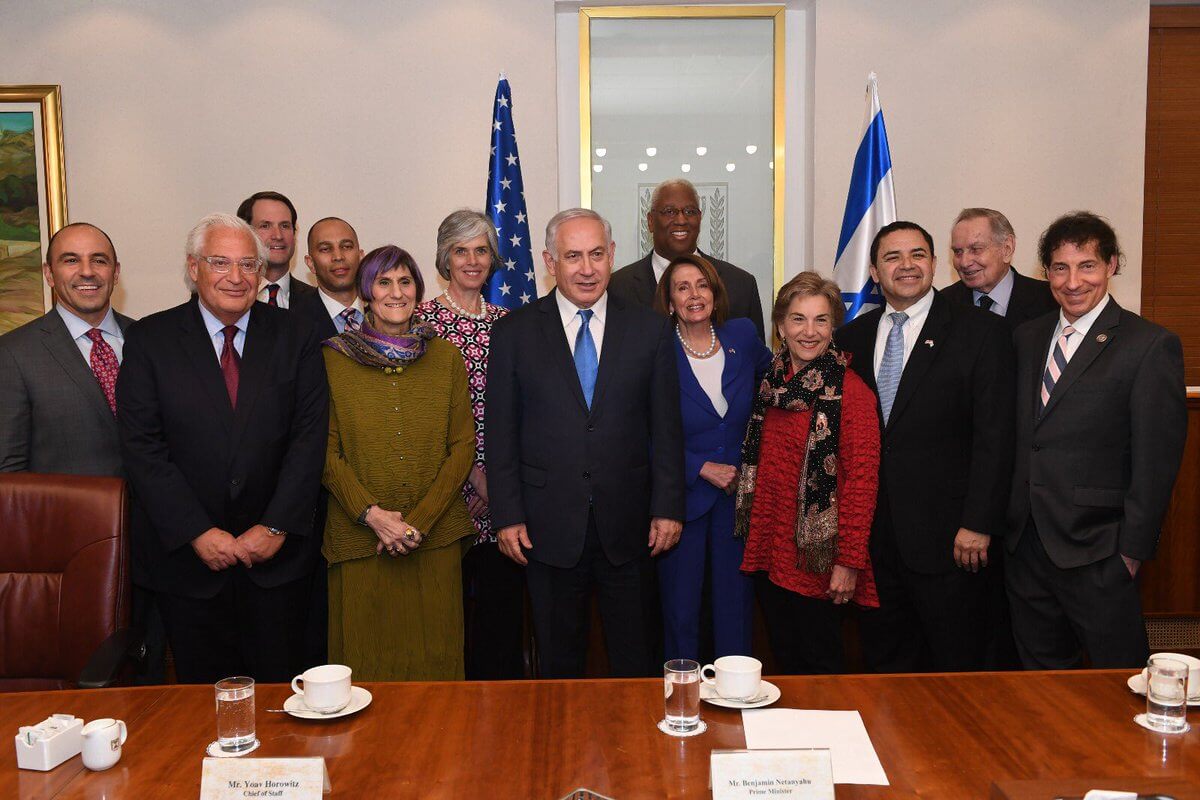
Democratic Congresspeople Nancy Pelosi and Adam Schiff and 9 others met with Israeli leaders even as Israel announced it was sending “dozens of snipers” to Gaza border. Four days later they shot hundreds of Palestinians, killing 17. Pelosi and Schiff and the others have issued no criticism of the shootings. Did they give Netanyahu the OK?
Professor of philosophy Joseph Levine takes apart the argument that BDS is anti-Semitic because it establishes a “double standard” for Israel. There are many reasons to single out Israel as a target for boycotts, rather than other oppressive nations. Because Palestinians have issued such a call as part of their struggle. And because of western complicity in the history of colonialism.