

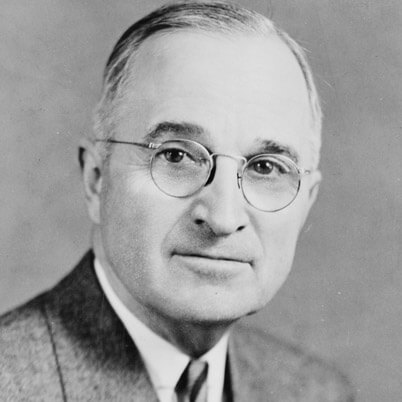
You will not see a fairer rendition of the Israel lobby theory in The New York Times than Joseph Dorman provides in his largely-positive review of John Judis’s new book on Truman and the recognition of Israel in Sunday’s paper. Yes, The New York Times.
Here is how the review begins:
“I received about 35,000 pieces of mail and propaganda from the Jews in this country,” Harry Truman told Senator Claude Pepper in 1947. “I put it all in a pile and struck a match to it.” The man destined to be canonized by American Jews as a champion of Israel felt exhausted and outmatched by the young but influential Zionist lobby.
Bald, huh. What a great step forward. Here is Dorman’s honest description of Judis’s business:
Judis approaches his subject from the more distant precincts of history, but make no mistake, that history is served on the tip of a sharp spear. Though he may write of Harry Truman in 1947, it is Barack Obama and contemporary America at which he aims. “The underlying problem,” he says, “remains the same: whether an American president and the American people can forthrightly address the conflict of Jew and Arab in the Middle East, or whether they must bow to the demands of a powerful pro-Israel lobby.” These are clearly fighting words. Nonetheless, Judis, a senior editor at The New Republic, is a careful historian, looking at the origins of the conflict in Palestine, the rise of the American pro-Israel lobby and, finally, the fateful encounter between the lobby and Truman over the three years from his accession to the presidency to the creation of the new nation.
Dorman disagrees with Judis about the power of the lobby, but he offers a fair rendition of Judis’s historical chapters and nods to John Mearsheimer and Stephen Walt’s book The Israel Lobby. I particularly liked the revisionism on Louis Brandeis.
Truman and the United States, according to Judis, had the power to enforce an agreement, and just might have done so if it were not for America’s pro-Zionist lobby. This is the crux of his argument, and to make it, he gives us the history of the lobby’s rise to influence, from Louis Brandeis, who used his immense prestige and skills to put Zionism on the American political map, through the Zionist Organization of America that he founded, to the formidable Rabbi Abba Hillel Silver, who forcefully took control of the pro-Zionist lobby in the 1940s…
The same men who championed civil rights at home, he argues, [in a reference to Brandeis and liberal Jews who came after him] were blinded by Zionism to the rights of Palestinian Arabs. There is some truth to this.
That’s about the birth of PEP, progressive except Palestine. (The next shoe to drop on Brandeis will be the idea that he converted to Zionism in 1912 so as to be representative of the attitudes of Eastern European Jewish immigrants, and thus to be qualified to be the first Jew on the Supreme Court (i.e., Thurgood Marshall not Clarence Thomas).)
Dorman takes issue with Judis over binationalism/partition, saying that the author’s “ideal seems to be the Anglo-American Morrison-Grady plan, which called for a federated Palestine with autonomous Jewish and Arab provinces, under continuing British oversight…but it’s hard to see how, even with a long-term commitment of Western, most likely American, troops.” And we see how a multi-ethnic democracy worked out in Iraq and Lebanon, Dorman says.
A Jewish documentarian, Dorman concludes that Truman went for partition because people saw no way that Jews and Arabs could cooperate in Palestine. I have often been sympathetic to this argument; and it is an excellent argument to have, now that partition has failed again and again and again over there, and millions endure a form of slavery on an ethnic basis, and the Israeli government’s idea of historic compromise is, Palestinians get an h’ors d’oeuvre.
(This is an intractable conflict. History has told us how intractable conflicts end. That is why so many are supporting a nonviolent alternative, BDS, to force the radical idea of one person, one vote on Israel).
Hat’s off to the Times for this fair review. The next challenge: When will the Times review Max Blumenthal’s blockbuster on the intolerant, racist, rightwing trends inside Israel and Zionism: Goliath. That book is a fact-laden challenge to the US paradigm on Israel, and has to be engaged. If Americans are grown up enough to read about the Israel lobby, they’re grown up enough to learn about extremist and fascistic currents in the Jewish state.


That was a pretty good review. I don’t completely agree with his opinions, but that’s fine. He seems fairminded. The only fact I might quarrel with after a quick read and I don’t know that I’m right, is the claim that most Jewish refugees wanted to come to Israel/Palestine. I’ve heard otherwise, but don’t know what’s true.
The NYT is changing. With this review and their editorial today, some of the criticisms we launch their way may be outdated. Some of the individual articles stink, but not everything.
“The same men who championed civil rights at home, he argues, [in a reference to Brandeis and liberal Jews who came after him] were blinded by Zionism to the rights of Palestinian Arabs. There is some truth to this.”
“Some” truth?? That’s all the truth. That’s the only truth that matters. The stuff about the Jewish self-determination and God and Abraham and that nonsense are all sideshow, because no political construct, no political goal, is in any way legitimate if it can only come about at the expense of another people’s rights. Not a Glorious Southern Confederacy, not a Greater German Reich, not an Afrikaner Homeland, and not a Jewish State of Israel.
That’s the only valid lesson from the Holocaust, and no one who refuses that lesson is fit to be labeled as being champions of human rights or, even, being concerned about human rights.
The review is still all about Jewish privilege.
Max Blumenthal said that a non-Jew couldn’t have written his book, and that’s true.
John Judis’ book was picked up by the Times in large part because it is coming from the Jewish left and Judis is not necessarily an anti-Zionist but rather a non-Zionist. Of course, Max’s book was beyond the pale for the Times’ but if he wasn’t Jewish he’d be compared to Nazis, instead they “only” accused of him being an anti-Semite and a self-hating Jew instead of directly comparing him to David Duke.
And it’s unlikely the Nation would have even bothered to allow him to write anything about the subject if he hadn’t been Jewish; too sensitive.
There is still a strong racial barrier surrounding Israel, heavily favouring those of us with J-positive blood.
This is actually quite an extraordinary quote. He is essentially no different than a White Gentile who slams multi-ethnic democracy in America by comparing to the former Yugoslavia, people like Pat Buchanan.
Yet would Pat Buchanan be welcome in the pages of the Times’ with his White Nationalism?
It’s easy to become so used to the situation that you don’t react anymore, but it’s actually quite amazing that a liberal newspaper like the Times’ is running reviews where the author critical of multi-ethnic democracy as an American paper. It would never give that space to people who are uncomfortable with everyone except white Christians, for natural reasons, because then a lot of Jews in the masthead would have to be deported if that vision ever came to fruition.
But it does give space, without any criticism, to someone who attacks the concept, so long as it is about Jews, or rather, where anyone who isn’t Jewish is affected.
I’m anxious to see a book review in the Times where someone from VDARE reviews a book about multiculturalism!
the loudmouth aholes of the zionist lobby and the fascist idiots who run israel can not stand to be out of the news for five minutes…and most of the “news” they generate is BAD…
you and your “fellow travelers” have a far greater impact than you may believe…
all it takes is 5 minutes perusing the photos on the Electronic Intifada or the like and one can fully appreciate the scene…
the media have turned into a bunch of unschooled dolts who know little of history, the world, religions, languages…
it takes folks like this web page, and it’s fellow travelers and Mearsheimer to constantly remind people of the FACTS….
http://www.youtube.com/watch?v=dyqcZMsBOU4
Donald: It is also my recollection of reading that most European Jewish refugees did not want to go to Israel.
Perhaps more interesting, that Israel did not (initially) want all Jewish refugees, not by a long shot, but only able-bodied Jews — because the intention to go to war was on their minds and B-G wanted soldiers, not feeble folks (as many refugees must have been, due either to age, sickness, or hard times during the war).
So, yes, NYT is changing by dipping its back-page toes into formerly forbidden waters. Sending messages to AIPAC.