Arab American diplomat, activist and scholar Dr. Clovis Maksoud died Sunday in Washington DC after suffering a severe cerebral hemorrhage. He was 90 years old.


Arab American diplomat, activist and scholar Dr. Clovis Maksoud died Sunday in Washington DC after suffering a severe cerebral hemorrhage. He was 90 years old.
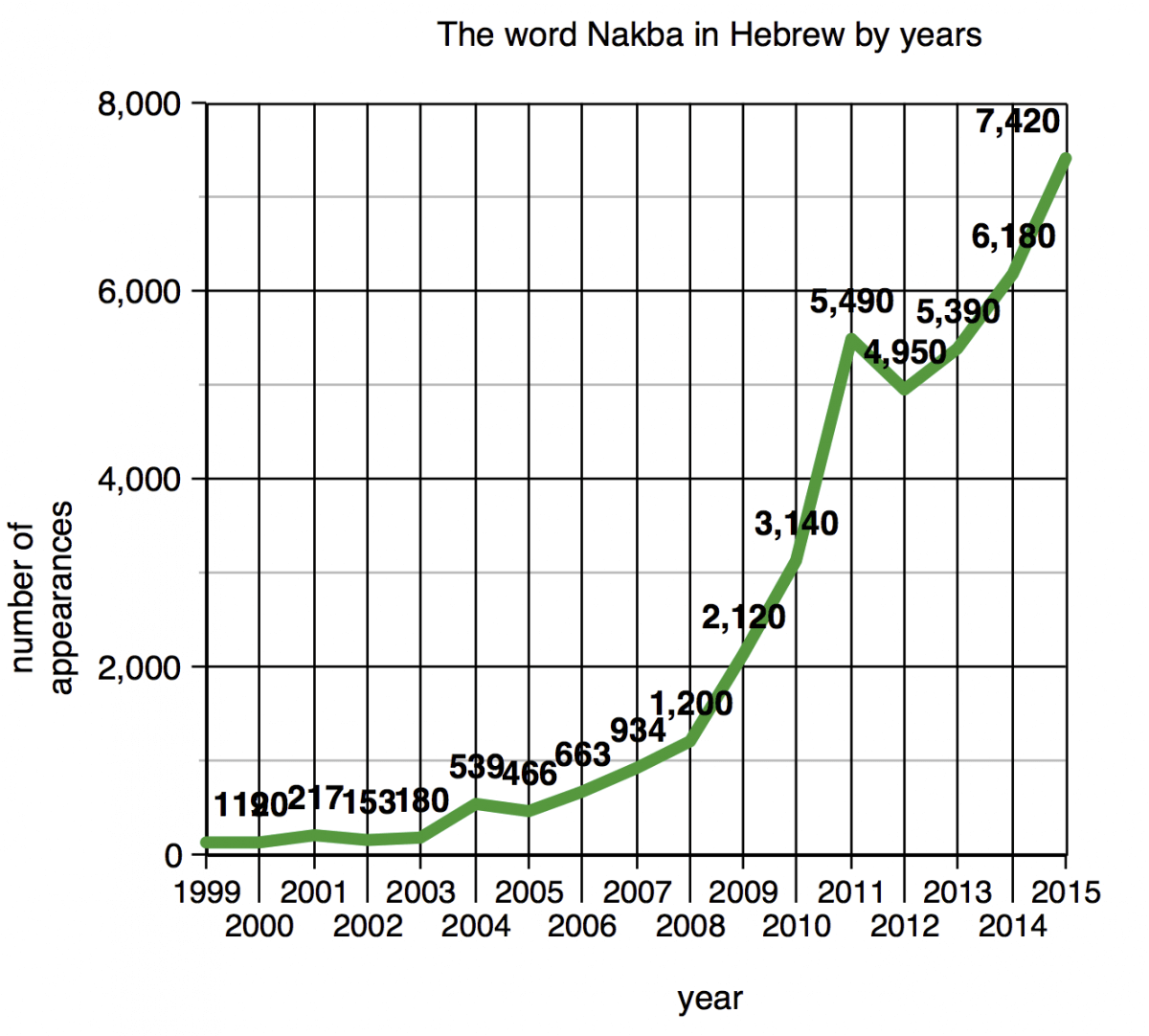
Eitan Bronstein Aparicio discusses how the discourse on the Nakba has changed over time in Israel — When did the term appear? When did it decline and what was repressed? And what has caused these changes? Bronstein Aparicio writes, “Today the term Nakba represents the polarization in Israeli society and discourse. In the non-zionist left there is a full understanding of its centrality in the construction of the conflict and its possible solution. On the other hand, there exists a raging battle led by the Israeli regime to repress these discussions as much as possible. Paradoxically these attempts to silence the discourse leaves the Nakba as a burning question that demands answers”

The largest Palestinian city, Jaffa, was emptied of Palestinians during the Nakba 68 years ago. It went from 120,000 Palestinians, many of them landowners, to 4,000. And many left in desperation by sea. A commemoration, by three refugees’ descendants.
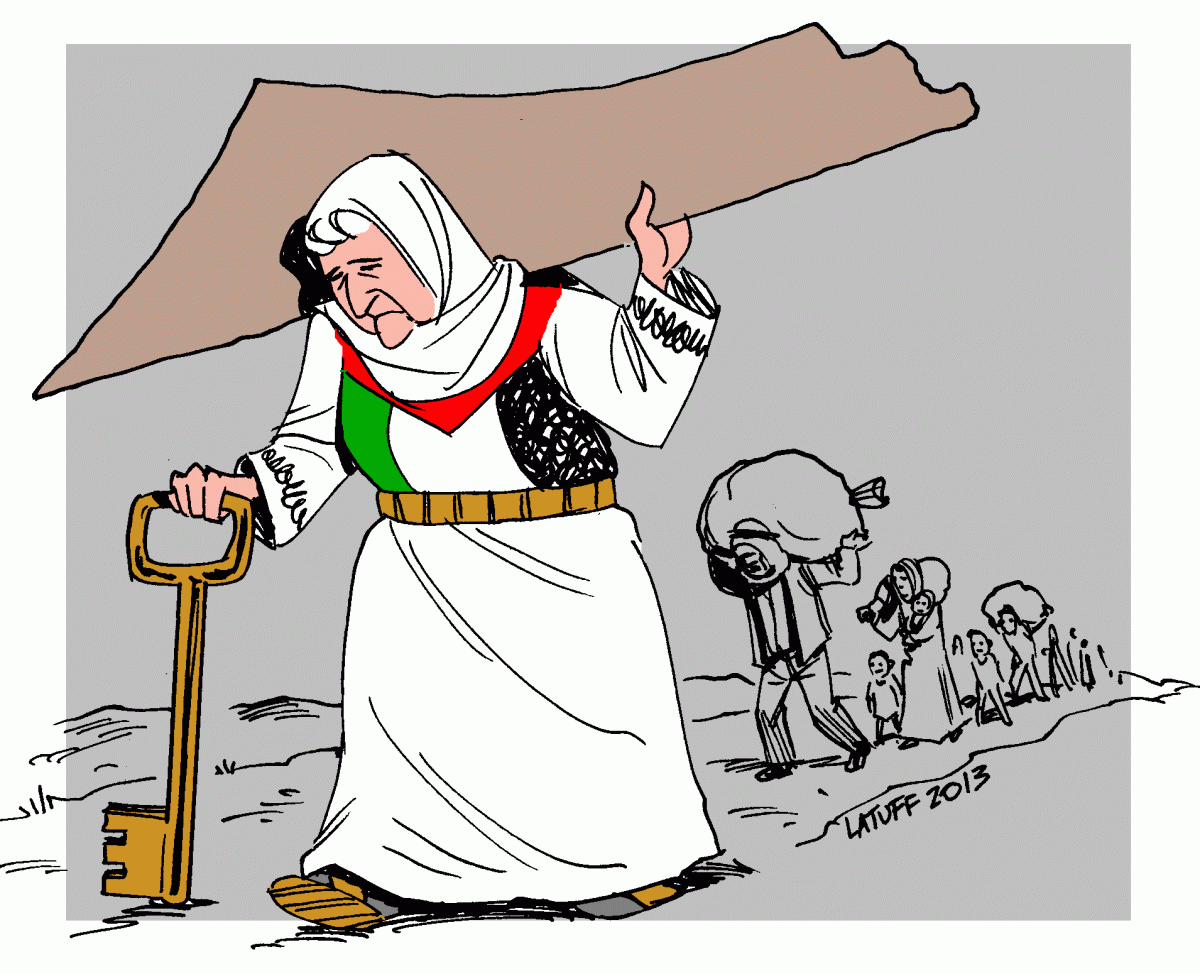
Haidar Eid writes, “I tried to explain to my late mother that she had to be expelled from Zarnouqa in 1948, leave her memories and house behind because a crazy bigot had committed a pogrom against Jews in Europe, but she neither wanted to understand (“what does that have to do with us?”) nor accept (why didn’t the Europeans give them a homeland?” until she passed away in a refugee camp, 90 km south of her village. This song is dedicated to all Palestinian mothers who had to endure the unendurable in 1948.”
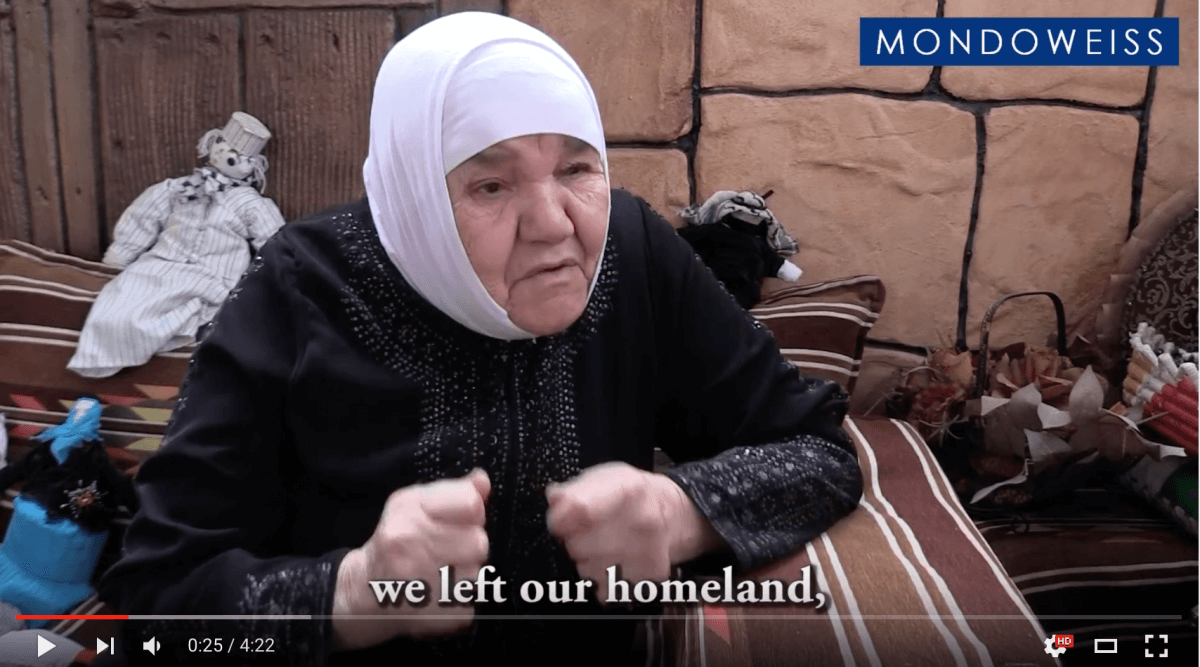
In the Active Aging House of Burj Barajneh, a Palestinian refugee camp in Beirut, the Nakba is still a vivid memory. Some of the center-goers were in their childhood when, in 1948, the ‘catastrophe’ had befell the Palestinians and more than 750,000 were ousted from their homelands. Around 110,000 took refuge in Lebanon that. Marian, 68 years old, still remembers those keys to her house. Her parents were holding them in their hands while telling her about al Safsaf, the village in Galilee they used to live in before the Nakba.
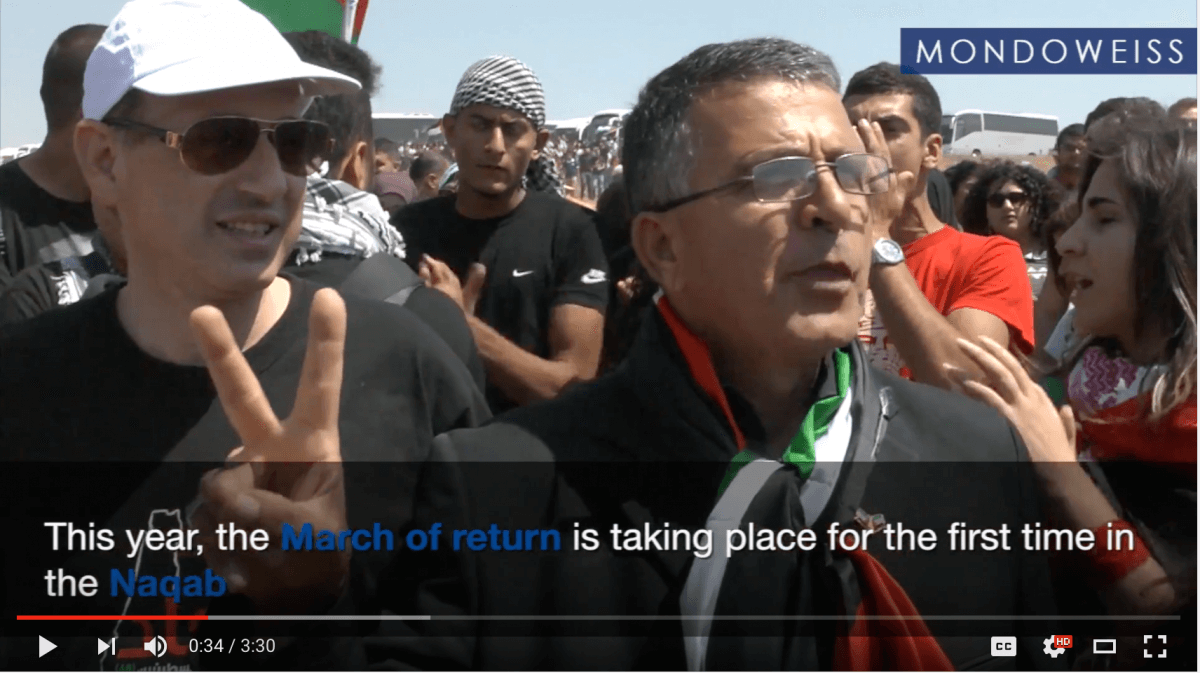
Thousands of Palestinians, mainly citizens of Israel, participated in the annual “March of Return” for the Nakba commemoration on Thursday, May 12. For the first time the Association for the Defense of the Rights of the Internally Displaced organized the march in the Naqab. The location on the lands of the destroyed village of Wadi Zabala was symbolic, and highlighted the on-going Nakba of the Palestinians.

Several hundred Palestinians marched through Bethlehem on Sunday in commemoration of the 68th anniversary of the Nakba, when an estimated 750,000 Palestinians were forcibly expelled from their homes and hundreds of others are believed to have been killed. The theme of the march this year was the “Train of Return,” and a massive train was made by volunteers from the three refugee camps in Bethlehem city for the march. “The idea behind the train was to show that we will return to our original villages,” Mohammed Abu Srour, one of the volunteers who helped build the train told Mondoweiss. “It is a simulation of our dreams to come back to our land.”

A group of Israeli settlers attacked a woman and child late Friday night during an incursion into a home in the area of in the southern occupied West Bank district of Hebron. Emad Abu Shamsiya, a coordinator for Human Rights Defenders, told Ma‘an settlers attacked the house of Riyad Abu Hazza and beat his wife as settlers sprayed his daughter with pepper spray and caused her to faint.

Chris Matthews says that Hillary Clinton was “concerned about Israel” when she voted for the Iraq war in 2002, and Mark Landler, NYT reporter who has authored a new book on her foreign policy, echoes him: “Precisely.” Now we know.
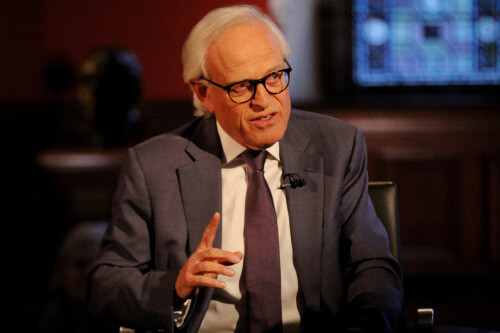
The US is “not neutral” and “it doesn’t claim to be neutral” in the Israel-Palestine peace process, and it’s sometimes acted as Israel’s lawyer, and Israel “screwed up” the latest round of peace talks by building settlements but there were no consequences — Martin Indyk, longtime Israel lobbyist and negotiator for the U.S.