The Israeli parliament on Wednesday passed a law expanding the power of the state to label individuals or groups as “terrorists,” in what critics said will be exploited to criminalize legitimate Palestinian political activity. Among its most controversial tenets is an expanded definition of “terrorism” as well as official procedure for declaring a group a “terrorist organization.” The law also enables the state to outlaw charity groups “indirectly” contributing to “terrorist organizations,” imprison its members by association and issue a life sentence to those who “support” but are not directly involved in “terrorist acts.” MK Hanin Zoabi of the Joint List said the new legislation is not intended to indict “real terrorists.” but has a different aim. “It aims to prevent citizens from being critical and express their views, from being involved in a popular political struggle against the [Israeli] occupation, to talk about the boycott, and in general to think outside the box,” Zoabi tells Mondoweiss.
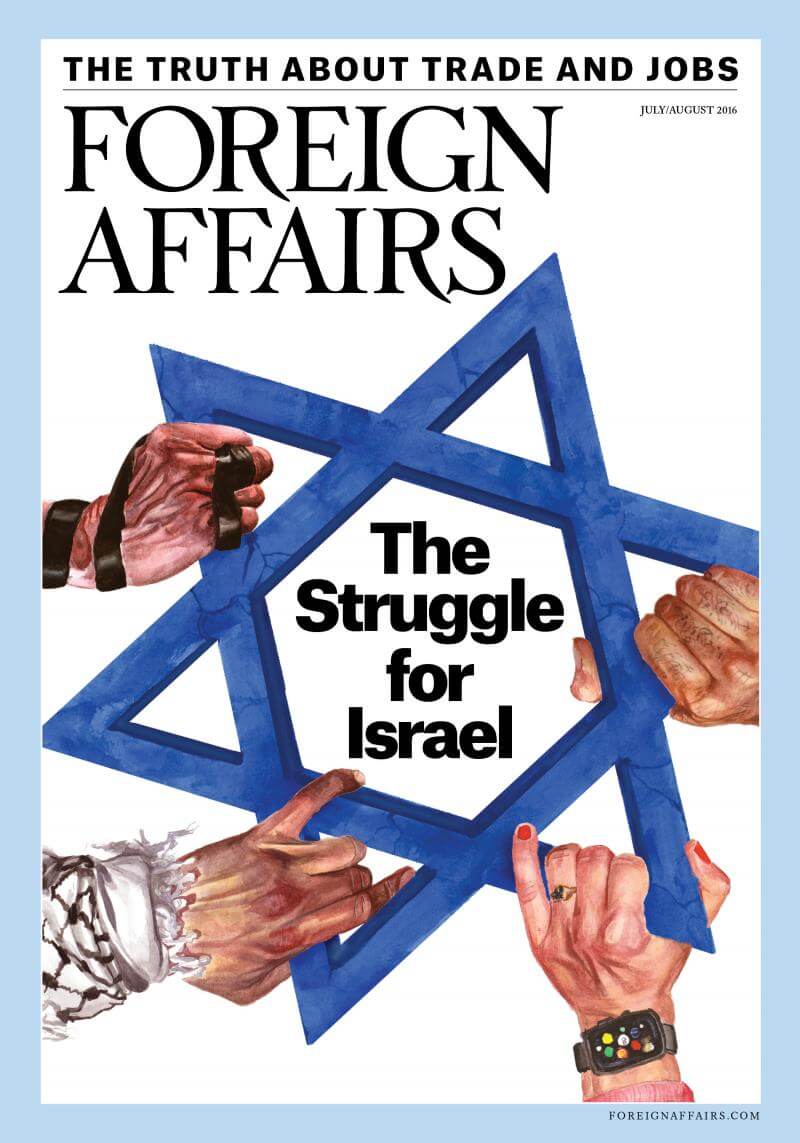
Media marginalize critics of US Israel policy. Chris Matthews says the Democratic Party platform is riven by “red hot” Cornel West and James Zogby, but censors their concern about Israel. And Foreign Affairs publishes a navel-gazing issue all about Israel that leaves out the depths of extremism in Israel, let alone Palestinian conditions.
A group of BDS and Open Hillel activists have produced a darkly humorous web video series about campus divestment from Israel called act-iv-ist. The season finale aired earlier this week.
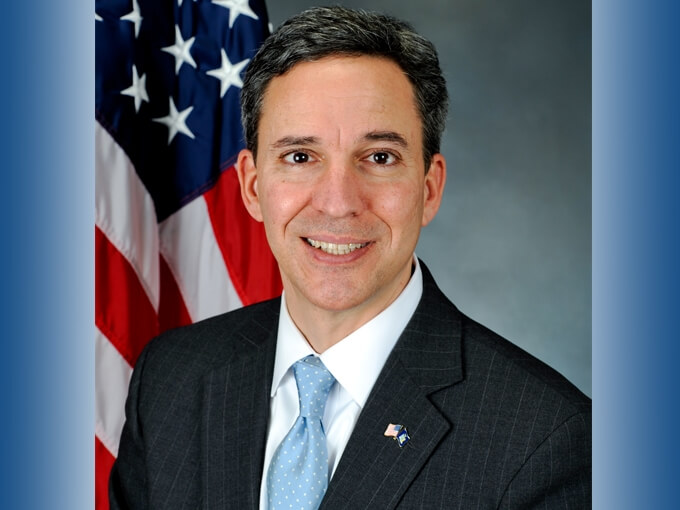
A New York state senator is seeking to cut off university funds to student groups that support boycotting Israel, an escalation of the legislative assault on the boycott, divestment and sanctions (BDS) movement. Last week, State Senator Jack Martins, a Republican from Long Island, New York, introduced a measure that would prohibit student organizations, like Students for Justice in Palestine (SJP), from receiving public funds. The bill would impact students who organize for Palestine at State University of New York and City University of New York schools and has been blasted as unconstitutional by Palestine Legal.
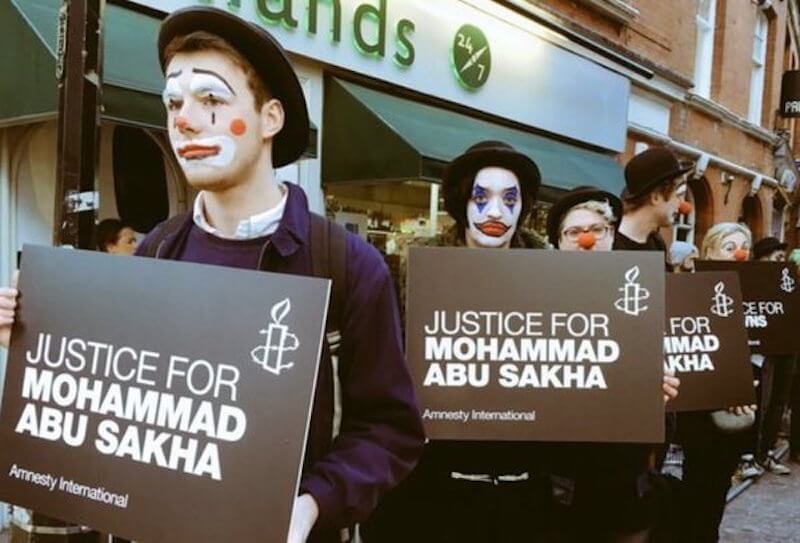
On Monday, Israel extended the administrative detention of Muhammad Faisal Abu Sakha, a 23-year-old Palestinian circus performer, in spite of widespread outcry from activists and rights groups around the world demanding his release. A statement released by the Palestinian Circus School, where Abu Sakha worked, said the Israeli occupation is “a system that knows no humanity,” whose only goal is “to break the spirit of an entire nation.” “You (the Israeli occupation) only make our resistance stronger. And the resistance of the Palestinian Circus School has always been and will continue to be injecting hope, love, and happiness in the hearts and minds of all Palestinians and all people that cross our path worldwide.”
Netanyahu is experiencing “Stockholm syndrome” after he was taken “hostage” by rightwing extremists, says former Israeli PM Ehud Barak. Netanyahu’s commitment to a Palestinian state is “hot air,” his government is “deaf” and “paralyzed,” and it’s time for American Jews to stop speaking in “unison” in support of Israel.
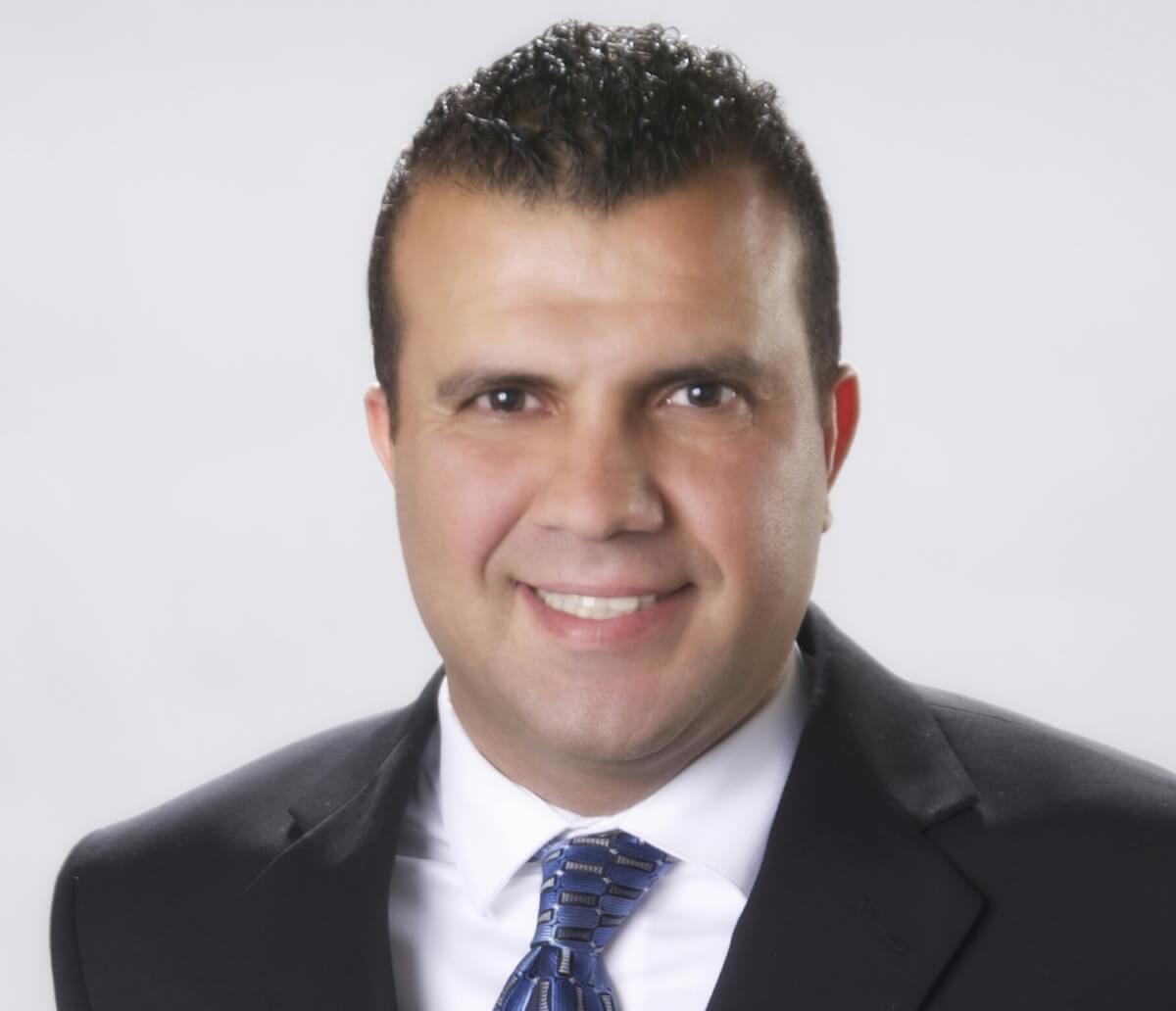
Jesse Sbaih, the Nevada Congressional candidate who said he was discouraged from running by Sen. Harry Reid because of his Muslim faith, lost badly in Tuesday’s Democratic primary. Sbaih, whose Palestinian-refugee parents immigrated from Jordan when Jesse was 11, got 12.81 percent of the vote compared with 62.19 percent for Jacky Rosen, Reid’s hand-picked candidate. Both were seeking office for the first time. Rosen in president of a Henderson, Nevada synagogue. In March Sbaih made news when he asserted Reid told him, “You are not going to be able to win because you are a Muslim.”
Although comparisons between Israel and South Africa stretch back to the early 1960s, the past decade has seen a growing recognition that Israel’s policies should be characterized as apartheid. Jon Soske and Sean Jacobs, authors of “Apartheid Israel: The Politics of an Analogy,” unpack the similarities and differences between South Africa and Israel/Palestine and tell us what lessons the South African anti-apartheid struggle offer for Palestinian solidarity work.
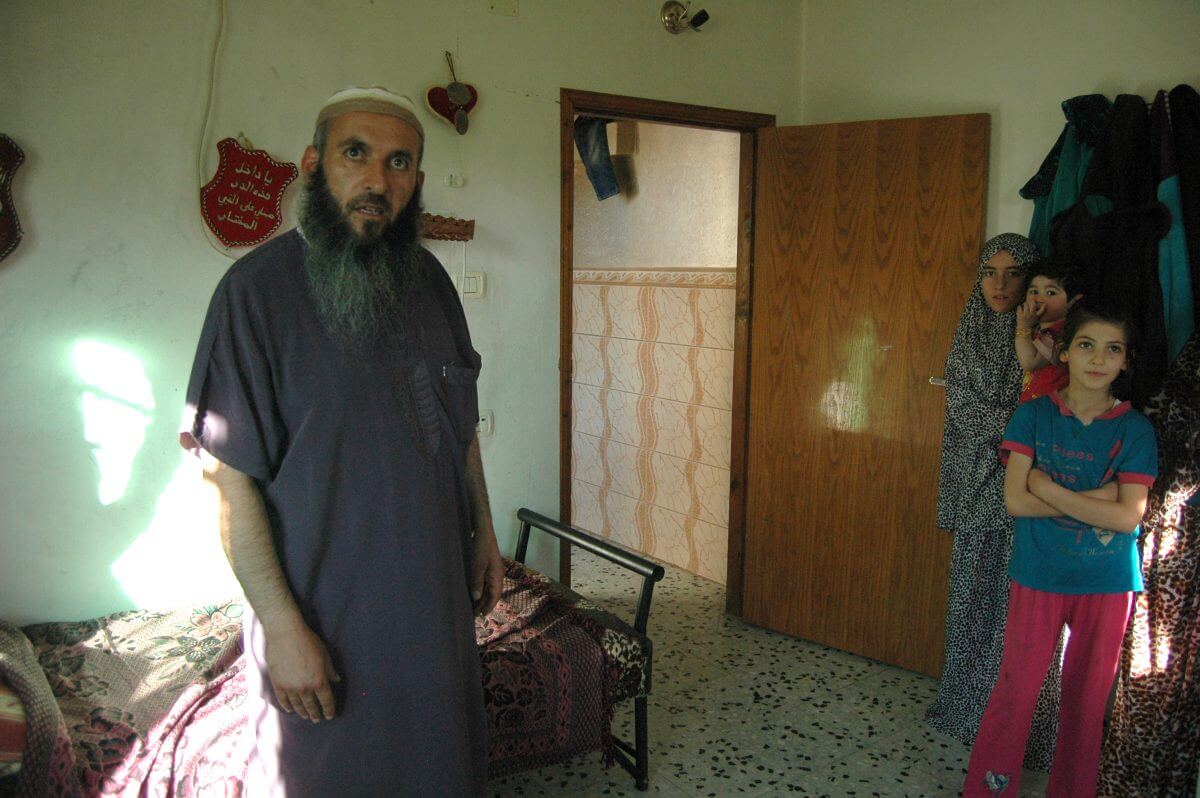
Khaled Makhamri was an excellent student enrolled in university in Jordan on a prestigious governmental scholarship. Now his family is trying to understand why he carried out one of the deadliest attacks in Tel Aviv in years. More than 60 of the attackers in the last 9 months came from Khaled’s district in the southern West Bank and his hometown of Yatta is a particularly difficult place to live. It has the highest school drop out rate in the occupied Palestinian territory, settler attacks on agricultural land in the outskirts of town are common, and Israeli army ordered home demolitions in the surrounding areas are frequent. “The reason why he did such a thing is the occupation, he is not working with any illegal organization,” his father tells Allison Deger.
Andrew Cuomo’s executive order targeting the Boycott, Divestment and Sanctions (BDS) movement against Israel reveals his double standard for boycott, as he was eager to boycott other states for LGBTQ rights violations, and his father, to whom he was a close adviser, urged divestment from South Africa.