[mailpoet_form id=”5″]
The Latest:
- 267 confirmed Palestinian cases of COVID-19; 2 deaths
- A total of 13 cases in Gaza, 9 have already recovered
- Closures and health expenditures have hit the Palestinian economy. Officials estimate $ 3.8 billion in losses; Palestinian deficit expected to increase to $1.4 billion
- Over 10,000 have tested positive for COVID-19 in Israel; 95 have died
Cases of COVID-19 are continuing to soar in Israel, however, over the last few days very few new Palestinian cases have been announced. Health officials have been able to more easily target and track the spread of coronavirus in the West Bank and Gaza, and now have a clear picture of how every case was transmitted.
On Wednesday, Dr. Kamal Shakhra, the Director-General for Primary Healthcare announced a breakdown of the then current cases of COVID-19:
- 89 Palestinian workers in Israel
- 103 cases that were infected through close contact
- 29 cases from Palestinians returning from abroad
- 40 infected from tourists in Bethlehem
- 1 Palestinian who tested positive after being released from prison in Israel Prisoners
- 1 Palestinian healthcare worker
This could all change this week from the Passover holiday, a time when around 50,000 Palestinian workers inside of Israel usually come home to the West Bank.
At the same time Israelis observed Passover seder under a strict lockdown, leading to many new traditions from more women leading seders, to Zoom dinners, to singing holiday songs on the balconies of Tel Aviv.
Coronavirus claims second life in the West Bank
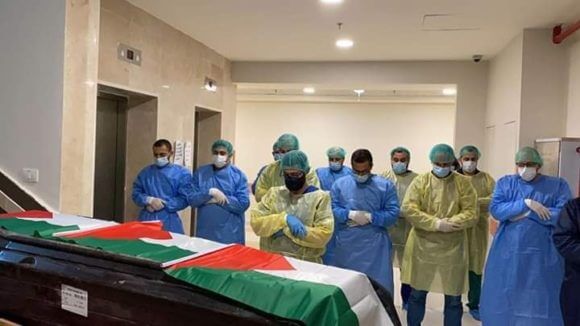
Palestine declared its second death from COVID-19 on Friday, identifying the victim as 55-year-old Naji Mahmoud al-Mudalal, a resident of the Barta’a village west of Jenin in the northern occupied West Bank.
Palestinian Authority spokesman Ibrahim Milhem said in a statement that al-Mudalal, who suffered from unnamed chronic illnesses, died just a few days after contracting the virus. He had been transferred to the Hugo Chavez Hospital in Ramallah four days ago after a severe deterioration in his health.
According to the government, al-Mudalal, a butcher, contracted the virus after coming into contact with Israeli “merchants.” He was buried today in his hometown, presumably by only a few immediate family members, following strict government health protocols.
The death of al-Mudalal comes two weeks after a woman in her 60s from the village of Biddu northwest of Jerusalem, died of the virus after contracting it from her son, a laborer in Israel.
COVID-19 and Gaza
Yesterday, Yumna Patel spoke to Dr. Medhat Abbas, the Director General of Primary Care for the Ministry of Health in Gaza about the COVID-19 crisis in Gaza. The event also featured Jewish Voice for Peace Health Advisory member, Dr. Alice Rothchild. You can watch it on YouTube.
Supply chain reload
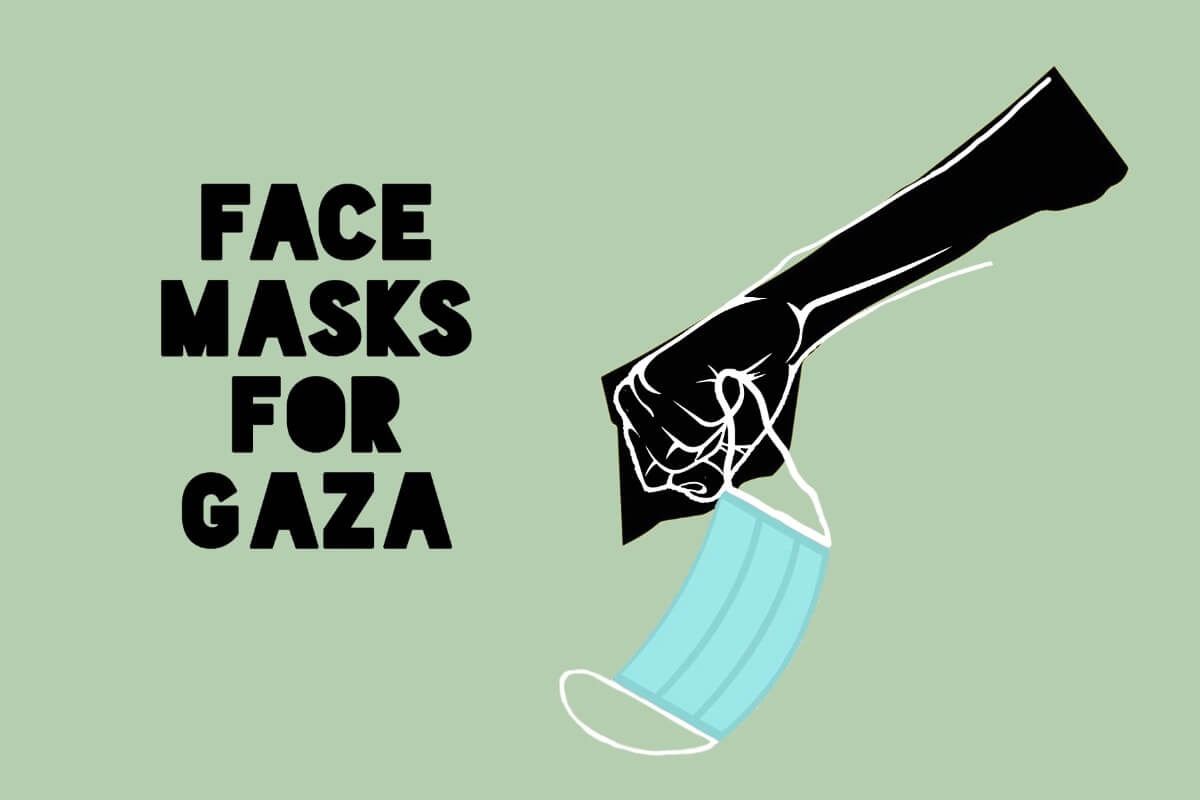
The team at Babyfist, the Palestinian clothing line known for the subversive feminist campaign “not your habibi” converted their operation to manufacture protective wear in response to COVID-19. Their Gaza-based factory churned out 40,000 face masks in this first cycle of production, with cycle two starting this week. The masks were all donated to the Palestinian Medical Relief Society and paid for by a crowd-sourced fundraiser.
Babyfist’s founder Yasmeen Mjalli wrote on the campaign page, “During this time, we need to do what we can to help Gazan’s protect themselves from the spread of the virus and provide as many face masks as we can make.”
A bird’s eye view
Epidemiologist Rob Lipton who usually authors Mondoweiss’s Muzzlewatch column reflects on the porous geography of the West Bank and Israel.
Lipton writes:
A walled-off population, whether the permeable membrane of the West Bank or the prison context of Gaza, will function to make the coronavirus much worse for Palestinians, as well as for Israelis because there will be this massive reservoir of disease that can easily be passed between the contiguous populations. The patchwork nature of the West Bank shows how actual separation will be very difficult to maintain as Palestinians and Israelis essentially live side-by-side.
Back to school
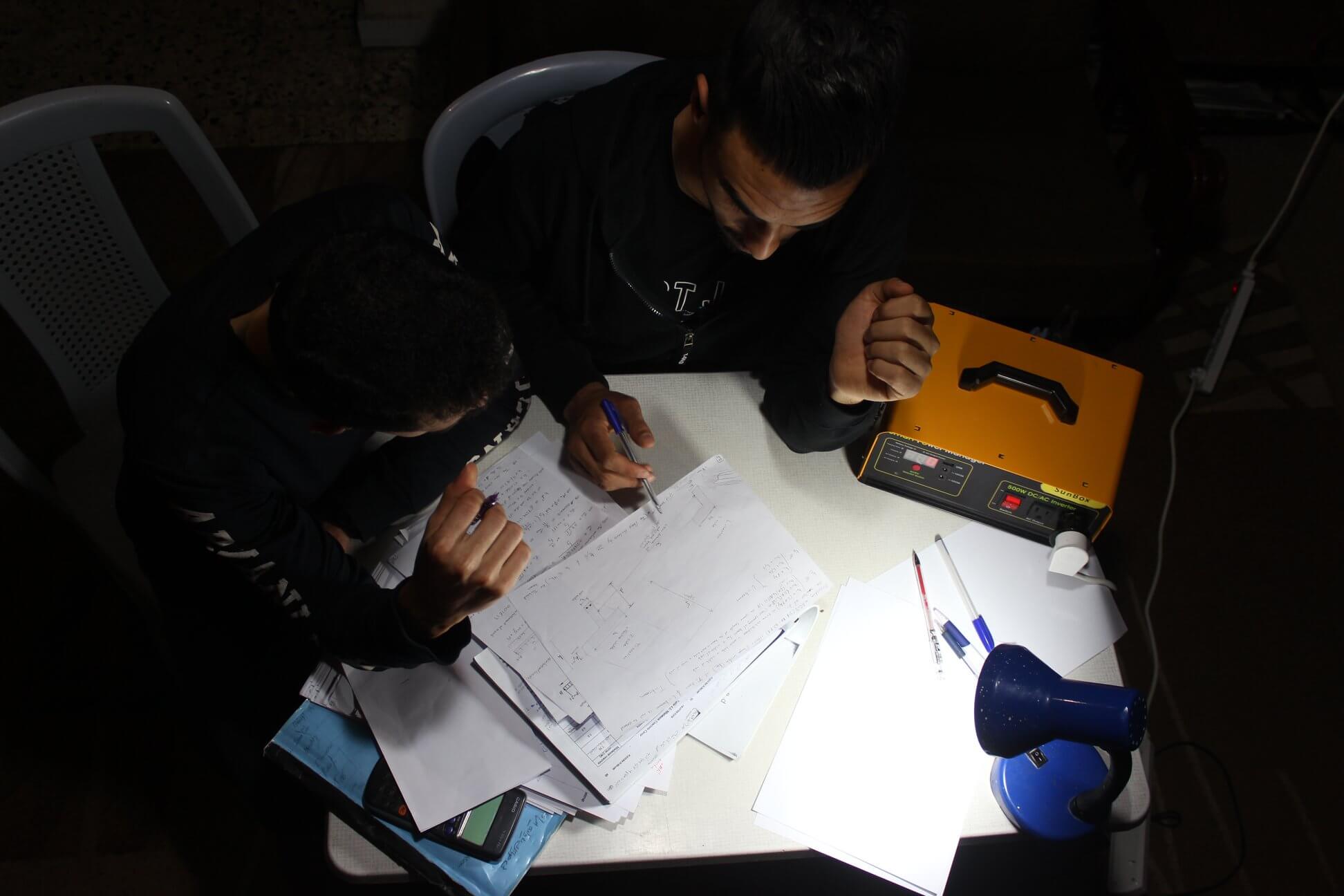
Palestinians schools in the West Bank and Gaza are closed for the rest of the school year, but classes are continuing online. Remote learning is particularly challenging in Gaza where an electricity crisis limits the time students have to use the internet, charge laptops, or even turn on a light at night to study.
This piece by Abdallah Abusamra profiles Majd Mashharawi, a 25-year-old Palestinian entrepreneur and engineer who founded a company that produces small, portable solar panels.
One of her college student customers Mohammed al-Mzaini explains, “I don’t need to rack my brain on how much time I have to finish my assignments on my laptop and worry about how long I have before the electricity goes off.”
Arab doctors on the forefront, their families on the back burner
Mondoweiss’s Yumna Patel reports COVID-19 testing among Palestinian citizens of Israel is due to increase after a slow start. Interventions came after members of Knesset pressured the Ministry of Health. At the helm was head of the Joint List, Ayman Odeh who blasted health officials over social media. Patel reports,
Ayman Odeh, head of the Arab-majority Joint List has been vocal about the discrimination against Palestinian citizens of Israel when it comes to getting tested for the virus, speaking out against the practice on Israeli television as well as on his personal social media accounts.
‘It is an unbearable reality in which Arab doctors are at the forefront of the fight against the coronavirus, while their families remain in the backyard,’ Odeh posted on Twitter on March 28th, saying that ‘to date, there are no drive-thru testing centers in Arab-majority communities.’
Although, with testing supplies running low, overall COVID-19 testing is expected to decrease this week.
Streaming together, alone
Mondoweiss’s Michael Arria complied a couple of lists of books and films to read and stream while you’re isolated at home. This is as close as we are getting to a reboot of Blockbuster video stores, where you could find out about dated and beloved art films. From Arria’s picks:
The Time That Remains is a beautiful film that shouldn’t be missed. A deeply personal dark comedy that begins with the creation of Israel in 1948 and follows its protagonist to present day, it won the Critics Prize of the Argentinian Film Critics Association at Mar del Plata International Film Festival. You can watch it on Hulu.
Links of interest
- Don DeLillo, Ghassan Kanafani, and the coronavirus (Mondoweiss)
- Episode 117 – Perspectives on COVID-19 (The East is a Podcast, featuring Mondoweiss contributor Mary Turfah )
- Coronavirus and aid: What we’re watching (The New Humanitarian)
- Providing Urgent Aid to Refugees in Amman, Jordan (MERIP)